Lagos, the bustling commercial and cultural capital of Nigeria, witnessed a vivid display of heritage and fashion on Sunday as the Eko Amore Garden in the upscale Lekki district played host to the inaugural Lagos Gele Festival. The landmark cultural event, orchestrated by the Lagos State Government through its Ministry of Tourism, Arts and Culture, was designed to celebrate the intricate artistry of the traditional Yoruba headtie, known locally as the gele. Drawing a diverse crowd of fashion practitioners, international tourists, entertainment icons, and cultural enthusiasts, the festival successfully merged traditional aesthetics with contemporary economic empowerment initiatives, highlighted notably by a substantial two million naira cash prize for the most innovative gele design.
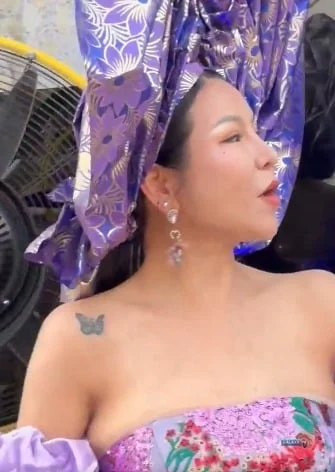
The Sunday event transcended standard cultural exhibitions by serving as a cross-cultural melting pot. In a striking display of global cultural appreciation and integration, members of the local Chinese community enthusiastically participated in the festivities, donning elaborately styled traditional Yoruba headties alongside native attendees. Images and video footage capturing Chinese nationals proudly wearing the architectural headpieces quickly circulated across various media platforms, symbolising the universal appeal of Yoruba fashion. This cross-cultural engagement underscored the growing diplomatic, economic, and social ties between Nigeria and international communities residing within the state, transforming a regional cultural staple into a global talking point.
Genesis and Chronology of the Festival
The journey toward the realization of the maiden Lagos Gele Festival began months prior, rooted in civic engagement and administrative responsiveness. According to Idris Aregbe, the Lagos State Special Adviser on Tourism, Arts and Culture, the conceptualization of the festival was directly inspired by a formal letter submitted by a vigilant and culturally conscious Lagos resident. The citizen had urged the state government to officially recognize, institutionalize, and preserve the traditional headtie by embedding it permanently into the official Lagos State cultural calendar.

Recognizing the cultural weight and economic potential of the suggestion, the state government fast-tracked plans for the inaugural event. Leading up to Sunday’s grand finale, the administration rolled out a series of pre-event announcements and stakeholder engagements. Last week, during a press briefing in Lagos, Aregbe outlined the comprehensive vision for the festival, emphasizing that it was structured not merely as a one-day celebration, but as a strategic catalyst for youth and women empowerment. The chronology of the event’s rollout reflected a meticulous approach by the state, moving from citizen petition to policy adoption, stakeholder consultation, masterclass training announcements, and finally, the spectacular execution at the Eko Amore Garden.
Economic Empowerment and Strategic Skill Development
While the visual splendor of the event captured immediate attention, state officials maintained a strong focus on the socioeconomic implications of the gele industry. Traditionally viewed solely as an accessory for festive occasions such as weddings, naming ceremonies, and religious gatherings, the government aims to reposition gele styling as a lucrative commercial enterprise capable of lifting women and young people out of poverty.
In his address to journalists, Special Adviser Idris Aregbe articulated the core developmental philosophy driving the initiative. He noted that the administration’s intervention is designed to honor the unsung heroes of the fashion ecosystem—including fabric makers, headtie artists, professional photographers, and seasoned women who have sustained the craft through generations.
To bridge the gap between cultural heritage and economic sustainability, the Lagos State Government announced comprehensive training programs running concurrently with the festival. These initiatives are tailored to provide young and aspiring gele artists with practical styling techniques, entrepreneurial acumen, and direct mentorship from industry veterans. Aregbe emphasized the multiplier effect of such targeted investments, stating, “If we empower one woman, we empower the family and the entire community.”

Furthermore, to ensure that participants transition from informal practitioners to sought-after professionals, the state is currently compiling an official database of creative industry practitioners. This registry is intended to connect trained gele artists directly with high-profile event organizers, major state functions, and international tourism showcases. By institutionalizing this connection, the government seeks to guarantee steady, paid engagements for practitioners, thereby transforming ephemeral artistic talents into sustainable, long-term careers.
High-Stakes Competition and Star-Studded Attendance
The focal point of the day-long festival was the highly anticipated gele design competition, anchored by a lucrative two-million-naira prize pool sponsored by the Lagos State Government. The substantial financial incentive attracted top-tier stylists from across the region, all eager to demonstrate their mastery over stiff fabrics, intricate folding techniques, and balanced structural geometry. As of the close of the event, organizers noted that evaluations were rigorous, with the official winner of the grand prize yet to be formally announced pending final adjudication by a panel of esteemed fashion judges.
The grandeur of the venue was further elevated by the presence of prominent figures from the Nigerian entertainment and creative sectors. A-list celebrities, including celebrated actresses Sotayo Gaga and Bukky Wright, renowned music artist Darey Alade, and popular comedian Folagade Banks, graced the occasion. Their presence not only added immense star power and media visibility to the maiden event but also signaled robust industry backing for the preservation and modernization of traditional Yoruba attire.
Cultural Significance and Broader Implications
The gele holds a revered position within Yoruba culture, historically serving as a marker of social status, marital maturity, and celebratory joy. Worn predominantly by women, the headtie requires immense dexterity to transform flat textiles—such as Aso Oke, damask, or brocade—into towering, sculptural masterpieces. By elevating this domestic craft to an international festival standard, the Lagos State Government has achieved a dual objective: safeguarding an indigenous intangible cultural heritage against the homogenizing forces of globalization, and injecting formal economic structures into the informal fashion sector.

Analysts observing the intersection of tourism, culture, and governance in Lagos note that initiatives like the Gele Festival play a critical role in diversifying the state’s economy away from oil dependency and heavy manufacturing. By leveraging Lagos’s reputation as Africa’s entertainment and fashion powerhouse, the state is effectively positioning itself as a premier destination for cultural tourism.
The active participation of the Chinese community serves as an encouraging indicator of the soft-power potential inherent in Nigeria’s vibrant cultural exports. As international residents embrace indigenous traditions like the gele, the boundaries of cultural exchange expand, fostering mutual respect and community integration.
Ultimately, the maiden Lagos Gele Festival has set a high benchmark for future cultural administration in Nigeria. By combining historic reverence with forward-looking economic policies, masterclass training, and high-profile patronage, the Lagos State Government has successfully transformed a traditional headpiece into a dynamic vehicle for wealth creation, social cohesion, and international cultural diplomacy. As organizers prepare to announce the winner of the two million naira prize and roll out the subsequent phases of practitioner databases and mentorship networks, the future of gele artistry in Nigeria appears both economically viable and culturally secure.