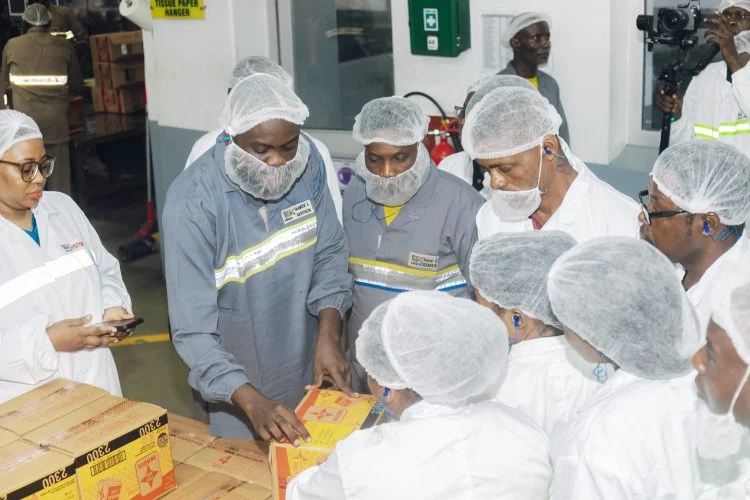
In a comprehensive effort to reinforce the integrity of the food supply chain and promote public health, Maggi, the leading culinary brand under the Nestlé Nigeria PLC portfolio, recently concluded a high-impact series of activities to commemorate World Food Safety Day. The initiative, which centered on the theme of shared responsibility and transparency, brought together an extensive array of stakeholders, including raw material suppliers, downstream distributors, consumers, health journalists, and digital content creators. By opening its doors and sharing its internal quality protocols, the company sought to demystify the production of its iconic seasoning products while underscoring the rigorous scientific standards required to maintain food safety from the farm gate to the dinner table.
The multi-day program served as a platform for education and collaboration, providing participants with a rare, behind-the-scenes look at the industrial processes that transform locally sourced agricultural inputs into household staples. As food safety remains a critical concern in Nigeria—where foodborne illnesses contribute significantly to the national burden of disease—Maggi’s engagement highlights the pivotal role that large-scale food manufacturers play in setting benchmarks for the wider industry.
Historical Context and the Significance of World Food Safety Day
World Food Safety Day, established by the United Nations General Assembly in 2018 and jointly facilitated by the Food and Agriculture Organization (FAO) and the World Health Organization (WHO), is observed annually on June 7th. The day aims to draw global attention to the prevention, detection, and management of foodborne risks. According to WHO data, an estimated 600 million people—almost one in ten people in the world—fall ill after eating contaminated food each year, resulting in 420,000 deaths. In the African region, the impact is particularly acute, with high incidences of diarrheal diseases linked to poor food hygiene.
In Nigeria, the challenge of food safety is multifaceted, involving issues of pesticide residues in crops, improper storage leading to aflatoxin contamination, and the presence of unapproved additives in processed foods. Against this backdrop, Maggi’s initiative in Agbara represents a proactive corporate response to a national public health priority. By engaging stakeholders across the entire value chain, the company is addressing the "preparedness" aspect of food safety, ensuring that every actor—from the farmer providing soya beans to the retailer selling the final cube—understands their role in preventing contamination.
A Chronological Overview of the Stakeholder Engagement Program
The initiative was structured into several distinct phases, each tailored to the specific roles of the participants within the Maggi ecosystem.
The program commenced with intensive technical sessions for suppliers. These sessions focused on Nestlé’s stringent "Responsible Sourcing Standard," which mandates that raw materials be free from harmful contaminants and produced under ethical conditions. Suppliers were briefed on the latest quality requirements, including moisture content limits for grains and the elimination of heavy metal risks.
Following the supplier engagement, the focus shifted to the distribution network. Distributors and warehouse managers received specialized training on "Good Warehousing Practices" (GWP). This included guidance on temperature control, pest management, and the "First-Expiry, First-Out" (FEFO) inventory system. These measures are vital for ensuring that products do not degrade due to environmental factors like humidity or heat during their journey through the Nigerian market.
The highlight of the week was the immersion day for journalists and digital content creators. This group was invited to the Nestlé Agbara Factory, one of the most advanced food manufacturing facilities in West Africa. The tour provided an end-to-end view of the production line, offering a transparent look at the ingredients and hygiene protocols that define the Maggi brand.
Inside the Agbara Factory: The Science of Soya and Fermentation
The factory tour offered a deep dive into the manufacturing of Maggi seasoning cubes, specifically focusing on the use of locally sourced soya beans. This choice of ingredient is significant not only for its nutritional profile—being a high-quality source of plant-based protein—but also for its cultural resonance.
Participants observed the transformation of raw soya beans through a sophisticated industrial fermentation process. This process is modeled after traditional West African culinary practices. For centuries, Nigerian households have used fermented condiments such as iru (locust beans), dawadawa, and ogiri to add umami and depth to soups and stews. Maggi’s industrial fermentation mimics these traditional methods but under highly controlled, sterile conditions to ensure consistency and safety.
The journey begins with the procurement of high-grade soya beans, which undergo rigorous cleaning and sorting. The beans are then cooked and inoculated with specific cultures to initiate fermentation. This stage is critical for developing the unique savory flavor profile of the seasoning. After fermentation, the mixture is dried, milled, and blended with other ingredients—such as fortified salt, spices, and minerals like iron—before being compressed into the familiar cube format and wrapped at high speeds.

Throughout the tour, factory experts emphasized the "Multi-Barrier" approach to food safety. This involves multiple stages of testing: first at the point of raw material entry, then during the processing phase, and finally on the finished product before it leaves the warehouse.
Official Perspectives: Quality as a Collective Responsibility
Speaking during the stakeholder event, Funmi Osineye, Category Manager for Culinary at Nestlé Nigeria, emphasized that food safety is not a destination but a continuous journey of collaboration.
"MAGGI reaches millions of consumers through a complex value chain that includes farmers, suppliers, distributors, retailers, and ultimately, the home cooks who use our products," Osineye stated. "We recognize that we cannot achieve our quality goals in isolation. We continuously engage our stakeholders to strengthen collaboration, build mutual understanding, and provide greater visibility into the journey behind our products. Creating these opportunities for dialogue and transparency helps everyone appreciate the expertise, high-quality ingredients, and rigorous processes that contribute to the quality consumers expect from us."
Talla Fall, the Factory Manager at the Nestlé Agbara plant, echoed these sentiments, highlighting the internal culture of excellence. "Quality and food safety are embedded in every single stage of our operations," Fall noted. "From the moment we source ingredients and test raw materials to the final stages of manufacturing and packaging, our teams work diligently every day to uphold the highest standards. These engagements allow us to demonstrate the rigorous science and passion behind every product that leaves this factory."
Supporting Data: The Economic and Nutritional Impact
The scale of Maggi’s operations in Nigeria provides significant insight into the brand’s influence on the local economy and public health. Nestlé Nigeria sources a substantial portion of its raw materials locally, supporting thousands of smallholder farmers. By providing a stable market for crops like soya beans, the company contributes to rural livelihoods and agricultural development.
Furthermore, the nutritional enrichment of Maggi products is a key component of the brand’s value proposition. In a country where micronutrient deficiencies—particularly iron-deficiency anemia—remain prevalent, the fortification of seasoning cubes serves as a mass-market vehicle for improving public health. According to industry data, Maggi cubes are fortified with iron, reaching millions of households daily and helping to close the nutritional gap in the Nigerian diet.
During the interactive cooking session that concluded the program, nutritionists and professional chefs demonstrated how to use Maggi products responsibly. The focus was on "Salt-Wise" cooking—encouraging consumers to achieve great taste using the salt already present in the seasoning cubes rather than adding excessive table salt, thereby supporting cardiovascular health.
Analysis of Implications: Transparency as a Tool for Trust
The decision to conduct a factory tour and engage openly with the media and content creators carries significant implications for the Nigerian food industry. In an era of "fake news" and digital misinformation, food brands often face unfounded rumors regarding their ingredients and manufacturing processes. By providing direct access to the factory floor, Nestlé is utilizing transparency as a strategic tool to build and maintain consumer trust.
Furthermore, this initiative sets a precedent for other players in the Fast-Moving Consumer Goods (FMCG) sector. It shifts the narrative from mere compliance with regulatory bodies like the National Agency for Food and Drug Administration and Control (NAFDAC) to a more proactive model of "Social License to Operate." When consumers and journalists can see the fermentation vats, the hygiene airlocks, and the automated packaging lines for themselves, the brand’s claims of quality transition from marketing slogans to observable facts.
The integration of traditional fermentation techniques (iru/dawadawa) into modern industrial frameworks also highlights a path forward for the "Africanization" of global food standards. It demonstrates that traditional knowledge and modern science are not mutually exclusive but can be combined to create products that are both culturally relevant and safety-certified.
Conclusion: The Road Ahead for Food Safety in Nigeria
As the activities marking World Food Safety Day drew to a close, the consensus among stakeholders was clear: maintaining the integrity of Nigeria’s food system requires an "all-hands-on-deck" approach. Maggi’s initiative served as a reminder that while the manufacturer bears the primary burden of quality control, the supplier, the distributor, and the consumer each hold a link in the chain.
The Agbara Factory engagement has provided a blueprint for how corporate entities can lead the charge in public health education. By fostering a culture of transparency and investing in the technological advancement of local ingredients, Maggi is not only defending its market leadership but is also contributing to a safer, more resilient food future for Nigeria. The journey of the soya bean—from the Nigerian farm through the Agbara fermentation tanks to the family pot—stands as a testament to the complex, disciplined, and essential work of ensuring that "food is safe, today for a healthy tomorrow."