The Nigerian national power grid, the backbone of the country’s energy distribution, has entered a period of unprecedented volatility, collapsing at least four times throughout 2025 and an additional two times within the first 60 days of 2026. In a particularly stark illustration of this instability, the month of January 2026 witnessed two total system failures within a single week. During these incidents, power generation plummeted from a modest peak of 3,825 megawatts to a negligible 39 megawatts in a matter of minutes, effectively plunging a nation of over 200 million people into total darkness. This recurring failure of the Transmission Company of Nigeria (TCN) infrastructure has become a defining characteristic of the country’s energy landscape, prompting a significant shift in how citizens and small businesses access electricity.
For the better part of a decade, the national grid has been characterized by a patchwork of aging infrastructure, gas supply shortages, and insufficient generation capacity. Data indicates that the grid has collapsed more than 100 times over the past ten years, despite billions of dollars in international loans and government interventions aimed at stabilizing the sector. However, the narrative of the Nigerian energy crisis is beginning to change. While the grid remains fragile, a growing segment of the population is no longer waiting for a centralized solution. Instead, they are turning to an emerging "battery-as-a-service" (BaaS) economy, led by innovative firms offering pay-per-use power solutions that bypass the traditional grid and the prohibitive costs of private generators.
The Chronic Instability of the National Grid: A Ten-Year Chronology
To understand the rise of alternative energy solutions, one must first examine the systemic failure of the centralized system. Nigeria’s electricity sector was privatized in 2013 with the hope of attracting investment and technical expertise. However, the expected stability never materialized. The grid’s fragility is rooted in several technical and economic factors, including the lack of a functional "spinning reserve" to manage frequency fluctuations, the high indebtedness of Distribution Companies (DisCos), and frequent acts of vandalism on transmission towers.
Between 2015 and 2025, the grid recorded over 105 total or partial collapses. Each failure carries a heavy economic toll, estimated by the World Bank to cost the Nigerian economy approximately $28 billion annually in lost productivity. The events of early 2026 have only exacerbated this trend. When the grid crashed to 39 megawatts in January, the impact was felt immediately across industrial hubs in Lagos, Kano, and Port Harcourt. For the average Nigerian, these collapses have transitioned from being major news events to a predictable, albeit frustrating, routine. This "normalization" of energy poverty has created a massive market vacuum that traditional solar home systems and expensive petrol generators have struggled to fill entirely.
The Emergence of the Battery Rental Model
As the grid falters, battery rental services have emerged as a pragmatic, decentralized response to the immediate energy needs of households and small-scale entrepreneurs. Leading this charge is MOPO, an Africa-focused battery rental company backed by the United Kingdom’s Octopus Energy Group. MOPO recently solidified its commitment to the Nigerian market by signing a $75 million agreement with Nigeria’s Rural Electrification Agency (REA). This strategic partnership aims to expand pay-per-use battery rental operations across the federation by 2030, beginning with a large-scale pilot program in 2024 and 2025.
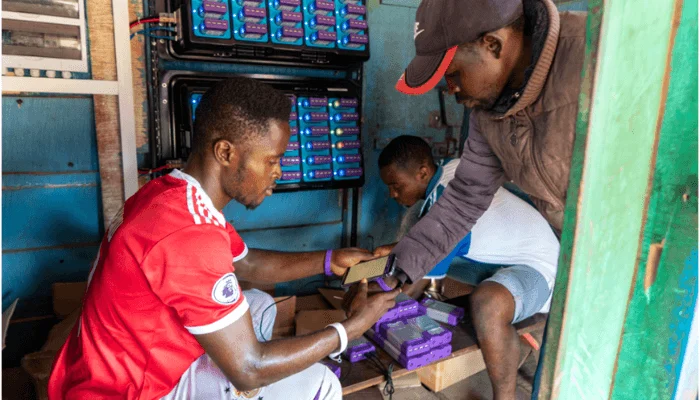
The MOPO model is designed to address the "last mile" of energy access. The company operates solar-powered charging hubs managed by local agents within communities. Customers can rent high-capacity, rechargeable lithium-ion batteries by the hour or by the day. These units are capable of powering essential electronics, including mobile phones, LED lighting, televisions, fans, and small appliances. Once the battery is depleted, the customer returns it to the agent for a freshly charged unit.
In metropolitan areas like Lagos, the affordability of this model is its primary selling point. Residents can rent power banks and small battery units for as little as NGN 300 (approximately $0.22) per day. This pricing structure is specifically tailored to the "kobo-kobo" economy, where low-income earners manage their finances on a daily or weekly basis. Unlike solar home systems, which require significant upfront capital or long-term credit agreements, battery rentals offer immediate flexibility without the burden of asset ownership.
Strategic Partnerships and International Investment
The $75 million deal between MOPO and the REA signifies a shift in government policy toward recognizing decentralized, non-grid solutions as essential components of national electrification. The Rural Electrification Agency, tasked with bringing power to underserved areas, views the battery rental model as a way to achieve rapid impact without the years of construction required for mini-grids or transmission lines.
The involvement of Octopus Energy, Norway’s Norfund, and the International Finance Corporation (IFC) highlights the growing international confidence in this sector. MOPO’s Chief Operating Officer, Luke Burras, noted in a recent interview that the company solves the primary hurdles faced by mini-grids and solar home systems: capital intensity and demand risk. By renting assets rather than selling them, the company removes the financial barrier for the user while providing investors with a scalable, data-driven business model. As of mid-2026, MOPO has recorded over 32 million battery rentals across six African nations, including the Democratic Republic of Congo and Nigeria, demonstrating the robustness of the "pay-as-you-go" energy concept.
Economic Analysis: Generators vs. Battery Rentals
The surge in battery rental adoption is also a direct consequence of the removal of petrol subsidies in Nigeria, which occurred in mid-2023. Historically, small petrol-powered generators, colloquially known as "I-pass-my-neighbor," were the primary backup for millions of Nigerians. However, with petrol prices soaring to over NGN 1,000 per liter in many regions, the cost of running a generator has become unsustainable for the average household.
A comparative analysis of energy costs reveals why battery rentals are winning the market. A standard 300Wh battery rental from providers like bPOWERd, which recently expanded into Lagos by launching hubs at Mobil fuel stations, costs roughly NGN 1,500 ($1.10) per day. In contrast, running a small generator for six hours can easily consume three to four liters of fuel, costing upwards of NGN 4,000, excluding maintenance and the health costs associated with noise and air pollution. bPOWERd claims its service is up to 70% cheaper than petrol-based generation, a figure that resonates strongly with a population facing high inflation and a devalued currency.
The Shift in Venture Capital: From Fintech to Climate Tech
The rise of battery rentals is part of a broader shift in the African investment landscape. For years, financial technology (fintech) dominated venture capital inflows into Nigeria. However, 2025 marked a turning point where climate tech—specifically energy access solutions—surpassed fintech as the top sector for venture funding. Climate tech accounted for nearly 40% of all annual investment in Africa in 2025.
Investors are increasingly drawn to "real-world" infrastructure that addresses the continent’s most pressing deficits. In Nigeria, where the electricity access deficit is the largest in the world, the market for energy is essentially guaranteed. The move toward battery rentals represents a "leapfrogging" of traditional infrastructure, similar to how mobile phones bypassed landlines across the continent two decades ago.
Official Responses and Broader Implications
The Nigerian government, through the Ministry of Power and the REA, has expressed a cautious but supportive stance toward these private-sector-led initiatives. While the official goal remains the stabilization of the national grid and the expansion of gas-to-power projects, officials acknowledge that the scale of the deficit requires a multi-pronged approach. The REA’s collaboration with MOPO is seen as a way to meet the United Nations’ Sustainable Development Goal 7 (Affordable and Clean Energy) ahead of the 2030 deadline.
Critics and energy experts, however, point out that battery rentals are a "painkiller" rather than a "cure." They argue that while these services provide immediate relief for lighting and small electronics, they do not address the energy needs of heavy industry or large-scale manufacturing, which are vital for long-term economic growth. Furthermore, the environmental impact of disposing of millions of lithium-ion batteries in a country with limited recycling infrastructure remains a concern that providers will need to address as they scale.
Despite these challenges, the practical benefits of the battery rental model are undeniable. For a tailor in a rural village or a student in a crowded Lagos suburb, the ability to rent a battery means the difference between working through the night or sitting in darkness. It provides a level of energy security that the national grid has failed to deliver for decades.
Conclusion: A New Paradigm for Energy Access
As Nigeria moves further into 2026, the energy landscape is being redefined by decentralization. The frequent collapses of the national grid, once a source of national despair, have instead become the catalyst for a technological and economic pivot. The $75 million expansion of MOPO and the entry of players like bPOWERd suggest that the future of Nigerian energy may not lie in a single, massive grid, but in millions of small, interconnected batteries.
While the government continues to grapple with the complexities of the Transmission Company of Nigeria and the financial viability of the DisCos, the private sector is providing a roadmap for immediate, flexible, and affordable power. Battery rentals sit in the vital gap between the failing grid and the unaffordable generator, offering a clean, reliable alternative that matches the economic reality of millions. In a country where the grid fails as often as it works, the battery rental revolution is proving to be more than just a trend—it is a necessary evolution in the quest for light.