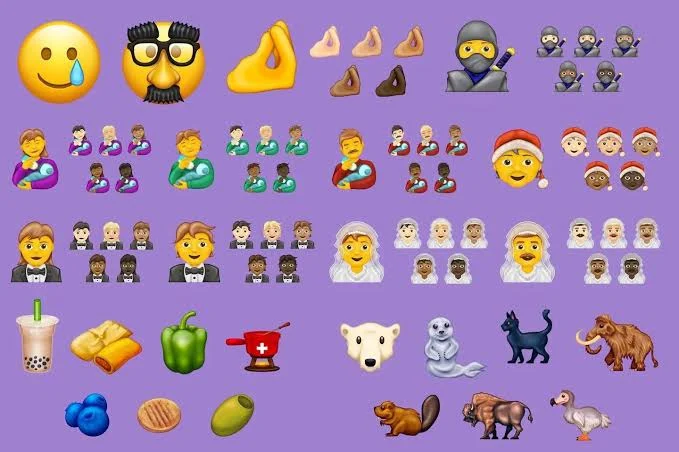
Every day, billions of digital icons travel across the globe via text messages, social media posts, and professional emails, serving as a universal visual language that transcends traditional linguistic barriers. Whether it is a simple thumbs-up, a laughing face with tears of joy, or a steaming bowl of ramen, emoji have integrated themselves into the fabric of modern human communication. However, these tiny pictographs are not merely the result of a designer’s whim at a major tech company; they are the product of a rigorous, multi-year international standardization process governed by a little-known but immensely powerful organization. Understanding how an emoji transitions from a conceptual idea to a standardized character on a smartphone reveals a complex intersection of linguistics, technology, and global politics.
The Unicode Consortium: The Global Gatekeepers of Digital Script
Contrary to the common assumption that individual tech giants like Apple or Google unilaterally invent new emoji, the authority actually lies with the Unicode Consortium. Based in Mountain View, California, this non-profit organization is responsible for maintaining the Unicode Standard, the foundational system that ensures text and symbols are displayed consistently across every computer, smartphone, and tablet in the world. Without this standard, a message sent from an iPhone might appear as a series of incomprehensible squares or "tofu" on an Android device.
The Consortium’s membership is a "who’s who" of the technology sector. Full voting members include industry leaders such as Apple, Google, Microsoft, Meta, Adobe, and Netflix. These entities pay significant annual dues to have a seat at the table where the future of digital communication is decided. They are joined by individual experts, linguists, and representatives from various governments and academic institutions. While the Consortium’s primary mission is to digitize the world’s written languages—ensuring that scripts like Sanskrit, Cherokee, or Old Italic are preserved for the digital age—the Emoji Subcommittee has become its most publicly visible arm.
The Democratic Doorway: Anyone Can Propose a New Emoji
One of the most unique aspects of the Unicode Standard is that it is open to public contribution. Unlike the closed-door branding decisions of most corporations, the process for creating a new emoji allows for submissions from the general public. However, the path from a proposal to a permanent fixture on the digital keyboard is intentionally difficult. The Unicode Consortium receives thousands of suggestions annually, but only a small fraction—usually around 30 to 70—are approved for the yearly update.
A successful proposal must be a comprehensive document, often spanning a dozen pages or more. It requires a detailed justification for why the emoji is necessary, including evidence of its potential popularity and distinctiveness. Proposers must provide data from search engine trends (like Google Trends) and social media frequency to prove that the concept is a "missing link" in current digital vocabulary. For example, the successful proposal for the "Dumpling" emoji argued that since dumplings exist in nearly every culture—from pierogies to gyoza—the icon would have global utility.
The Criteria for Rejection: Why Your Favorite Idea Might Fail
The Emoji Subcommittee adheres to a strict set of exclusionary criteria to prevent the emoji set from becoming cluttered or commercially biased. One of the most significant rules is the prohibition of "specific" entities. This means no logos, no brand names, and no specific people, whether they are historical figures or modern celebrities. You will never see a "Coca-Cola" emoji or an "Elvis Presley" emoji, as these would violate the neutrality of the standard.
Furthermore, the Consortium rejects ideas that are deemed "transient" or "too specific." Internet memes, which may be popular for a few months before fading into obscurity, are generally dismissed because once an emoji is added to the Unicode Standard, it can never be removed. The goal is to build a library of symbols that will remain relevant for decades. This explains why the "Doge" meme or specific viral dance moves are not part of the official set. Additionally, concepts that can already be expressed by combining existing emoji are often rejected to maintain efficiency.
Chronology of a Character: The 18-Month Journey
The lifecycle of an emoji is a slow and deliberate process that typically takes between 12 and 18 months. The timeline generally follows these stages:
- Submission Phase: Proposers submit their documents to the Unicode Consortium, usually by a mid-year deadline.
- Initial Review: The Emoji Subcommittee reviews the proposals against their criteria. They may ask for revisions or additional data.
- Technical Committee Evaluation: If a proposal passes the subcommittee, it moves to the Unicode Technical Committee (UTC). Here, the technical implications of adding the character are analyzed.
- Candidate Status: The emoji is designated as a "candidate." At this stage, it is highly likely to be included but is not yet official.
- Final Approval and Release: Every September, the Consortium officially releases the new version of the Unicode Standard (e.g., Unicode 15.0 or 16.0).
- Vendor Implementation: This is the final and most visible step. Once the standard is released, companies like Apple, Google, and Samsung must design their own custom artwork for the new characters and integrate them into their next operating system updates (iOS or Android).
Design Variations: Why One Emoji Looks Different Across Devices
A common point of confusion for users is why a "Grimacing Face" looks nervous on an iPhone but perhaps more frustrated on a Samsung device. This occurs because the Unicode Consortium does not standardize the image of the emoji; it standardizes the description and the underlying code. For instance, Unicode character U+1F345 is defined simply as "TOMATO."
Each company employs its own team of graphic designers to interpret that description. Apple’s design philosophy often leans toward photorealism and 3D depth, while Google’s "Material Design" focuses on vibrant colors and flatter shapes. Microsoft’s "Fluent" style often utilizes thick outlines and a playful, illustrative aesthetic. While these differences are usually stylistic, they have historically led to "cross-platform miscommunication." A classic example was the "Pistol" emoji; when Apple changed its icon from a realistic revolver to a bright green water pistol in 2016 for social reasons, other platforms eventually followed suit to ensure the "meaning" of the message remained consistent across devices.
Supporting Data: The Exponential Growth of the Emoji Library
The growth of the emoji library reflects the increasing complexity of digital expression. In 2010, when emoji were first integrated into the Unicode Standard, there were 722 characters. As of late 2023, that number has swelled to over 3,700 distinct icons, including variations for skin tones and gender.
According to data from the Unicode Consortium and tracking sites like Emojipedia, the "Face with Tears of Joy" (😂) and "Red Heart" (❤️) consistently rank as the most used emoji worldwide. The expansion of the library is not just about adding new objects; it is about representation. In 2015, a major update introduced the ability to change skin tones, a move that significantly increased the "person-centric" usage of emoji. Subsequent updates have focused on gender-neutral options, disability-inclusive symbols (such as wheelchairs and prosthetic limbs), and culturally specific items like the hamsa or the hijab.
The Politics of Representation and Industry Reactions
As emoji have become a primary form of communication, they have also become a site of cultural and political debate. The Unicode Consortium often finds itself at the center of discussions regarding identity and inclusion. When the "Period Blood" (drop of blood) emoji was approved in 2019, it followed a massive campaign by Plan International UK to break the stigma surrounding menstruation. Similarly, the addition of the "Transgender Flag" was the result of years of advocacy by the LGBTQ+ community.
Industry reactions to these changes are generally positive, as tech companies recognize that inclusivity drives user engagement. "Emoji are a powerful tool for self-expression," a representative from a major mobile manufacturer recently noted in an industry forum. "Ensuring that every user feels represented on their keyboard is a priority for our design teams." However, the Consortium remains cautious about "over-saturation." They have recently signaled a shift toward approving fewer emoji each year, focusing instead on symbols that have the highest potential for universal utility rather than niche interests.
Broader Impact and the Future of Digital Lingua Franca
The implications of emoji standardization extend far beyond simple text messaging. In legal circles, emoji are increasingly appearing as evidence in court cases, where judges must determine the intent behind a "Winking Face" or a "Knife" icon in a threat or a contract. Because the Unicode Consortium provides a stable, permanent definition for these characters, they provide a necessary baseline for legal and linguistic analysis.
Looking forward, the evolution of emoji is likely to move toward even greater customization and technical sophistication. We are already seeing the rise of "animated" emoji and personalized avatars like Apple’s Memoji or Snapchat’s Bitmoji. However, these proprietary systems remain separate from the Unicode Standard. The "core" emoji set will continue to serve as the global anchor—a set of symbols that everyone, regardless of their device or language, can understand.
The journey of an emoji from a simple proposal to a global standard is a testament to the necessity of international cooperation in the digital age. It serves as a reminder that even the most trivial-seeming aspects of our technology are underpinned by rigorous logic, technical precision, and a commitment to universal accessibility. The next time you send a tiny icon to a friend, you are participating in a sophisticated global system that has spent years ensuring your message is seen, understood, and preserved.