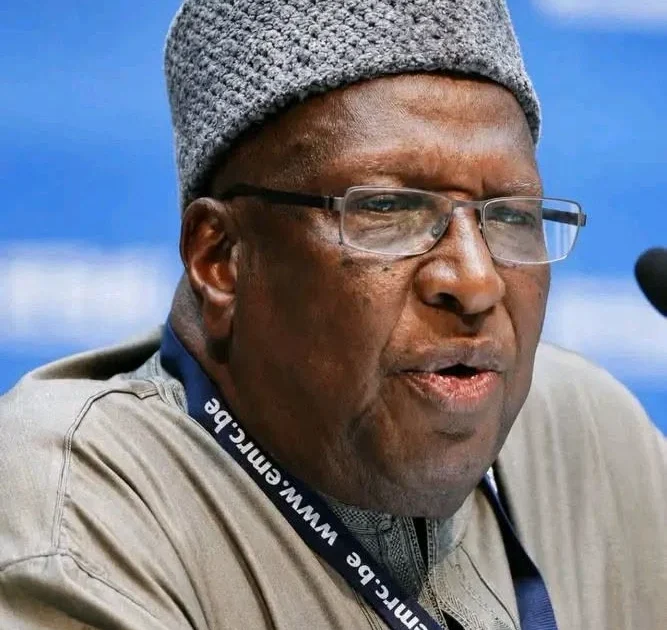
The political and economic landscape of Nigeria was thrown into mourning following the death of Alhaji Bamanga Tukur, the former Governor of the defunct Gongola State, former Minister of Industries, and one-time National Chairman of the Peoples Democratic Party (PDP). Tukur, who held the esteemed traditional title of Tafidan Adamawa, passed away in Abuja on a Saturday, drawing an outpouring of tributes from political leaders, business moguls, and statesmen across the country.
Among the earliest and most prominent voices to express grief was the Chairman of the Northern States Governors Forum (NSGF) and Governor of Gombe State, Muhammadu Inuwa Yahaya. Speaking on behalf of his gubernatorial colleagues across the nineteen northern states, Yahaya described the demise of the elder statesman as an irreplaceable loss to the entire country. In an official condolence message disseminated by his Director-General of Press Affairs, Ismaila Misilli, the NSGF chairman underscored Tukur’s monumental contributions to public administration, industrialization, and democratic governance over a career spanning more than six decades.
The death of the Tafidan Adamawa marks the closing chapter in the life of a titan whose footprint remains indelible across multiple sectors of Nigeria’s national development, ranging from maritime administration to continental business leadership and partisan politics.
A Storied Life and Six Decades of Public Service
Alhaji Bamanga Tukur’s journey through Nigeria’s public and private sectors is a testament to resilience, administrative acumen, and a relentless drive for institutional development. Born into a generation of nationalist leaders who midwifed Nigeria’s independence, Tukur dedicated his active life to building the structural foundations of the nascent nation. His professional trajectory covered vital pillars of the Nigerian economy, most notably his tenure as the Chief Executive Officer of the Nigerian Ports Authority (NPA).
During his time at the helm of the NPA, Tukur was credited with modernizing port operations, enhancing trade facilitation, and positioning the maritime sector as a critical revenue earner for the federal government. His leadership style combined corporate governance principles with public sector responsibility, earning him recognition as a visionary manager of state-owned enterprises.
Beyond maritime logistics, Tukur’s administrative prowess was tested in the political arena when he assumed the mantle of leadership as the Governor of the old Gongola State—a vast territory that presently encompasses Adamawa and Taraba states. Although his tenure in the Second Republic was truncated by the military intervention of December 1983, his administration laid down infrastructural and socio-economic blueprints that outlived the geopolitical entity of Gongola State.
His transition into federal governance saw him appointed as the Minister of Industries during a crucial phase of Nigeria’s economic restructuring. In this capacity, he championed policies aimed at boosting domestic manufacturing, encouraging indigenous entrepreneurship, and integrating local industries into regional supply chains.
Chronology of Key Milestones in Bamanga Tukur’s Life
To understand the breadth of Alhaji Bamanga Tukur’s impact, a chronological review of his major appointments and achievements provides a clear picture of a multifaceted career:
- Early Beginnings and Education: Tukur acquired foundational education locally before pursuing higher studies both within Nigeria and internationally, equipping himself with degrees in public administration and business management that would anchor his future endeavors.
- The Nigerian Ports Authority Era: Serving as the General Manager and Chief Executive Officer of the NPA, he revolutionized cargo handling, port expansion, and administrative efficiency during Nigeria’s pre-oil boom and oil-boom economic expansions.
- Gubernatorial Tenure (1979–1983): Elected as the Governor of Gongola State on the platform of the National Party of Nigeria (NPN) during the Second Nigerian Republic, focusing on rural integration, education, and agricultural development.
- Ministerial Appointment: Appointed as the Federal Minister of Industries, where he spearheaded initiatives to diversify the industrial base and promote import-substitution strategies.
- Continental Business Leadership: Venturing into the international arena, Tukur played a pivotal role in the establishment and leadership of the Africa Business Roundtable and the NEPAD Business Group, advocating for private sector-led growth across the African continent.
- National Chairmanship of the PDP (2012–2014): Assuming leadership of Nigeria’s then-ruling party during a turbulent period of internal realignment, navigating complex factional dynamics and party reform agendas.
Champion of African Economic Integration and Continental Commerce
While Tukur’s name resonates strongly within Nigerian domestic politics, his influence transcended national borders. He was a passionate advocate for intra-African trade and private-sector empowerment long before continental free trade frameworks became mainstream policy topics.
As a driving force behind the Africa Business Roundtable, Tukur consistently argued that African economic independence could only be achieved if the continent’s private sector was empowered to drive cross-border investments. He worked closely with regional and international bodies, including the African Union and the United Nations Economic Commission for Africa, to promote public-private partnerships. His leadership of the NEPAD Business Group further solidified his reputation as a statesman who understood that economic diplomacy is inseparable from political stability.
Governor Inuwa Yahaya specifically highlighted these continental achievements, noting that Tukur’s visionary approach to business and economic development helped elevate the profile of Nigerian entrepreneurs on the global stage. Yahaya observed that Tukur’s international networks and business acumen established him as a bridge-builder between African policymakers and global investors.
Political Leadership and the PDP Years
In the twilight of his active public life, Bamanga Tukur stepped into the high-stakes arena of partisan politics as the National Chairman of the Peoples Democratic Party (PDP) from 2012 to 2014. Taking over the leadership of Africa’s self-proclaimed largest political party at a time of profound internal friction, Tukur attempted to enforce internal party discipline and implement structural reforms under his catchphrase of "Agenda for Transformation."
His tenure at Wadata Plaza, the PDP national headquarters, was marked by intense political maneuvering, high-profile defections, and ideological struggles within the ruling party. Despite the immense pressures and the eventual truncation of his tenure following a wave of political realignments that saw several governors and legislators defect to the opposition All Progressives Congress (APC), Tukur remained a stoic figure. Associates and political analysts noted that even amidst political turbulence, he maintained his trademark composure and unwavering loyalty to the principles of constitutional democracy.
Official Reactions and Tributes from Across the Nation
The passing of the Tafidan Adamawa triggered a cascade of condolences from political and traditional institutions across Nigeria. The Northern States Governors Forum, speaking through Governor Yahaya, captured the mood of the region by describing Tukur as an elder statesman whose wisdom and counsel were indispensable during times of national crisis.
"Alhaji Bamanga Tukur lived a long and impactful life, serving Nigeria in several critical capacities and contributing significantly to the growth of our economy, institutions, and political development," Governor Yahaya stated. "His wealth of experience, wisdom, and commitment to public service will be greatly missed. His death is a great loss to the North and the entire nation."
Beyond the NSGF, leaders from various political parties, traditional rulers led by the Lamido of Adamawa, and captains of industry expressed their sorrow. Many recalled his philanthropic endeavors, his mentorship of younger politicians, and his open-door policy that allowed individuals from diverse backgrounds to seek his guidance.
The government and people of Adamawa State, in particular, entered a state of mourning for a son of the soil who brought national and international honor to the state. Condolence registers were opened in Yola, Abuja, and other major cities, drawing dignitaries who came to pay their last respects.
Broader Impact and Implications of Tukur’s Passing
The exit of Bamanga Tukur signifies the gradual depletion of Nigeria’s post-independence generation of nation-builders—leaders who transitioned from the civil service to elective politics and international diplomacy. Figures of Tukur’s generation carried a distinct institutional memory of Nigeria’s foundational years, marked by efforts to forge national unity out of diverse ethnic and regional constituents.
Analysts observing the political climate note that the death of such elder statesmen leaves a vacuum in institutional mentorship. In an era where Nigerian politics is frequently characterized by hyper-partisanship and shifting loyalties, the bridging role played by veterans like Tukur—who could command respect across political divides—becomes increasingly scarce.
Furthermore, Tukur’s legacy in economic diplomacy serves as a blueprint for contemporary African leaders grappling with regional integration. His pioneering work with the Africa Business Roundtable laid groundwork that current trade ministers and economic strategists continue to build upon through instruments like the African Continental Free Trade Area (AfCFTA) agreement.
Conclusion: A Legacy Etched in History
As funeral rites and prayers are offered for the repose of his soul, the life of Alhaji Bamanga Tukur stands as a monumental chapter in Nigeria’s modern history. From the bustling wharves of the Nigerian Ports Authority to the legislative halls of Gongola State, the ministerial chambers in Lagos and Abuja, the boardrooms of continental business networks, and the high-tension headquarters of the PDP, Tukur left an indelible mark.
The Chairman of the Northern States Governors Forum, on behalf of his colleagues, prayed to Almighty Allah to forgive the late elder statesman’s shortcomings, reward his lifetime of dedicated service to humanity, and grant him Aljannatul Firdaus. As Nigeria bids farewell to the Tafidan Adamawa, his contributions to public administration, economic development, and political evolution will continue to inspire future generations of public servants dedicated to the growth and prosperity of the nation.