The geopolitical and economic landscape of Southeast Asia is undergoing a profound transformation as governments across the region reconsider nuclear energy as a cornerstone of their future power grids. Driven by an urgent need to decarbonize, accommodate the rapid expansion of energy-intensive data centers, and provide stable power for a growing fleet of electric vehicles, the region is emerging as a new frontier for nuclear development. While no Southeast Asian nation currently operates a commercial nuclear power plant, a flurry of diplomatic agreements and policy revisions suggests that the era of regional nuclear hesitation, which largely followed the 2011 Fukushima disaster, is coming to an end.
A Shifting Energy Paradigm
The primary catalyst for this shift is the dual pressure of energy security and climate commitments. Since 2015, electricity generation in Southeast Asia has surged by approximately 60%, a growth trajectory that has been predominantly serviced by coal. According to the International Energy Agency (IEA), the share of coal in the regional energy mix has risen from 37% to 47% during this period. This reliance on fossil fuels creates a precarious situation, as the region grapples with the volatility of global fuel prices and the long-term necessity of achieving net-zero emissions by 2050 or 2060.
Geopolitical instability—ranging from the ongoing conflict in Ukraine to tensions in the Middle East—has further underscored the vulnerability of countries dependent on imported hydrocarbons. In this context, nuclear power is increasingly viewed not just as a green energy source, but as a strategic hedge against energy shocks. Analysts from the S. Rajaratnam School of International Studies (RSIS) at Nanyang Technological University highlight that the "energy trilemma"—balancing security, affordability, and sustainability—is forcing policymakers to re-evaluate the nuclear option with renewed urgency.
Chronology of Renewed Ambitions
The resurgence of interest is evidenced by a series of high-level government maneuvers and strategic partnerships initiated throughout the past year:
- September 8, 2024: Vietnam’s state-owned energy giant, Petrovietnam, formalized an agreement with South Korea’s KEPCO to deepen collaboration on the Ninh Thuan 2 nuclear project, signaling a revival of the country’s long-stalled nuclear roadmap.
- September 14, 2024: The Singaporean government announced it is studying nuclear energy and Small Modular Reactors (SMRs) with an "open mind." While no formal commitment has been made, this marks a significant shift in stance for a country that previously viewed the technology as unsuitable for its dense urban environment.
- Ongoing (2024-2035): Vietnam has set a target to bring its Ninh Thuan plants into operation by 2035.
- 2032 Targets: Both Indonesia and the Philippines have established 2032 as the baseline year for bringing their first nuclear units online, with Indonesia targeting an initial 500 megawatts (MW) and the Philippines aiming for 1,200 MW.
- 2037 Outlook: Thailand’s draft power development plan proposes the integration of its first SMR unit by 2037, reflecting a long-term commitment to integrating advanced nuclear technology.
The Rise of Small Modular Reactors
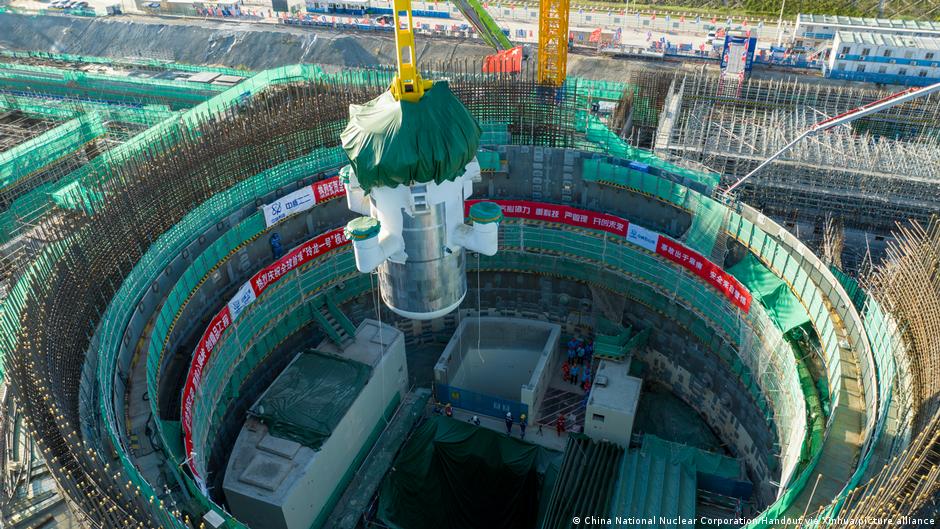
The technological landscape has changed significantly since the 2011 Fukushima disaster, which initially halted development across the region. The emergence of Small Modular Reactors (SMRs) has been a game-changer for Southeast Asian energy planners. Unlike traditional, large-scale light-water reactors that require massive upfront capital, lengthy construction timelines, and immense grid capacity, SMRs offer a more flexible approach.
These smaller units can be constructed in stages, allowing countries to scale their nuclear capacity in line with economic growth and grid infrastructure improvements. Experts, including Jie-Sheng Tan-Soo of the Lee Kuan Yew School of Public Policy, note that SMRs are particularly well-suited for the regional context, where grids may be fragmented or limited in size. By reducing the physical and financial footprint of nuclear facilities, SMRs lower the barrier to entry for emerging economies.
However, the economic promise of SMRs remains largely theoretical. While proponents argue that factory-based mass production will eventually drive down costs, most designs are still in the early stages of commercial deployment. Consequently, the promised "economies of scale" have yet to be proven at a level that would provide the cost certainty governments require for multi-billion-dollar infrastructure projects.
The Data Center Dilemma
The rapid digitization of Southeast Asia’s economy has placed an unprecedented strain on national power grids. The expansion of cloud computing and the integration of Artificial Intelligence (AI) have triggered a boom in data center construction, particularly in hubs like Singapore and Johor, Malaysia, which collectively account for over 70% of the region’s data-center capacity.
Data centers are notoriously power-hungry, requiring a constant, uninterrupted supply of high-voltage electricity—a "baseload" power profile that is difficult for intermittent renewables like solar and wind to satisfy without expensive battery storage. Nuclear energy, with its high capacity factor and low carbon footprint, is increasingly identified by technology firms and governments as the most viable way to power the digital economy without sacrificing climate goals.
Institutional Challenges and Governance
Despite the political momentum, the path to a nuclear-powered Southeast Asia is fraught with institutional and technical hurdles. The successful deployment of nuclear energy requires more than just reactors; it necessitates a robust regulatory framework, a highly skilled workforce, and comprehensive waste management strategies—none of which can be established overnight.
The region’s geography also presents a formidable challenge. Much of Southeast Asia lies within the "Ring of Fire," an area prone to seismic activity, volcanic eruptions, and tsunamis. This requires stringent site-selection processes and advanced engineering standards that account for extreme environmental risks. Furthermore, there is the issue of public perception. While the Philippines has seen high public support for nuclear energy—with surveys indicating over 70% approval—other nations, such as Indonesia, have reported significant public skepticism, with nearly 78% of respondents in recent energy transition studies citing nuclear as their least preferred option.
"Building the ecosystem is as difficult as building the plant," notes Julius Cesar Trajano, a research fellow at the Centre for Non-Traditional Security Studies. Governments must create independent nuclear regulatory bodies that can withstand political pressure and maintain public trust over decades. For countries attempting to go nuclear for the first time, this requires a generational investment in human capital and institutional integrity.
Broader Implications and Future Outlook
The transition toward nuclear power is not a monolithic regional movement but rather a collection of national strategies reflecting diverse priorities. While Vietnam is pursuing a mix of conventional and modular plants, Indonesia and Thailand are leaning toward SMR-led strategies, and Singapore remains in the research and evaluation phase.
The implications of this shift are far-reaching. If successful, the deployment of nuclear energy would allow Southeast Asian nations to decouple their economic growth from fossil fuel imports, thereby improving long-term trade balances and energy sovereignty. However, the risk of failure is equally high; improper management of nuclear assets or a failure to address safety concerns could have catastrophic regional consequences.
As the decade progresses, the success of these plans will depend on three key factors: the ability of governments to secure financing for capital-intensive projects, the maturation of SMR technology to meet commercial cost expectations, and the creation of regional cooperation frameworks to share best practices in nuclear safety and waste disposal. While the political will is stronger today than it has been in decades, the transition from aspiration to operation remains an arduous, multi-decadal challenge that will define the region’s energy future for the remainder of the 21st century.