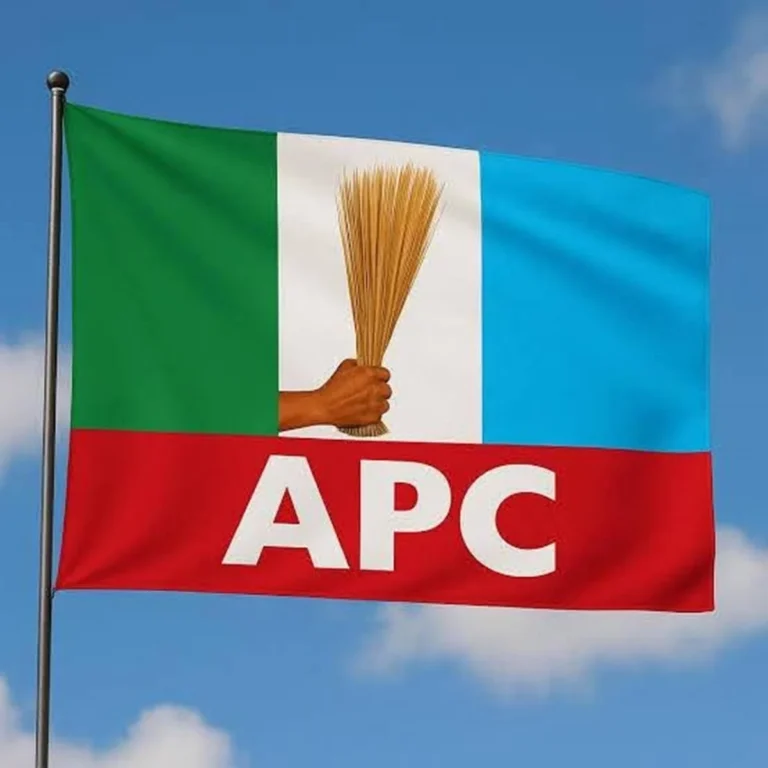
The political landscape in Oyo State has been thrown into turmoil following a scathing critique by the All Progressives Congress (APC) directed at the Allied Peoples Movement (APM) over a high-profile musical concert held on Monday at the Lekan Salami Stadium, popularly known as Adamasingba Stadium, in Ibadan. The event, which served as a massive political gathering for the Boye Nation and JAF Movement Mega Concert, saw Governor Seyi Makinde welcome thousands of defectors—many reportedly from the opposition APC—into the fold of the APM in a calculated strategic move ahead of the 2027 general elections.
However, the festivities have ignited a fierce political storm. The Oyo State chapter of the APC has vehemently denounced the event, labeling it an egregious "waste of public funds" and questioning the propriety of utilizing a state-owned sporting facility for explicit political maneuvering. The opposition party’s grievances extend far beyond the concert itself, touching upon deep-seated controversies regarding the financial transparency of the stadium’s multi-billion-naira rehabilitation, the standard of sports infrastructure in the state, and the recent continental heartbreak experienced by the state’s darling football club, Shooting Stars Sports Club (3SC).
Allegations of Coercion and Misuse of Public Resources
In a strongly worded official statement released to journalists in Ibadan on Monday, the Oyo State APC Publicity Secretary, Olawale Sadare, did not mince words. He alleged that the staging of the political concert was accompanied by high-handed administrative tactics, including the forceful shutdown of prominent commercial markets across Ibadan. According to the opposition, local traders, commercial motorists, and ordinary residents were subjected to intense pressure and intimidation to abandon their daily livelihoods and fill the stands of the Adamasingba Stadium to create a false impression of mass popularity for the ruling administration’s political realignment.
Furthermore, the APC asserted that substantial public resources were deployed to underwrite the costs of the musical extravaganza. While the opposition party did not present explicit financial audits or documentary evidence to substantiate the exact quantum of public funds allegedly diverted into the concert, they argued that the optics of hosting a lavish Fuji music concert on a weekday against the backdrop of pressing economic hardships facing ordinary citizens was deeply insensitive.
"At a time questions were being asked on what Gov. Makinde did on Adamasingba stadium to justify the whopping N5.5 billion cost of rehabilitation in view of the fact that the Confederation of African Football recently rejected the facility for its matches, the same stadium was turned into a campaign ground where APM members converged to enjoy Fuji music," Sadare stated.
The Adamasingba Stadium Rehabilitation Controversy
At the core of the APC’s renewed offensive is the contentious N5.5 billion rehabilitation of the Lekan Salami Stadium. Initiated under the administration of Governor Seyi Makinde, the multi-million-naira upgrade was heavily publicized as a monumental stride toward transforming Ibadan into a premier hub for modern sporting events, capable of hosting both national and international fixtures.
However, the integrity of the project has come under intense public scrutiny following recent developments concerning the Confederation of African Football (CAF). The controversy deepened when Shooting Stars Sports Club (3SC), Oyo State’s historical and most revered football flagbearer, qualified for continental engagements in the CAF Confederation Cup. Fans and stakeholders anticipated that the team would play its home fixtures on familiar turf at the newly renovated Adamasingba Stadium.
Instead, the club was forced to relocate its home matches out of the state, ultimately selecting the MKO Abiola Sports Complex in Abeokuta, Ogun State, as its alternative venue. While independent checks indicate that Adamasingba was simply omitted from the elite list of approved Nigerian stadiums cleared by CAF for the specific tournament rather than being uniquely and punitively banned, the distinction has done little to assuage the anger of local soccer enthusiasts.
The early exit of 3SC from the ongoing Confederation Cup has compounded the despondency of the state’s sporting community. The APC capitalized on this collective disappointment, arguing that hosting a political concert in a stadium deemed substandard by Africa’s governing football body is a direct insult to the sensibilities of Oyo State residents.
"Unfortunately, this happened when several thousands of soccer enthusiasts were mourning the early exit of their darling Shooting Stars Sports Club from the ongoing Confederation Cup," Sadare noted, emphasizing the poor timing of the political jamboree.
Demands for Accountability and Forensic Auditing
The opposition party has consistently maintained that the reported N5.5 billion expenditure on the stadium renovation represents poor value for money and potential fiscal misappropriation. In previous statements, the APC called for an independent, transparent forensic investigation into the contract awards, material sourcing, and execution timelines associated with the stadium upgrade.
The party reiterated these demands in the wake of the APM concert, arguing that the current administration’s refusal to address transparency concerns amounts to systemic disregard for public accountability.
"Rather than refund the N5.5 billion misappropriated in the name of Adamasingba stadium rehabilitation and re-award the project to a competent contractor in a transparent manner, Gov. Makinde continued to rub insults on the injury of the people," the APC statement charged.
The opposition maintains that public infrastructure funded by taxpayers’ money must strictly serve the public good rather than being repurposed as exclusive staging grounds for partisan political realignment.
Political Context and the Road to 2027
Monday’s mega-concert, officially styled as the Boye Nation/JAF Movement Mega Concert, was more than just a musical gathering; it served as a high-stakes political theater designed to showcase strength and preemptively realign political alliances ahead of the 2027 general elections. Governor Seyi Makinde, who is serving his second and final term in office, has been navigating complex political dynamics within the regional and national spheres.
The mass defection of political actors from the APC to the APM—a platform increasingly viewed as a strategic vehicle for the governor’s broader political network—underscores the fluid and competitive nature of Oyo State politics. Analysts observe that political realignments of this magnitude often trigger aggressive pushback from marginalized opposition structures, utilizing every available public policy misstep, infrastructure debate, and governance challenge to build narrative momentum.
By framing the stadium event as an inappropriate use of public assets amid infrastructural shortcomings, the APC aims to rally public sentiment against the ruling government’s spending priorities. The strategy seeks to connect bread-and-butter economic anxieties with tangible symbols of governance—such as the Adamasingba Stadium—to question the prudence of the administration’s capital expenditure.
Broader Implications for Sports Infrastructure in Nigeria
Beyond the immediate partisan crossfire, the dispute over the Lekan Salami Stadium highlights a recurring challenge within Nigeria’s sports administration: the widening gap between multi-billion-naira state-funded facility upgrades and actual international certification standards. Across the country, several state governments have invested heavily in stadium renovations, only to face strict oversight and subsequent non-approval from bodies like CAF and FIFA due to deficiencies in specialized pitch maintenance, floodlighting, media facilities, and safety infrastructure.
Sports administrators and civil society groups have frequently called for a more professionalized approach to stadium management in Nigeria, arguing that political patronage and ad-hoc maintenance cultures often undermine long-term sustainability. When public sports facilities are diverted for non-sporting events—such as mega political rallies and commercial concerts—the integrity of playing surfaces and ancillary facilities often suffers accelerated wear and tear, shortening their operational lifespans and frustrating efforts to attract lucrative international fixtures.
As the political temperature in Oyo State continues to rise with an eye on 2027, the debate surrounding the Adamasingba Stadium is unlikely to abate soon. While the ruling administration and its allies view the successful execution of high-profile political events as evidence of grassroots mobilization and organizational strength, the opposition remains determined to leverage fiscal and infrastructural controversies to demand institutional accountability.