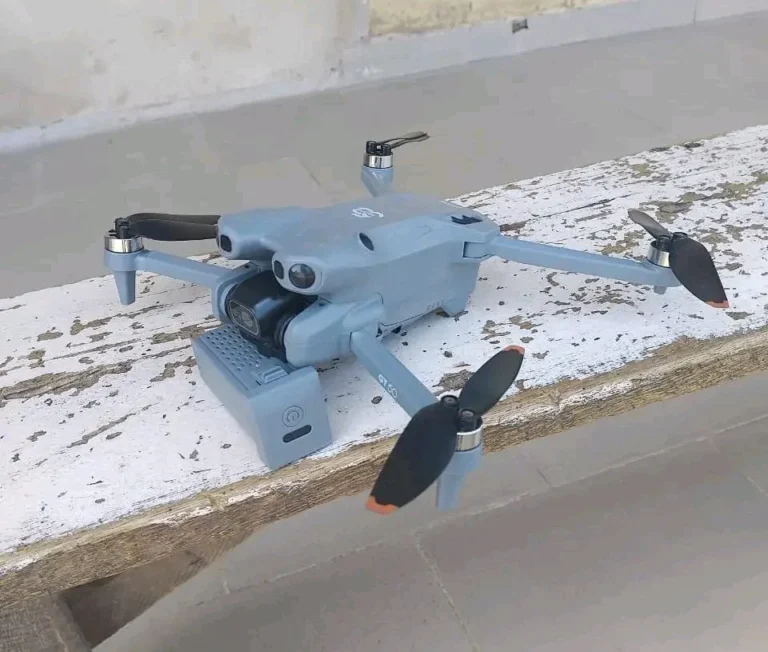
The security landscape along Nigeria’s northern corridor experienced a significant shift on September 14, 2026, when the Kano State Police Command apprehended a 35-year-old suspected kidnapping kingpin and cattle rustler, Habibu Bello. Operating across the porous borders connecting Kano, Kaduna, and Katsina states, Bello’s arrest represents a major breakthrough in ongoing regional clearance operations designed to dismantle organized criminal syndicates. The coordinated intelligence-led raid not only resulted in Bello’s capture in Makarfi Local Government Area but also led to the subsequent apprehension of an alleged accomplice and the baffling recovery of a high-end cine-camera drone in a separate sweep. As law enforcement authorities intensify their efforts to trace the syndicate’s broader network and weaponry cache, the operation underscores the escalating threat of technologically equipped criminal elements operating within Nigeria’s rural borderlands.
Chronology of the Arrest and Investigation
The operation that led to the capture of Habibu Bello began weeks prior through meticulous intelligence gathering by the Kano State Police Command’s Anti-Kidnapping Squad. Tracking criminal movements along the notorious Kano-Kaduna and Kano-Katsina border corridors, operatives zeroed in on Bello, a resident of Kunkumi Town in Makarfi Local Government Area, Kaduna State.
On September 14, 2026, at approximately 4:48 p.m., tactical teams executed a targeted raid, successfully apprehending Bello without immediate civilian casualties. Initial interrogations quickly yielded actionable intelligence, enabling investigators to track down and arrest another suspected member of the syndicate, identified as Mudam, hailing from Kwanar Dangora.
During preliminary police questioning, Bello reportedly confessed to active participation in multiple high-profile abductions and coordinated cattle rustling operations across the three northern states. Among the confessed crimes was the brazen kidnapping of Hajiya Binta of Kwanar Dangora, an incident that allegedly yielded a staggering 20 million naira ransom payout. Furthermore, investigators tied Bello to a violent household raid in Gwarzo Local Government Area within Kano State, cementing his status as a high-value target for regional security forces.
Recovery of the Cine-Camera Drone
Adding an unexpected dimension to the ongoing security sweeps, police operatives stumbled upon a high-tech surveillance asset during a subsequent clearance operation on September 17, 2026. At around 2:00 p.m., tactical units patrolling Hawan Tarau Village in Bebeji Local Government Area discovered a cine-camera drone, specifically identified as a GT 50 model, abandoned on the ground.
The recovery of the aerial device has raised significant operational concerns among security analysts and law enforcement officials alike. Drones of this caliber are typically utilized for high-resolution aerial cinematography or sophisticated surveillance. Security agencies are currently investigating whether the criminal syndicate used the equipment for reconnaissance—scouting vulnerable rural communities, tracking security checkpoints, or monitoring target residences prior to launching attacks. Efforts to trace the origin, serial number, and original owner of the drone remain a top priority for forensic investigators.
Broader Context of Regional Insecurity
The criminal activities of Bello’s syndicate reflect the complex security challenges plaguing the northwestern region of Nigeria. The expanse of territory encompassing Kano, Kaduna, Katsina, and Zamfara states has long been plagued by interconnected criminal networks engaging in mass kidnapping, highway robbery, and rural banditry. These syndicates frequently exploit the dense vegetation, difficult terrain, and porous interstate boundaries to evade law enforcement pursuit.

Cattle rustling has traditionally served as both an economic engine and a primary financing mechanism for these armed groups, often overlapping with kidnapping-for-ransom enterprises. The ability of syndicates to cross state lines seamlessly presents a severe challenge to localized policing, necessitating the type of aggressive, cross-jurisdictional collaboration emphasized by the Kano State Police Command. The integration of modern technology, such as the recovered cine-camera drone, highlights an alarming evolution in the tactical capabilities of rural criminal organizations, moving beyond traditional weaponry to incorporate surveillance assets.
Official Responses and Police Strategy
Reacting to the successful operations, the Kano State Commissioner of Police, Ibrahim Bakori, lauded the gallantry and professionalism of the Anti-Kidnapping Squad and tactical clearance teams. Commissioner Bakori reiterated the command’s unyielding resolve to deny criminal elements any safe haven within Kano State or along its borders.
"The Command will sustain aggressive clearance operations in collaboration with neighboring commands to deny criminal elements any safe haven," Bakori stated, emphasizing the necessity of inter-agency and interstate cooperation in combating transnational regional crime.
Recognizing that law enforcement alone cannot completely eradicate sophisticated criminal syndicates, the Commissioner issued a passionate appeal to local residents. He urged community members to remain vigilant, maintain open lines of communication with security personnel, and promptly report suspicious movements, unfamiliar visitors, or unusual activities to the nearest police station or through the command’s dedicated emergency hotlines. Public cooperation remains a critical pillar in sustaining the momentum of ongoing counter-crime initiatives.
Comparative Regional Incidents
The Kano arrest occurs against a backdrop of intensified nationwide police operations targeting kidnapping threats. In a parallel development occurring simultaneously in the southern part of the country, the Oyo State Police Command successfully arrested a suspect linked to a calculated kidnap-and-kill threat targeting a 50-year-old resident of Seni Salla Village in Saki, alongside members of his family. That intervention, sparked by a formal citizen report and rapid intelligence-led policing, demonstrates a nationwide pattern of heightened police responsiveness to extortion-based kidnapping plots.
Fact-Based Analysis of Implications
The apprehension of Habibu Bello and the concurrent seizure of the GT 50 cine-camera drone carry profound implications for regional security dynamics in northern Nigeria.
- Disruption of Financial Pipelines: The confession regarding the 20 million naira ransom tied to the abduction of Hajiya Binta underscores the lucrative nature of rural kidnapping. By capturing key actors involved in high-yield operations, law enforcement disrupts the financial lifelines that sustain these criminal networks, potentially starving them of funds required for logistics and arms procurement.
- Technological Adaptation by Criminals: The recovery of an advanced aerial drone signals an escalating sophistication among non-state armed groups. While previously reliant on basic ground informants and mobile phones, criminal syndicates are increasingly exploring technological force multipliers. Law enforcement agencies must similarly upgrade their counter-surveillance and electronic warfare capabilities to neutralize these emerging threats.
- Interstate Synergy: Criminals frequently exploit jurisdictional boundaries, assuming that local police forces will halt pursuits at state lines. The active collaboration between the Kano, Kaduna, and Katsina police commands demonstrates an evolving defensive posture that closes these administrative loopholes, forcing criminal elements into a defensive retreat.
- Community Trust and Intelligence Gathering: The success of the Kano operation, rooted fundamentally in "credible intelligence," validates the police leadership’s push for community policing. Rebuilding trust between rural populations and security agencies remains the most effective deterrent against the infiltration of criminal elements into vulnerable agrarian communities.
As investigations continue, the Kano State Police Command has assured the public that all remaining members of the syndicate will be hunted down and brought to justice, signaling a persistent, uncompromising approach to restoring lasting peace and security across the region.