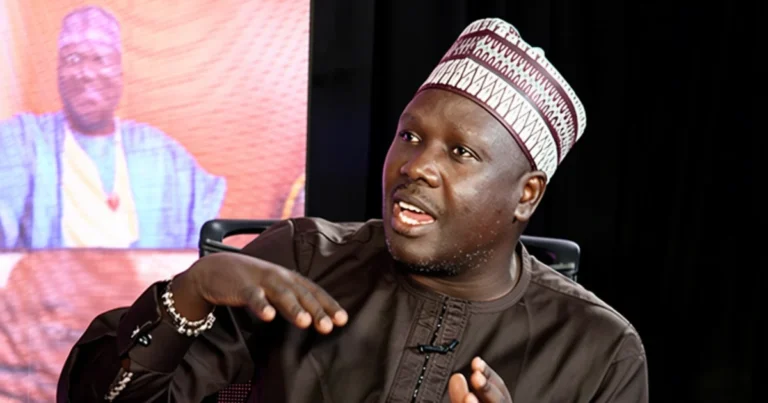
A significant revelation has emerged from a presidential aide, Daniel Bwala, who claims that a profound rivalry between the Nigerian Army and the Nigerian Air Force during the tenure of former President Muhammadu Buhari led to operational failures, specifically the denial of crucial air cover to ground troops. Bwala made these assertions during an appearance on The Link Up Podcast, a panel discussion hosted by EchoRoom and broadcast on Friday, shedding light on what he described as a critical breakdown in inter-service cooperation that potentially jeopardized military operations and troop safety.
Bwala detailed that a "disagreement" between the then-Chief of Air Staff and the Army leadership created a chasm that resulted in requests for air support being sometimes ignored. This operational friction, he stated, has since been resolved under the current administration of President Bola Ahmed Tinubu, where he noted a distinct improvement in "coordination or cooperation." The assertion brings to the forefront long-standing concerns about inter-service rivalry within the Nigerian military, an issue that military analysts and security experts have often flagged as a potential impediment to effective counter-insurgency operations. The importance of air cover in modern warfare, particularly in asymmetric conflicts like the one Nigeria faces against Boko Haram and the Islamic State’s West Africa Province (ISWAP), cannot be overstated. Air assets provide vital intelligence, surveillance, and reconnaissance (ISR), close air support (CAS) for ground troops, rapid logistics, and medical evacuation, all of which are critical for operational success and minimizing casualties.
Chronology of Allegations and Context
Daniel Bwala’s comments specifically refer to the period of the Muhammadu Buhari presidency, which spanned from May 2015 to May 2023. During this time, Nigeria’s security forces were heavily engaged in a protracted battle against various non-state armed groups, primarily Boko Haram and its splinter faction, ISWAP, predominantly in the North-East region. The conflict saw intense ground operations, often in challenging terrains like the Sambisa Forest and the Lake Chad Basin. The effectiveness of these operations frequently depended on seamless integration of air and ground assets.
The Nigerian military has, for decades, grappled with issues of inter-service rivalry, a phenomenon not unique to Nigeria but often exacerbated by resource constraints and command structures. While formal joint operations have been mandated and structures like the Defence Headquarters exist to foster synergy, informal rivalries can persist, sometimes manifesting in operational inefficiencies. Previous reports from various local and international bodies, including human rights organizations and security think tanks, have occasionally highlighted challenges within the Nigerian military’s command and control, although specific instances of intentional denial of air cover due to rivalry are rarely publicly confirmed by official sources.
Bwala’s statement suggests a direct impact on operational outcomes, implying that troops on the ground were left vulnerable due to a lack of aerial protection. This period saw several significant military setbacks and triumphs. For instance, Operation Lafiya Dole (later renamed Hadin Kai) was the overarching military effort against insurgency. Throughout its various phases, the Nigerian Air Force (NAF) played a critical role, conducting thousands of sorties, including precision airstrikes against terrorist enclaves, logistical support missions, and ISR operations. If Bwala’s claims hold true, instances of air support denial would represent a severe breach of operational protocol and potentially contribute to heightened casualties among ground troops, undermining morale and operational momentum.
Under the current administration, Bwala noted a perceived improvement in inter-service coordination. This could be attributed to a renewed emphasis on synergy by the current Chief of Defence Staff, General Christopher Musa, and the respective service chiefs, who have often publicly stressed the importance of a unified approach to national security challenges. Such improvements would be crucial for the effectiveness of ongoing operations and for rebuilding trust between the services.
Persistent Concerns: Military Infiltration and Foreign Interference
Beyond the issue of inter-service rivalry, Bwala also addressed the contentious question of whether the military has been infiltrated by elements sympathetic to terrorist groups. While dismissing suggestions that soldiers actively "guard terrorists during attacks" as mere "conjecture" without concrete live cases, he conceded that "isolated cases of infiltration" could not be entirely ruled out. He acknowledged that "one or two agents" could exist within the military or police, citing past arrests of security personnel, including a senior police officer alongside Chinese nationals, involved in illicit activities. This acknowledgement aligns with broader concerns about corruption and compromise within Nigeria’s security architecture, which security experts have often highlighted as a factor undermining the fight against insurgency and crime. The infiltration of security agencies by criminal or terrorist elements is a global challenge, exemplified by cases like Edward Snowden, a contractor to US national security, whom Bwala cited as a parallel, underscoring the universal vulnerability to insider threats. Bwala concluded this point by stating that "there are measures we’re taking and we don’t want people to know," indicating sensitive ongoing efforts to address internal security vulnerabilities.
Further complicating Nigeria’s security landscape, Bwala linked broader security concerns to alleged foreign interference, positing an "international dimension" to Nigeria’s insurgency. He specifically referenced "pro-Russian demonstrations" in parts of northern Nigeria following a decision by the Federal Government, suggesting a connection between geopolitical shifts and local unrest. This claim introduces a layer of complexity, hinting at external actors potentially exploiting or exacerbating internal divisions and conflicts for their own strategic interests. The Sahel region, where Nigeria is a dominant power, has indeed become a theater for competing international influences, with Russia notably increasing its footprint in several African countries.
In a more startling claim, Bwala also referenced an unverified assertion by a member of the United States Congress, Scott Perry, who allegedly questioned the CIA director during a congressional hearing, suggesting that "their congressional finding suggests that the CIA was funding Boko Haram, ISIS." Bwala was careful to qualify this as an unverified claim from a non-Nigerian source, stating, "I’m not saying he’s right or he’s wrong. But what I’m saying is that an event like that has occurred, and as a country we cannot hear that and say you are a liar." This statement, while carefully worded, reflects a pervasive suspicion in some quarters regarding the role of foreign powers in African conflicts, often fueled by historical precedents and complex geopolitical dynamics. Such allegations, whether substantiated or not, contribute to narratives that can complicate international partnerships and public trust in the global fight against terrorism.
The Military’s Stance on Inter-Service Synergy and Integrity
While no direct official response from the Nigerian military to Daniel Bwala’s specific claims of past air cover denial has been issued, the military’s current leadership consistently emphasizes the importance of inter-service synergy and a joint operational approach. Since the inception of the current administration, the Chief of Defence Staff and the service chiefs have frequently reiterated their commitment to fostering greater cooperation and intelligence sharing among the Army, Air Force, and Navy. This commitment is often articulated through new operational doctrines, joint training exercises, and integrated command structures designed to ensure a unified front against internal and external threats. The recent establishment of joint task forces and operational commands further exemplifies this renewed focus on synergy, aiming to eliminate the kind of operational gaps Bwala alluded to from the past.
Regarding the issue of infiltration, the Nigerian military and other security agencies maintain internal security departments and intelligence units dedicated to monitoring and rooting out compromised personnel. The military code of conduct explicitly prohibits collaboration with enemy forces or criminal elements, with severe penalties for violations. Arrests and court-martials of personnel implicated in such acts, though not always widely publicized, underscore the military’s ongoing efforts to preserve its integrity and operational effectiveness. These efforts, however, are often conducted with a degree of discretion to protect sensitive intelligence and ongoing investigations, which aligns with Bwala’s comment about measures being taken that "we don’t want people to know."
Economic Performance Under the Tinubu Administration
Shifting focus to governance, Bwala also offered a robust endorsement of the Tinubu administration’s performance, particularly highlighting improvements in foreign reserves and government revenue. He asserted that President Tinubu "has done more than enough to earn the trust of Nigerians," while also emphasizing that Nigerians should ultimately be allowed to decide on the President’s suitability for a second term.
This assessment comes amidst significant economic reforms initiated by the Tinubu administration, notably the removal of fuel subsidies and the unification of exchange rates. While these policies have led to short-term economic hardship for many Nigerians, they were implemented with the long-term goal of stabilizing the economy, attracting foreign investment, and improving government revenue generation. Data from the Central Bank of Nigeria (CBN) and the National Bureau of Statistics (NBS) provide some context to Bwala’s claims. For instance, Nigeria’s foreign reserves, which had seen declines in previous years, have shown periods of accretion under the current administration, though subject to fluctuations influenced by crude oil prices and CBN interventions. Revenue generation has also been a key focus, with efforts to broaden the tax base and improve efficiency in collection. Initial reports indicate some positive trends in non-oil revenue, though the overall impact on the national economy and the lives of ordinary citizens is a subject of ongoing debate and analysis. The administration’s efforts to boost investor confidence and attract foreign direct investment are also crucial components of its economic strategy, with early indicators being closely watched by economists and the international community.
Broader Implications for National Security and Governance
Daniel Bwala’s multifaceted claims carry significant implications for Nigeria’s national security, military effectiveness, and governance. The alleged denial of air cover due to inter-service rivalry under the Buhari administration, if substantiated, points to systemic flaws that could have directly impacted the lives of soldiers and the progress of counter-insurgency operations. It underscores the critical need for robust joint command structures, seamless communication, and a culture of cooperation over competition within the armed forces. The current administration’s reported success in fostering better coordination offers a glimmer of hope for improved operational outcomes against persistent security threats.
The acknowledgment of potential infiltration within security agencies highlights an insidious threat that compromises intelligence, operational security, and public trust. Addressing this requires continuous vigilance, stringent vetting processes, and a commitment to transparency and accountability. Similarly, the discussion around foreign interference, whether through geopolitical maneuvering or alleged clandestine funding, complicates Nigeria’s foreign policy and calls for a nuanced approach to international relations, balancing strategic partnerships with national sovereignty.
Finally, Bwala’s positive assessment of the Tinubu administration’s economic performance, while reflective of a presidential aide’s perspective, points to an ongoing narrative of economic reform and recovery. The long-term success of these reforms, measured by tangible improvements in living standards and sustainable economic growth, will be crucial in shaping public perception and political stability. These combined assertions by a presidential aide offer a rare, albeit unofficial, glimpse into the intricate challenges facing Nigeria, from the battlefields of the North-East to the corridors of economic policy, and underscore the complex interplay of military strategy, internal security, and global geopolitics in shaping the nation’s trajectory.