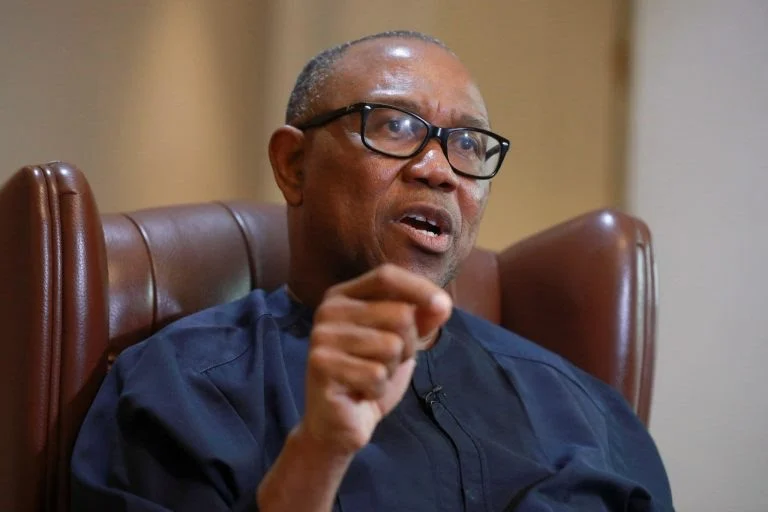
The political landscape in Nigeria has once again intensified following a scathing public challenge directed at President Bola Tinubu by the presidential candidate of the Nigeria Democratic Congress (NDC), Peter Obi. In a strongly worded public statement issued over the weekend, the former Anambra State governor demanded comprehensive accountability from the federal administration regarding the deployment of vast financial resources accrued since May 2023. Obi specifically called on the presidency to account for the N15.8 trillion reportedly saved from the controversial removal of the petrol subsidy, alongside more than $100 billion in external and domestic borrowings accumulated under the current administration.
The demands, which were published via Obi’s official social media handle under the heading “Good Day, Mr President: Nigerians Deserve Accountability,” represent a sharp escalation in the ongoing war of words between the ruling administration and opposition figures. Obi’s intervention was catalyzed by recent remarks made by President Tinubu during a political campaign rally in Akwa Ibom State. During the event, the President took direct jabs at the former governor, criticizing his gubernatorial record in Anambra State and accusing him of failing to adequately address severe ecological and erosion challenges during his tenure. Rather than getting bogged down in a localized political spat, Obi turned the tables on the Commander-in-Chief, urging him to redirect his focus from electoral campaigns to addressing the biting economic hardships faced by ordinary citizens across the federation.
Background Context and Economic Realities Under Tinubu’s Administration
To fully understand the gravity of Peter Obi’s recent demands, it is essential to examine the macro-economic trajectory of Nigeria since President Bola Tinubu assumed office on May 29, 2023. Upon taking the oath of office, Tinubu instituted sweeping reforms aimed at resuscitating the nation’s comatose economy. Among the most immediate and impactful policies was the abolition of the decades-long petrol subsidy regime, a move that instantly sent fuel prices skyrocketing by more than 300 percent. Concurrently, the administration unified the foreign exchange windows, leading to a massive devaluation of the Nigerian Naira against major global currencies.
While international financial institutions, such as the World Bank and the International Monetary Fund, initially praised these structural adjustments as necessary steps toward fiscal sustainability, the immediate fallout for the domestic population has been devastating. Inflationary pressures soared to historic highs, pushing the cost of basic food items, transportation, and healthcare beyond the reach of millions of households. The federal government, sub-national governments, and the Federation Account Allocation Committee (FAAC) subsequently recorded unprecedented windfalls in revenue allocations due to the subsidy removal and currency adjustments.
However, organized labor, civil society organizations, and opposition political parties have persistently questioned the tangible impact of these increased revenues. While the federal administration has routinely maintained that the savings are being channeled into infrastructural development, social safety net programs, and conditional cash transfers to vulnerable households, critics argue that these interventions have been grossly inadequate in cushioning the effects of the harsh economic policies. Obi’s latest intervention directly taps into this prevailing public anxiety, demanding verifiable metrics rather than broad political assurances.
Key Demands for Social and Infrastructural Accountability
In his public address, Peter Obi structured his accountability demands around specific socio-economic indicators, challenging the executive arm of government to present empirical evidence of progress. The former governor emphasized that governance must be measured by tangible improvements in human capital development rather than mere macroeconomic figures on paper.
First, Obi pressed the administration to disclose the exact demographic impact of its poverty reduction strategies. Since the inception of the current administration, various federal agencies have rolled out multiple iterations of social investment programs. However, independent research organizations continue to report a widening poverty gap, with tens of millions of Nigerians categorized as living below the international poverty line. Obi demanded a clear statistical breakdown of how many citizens have been genuinely pulled out of poverty over the past few years.
Second, the education sector remains a critical area of concern. Nigeria continues to grapple with one of the highest numbers of out-of-school children globally, a crisis exacerbated by widespread insecurity in the northern regions and decaying educational infrastructure. Obi asked the President to state precisely how many children have been successfully reintegrated into formal classrooms under the current administration’s watch.
Third, the healthcare sector received significant scrutiny. With brain drain—popularly known as the "Japa" syndrome—depleting the country of qualified medical personnel, primary healthcare delivery at the grassroots has deteriorated significantly. Obi challenged the presidency to provide data on the number of functional primary healthcare centers constructed, rehabilitated, and adequately staffed across the 774 local government areas.
Fourth, the infrastructural and utility deficits, particularly regarding the power sector, formed a cornerstone of Obi’s critique. He pointedly reminded President Tinubu of specific campaign promises made prior to the 2023 general elections, wherein the President explicitly urged the electorate to withhold their votes if he failed to resolve the country’s chronic electricity supply challenges. Obi demanded a factual update on power generation, transmission, and distribution stability, noting that steady electricity remains a foundational prerequisite for industrialization and small-business survival.
Finally, the NDC candidate addressed the persistent security crisis plaguing various geopolitical zones. Despite repeated assurances from security chiefs and increased budgetary allocations to the defense sector, agrarian communities in the North-Central, banditry-ridden states in the North-West, and separatist-fueled tensions in the South-East continue to undermine national stability. Obi argued that substantial public funds channeled into security operations must yield visible tranquility and safeguard lives and property.
Political Repercussions and the Akwa Ibom Rally Fallout
The exchange between President Tinubu and Peter Obi underscores the increasingly polarized political climate as political actors position themselves ahead of future electoral cycles. The catalyst for the current war of words occurred during a high-profile All Progressives Congress campaign stop in Uyo, the capital of Akwa Ibom State. During the rally, President Tinubu sought to undermine the credibility of his former challenger by referencing infrastructural deficits witnessed during Obi’s tenure as governor of Anambra State, specifically pointing to ecological degradation and erosion sites.
Political analysts note that it has become standard practice for incumbent administrations to deflect criticism of current macroeconomic challenges by highlighting the past governance records of opposition figures. However, by shifting the discourse from a localized debate over historical erosion management in Anambra to a national interrogation of fiscal prudence, multi-billion-dollar borrowings, and surging tax revenues, Obi successfully repositioned himself as a central voice of economic opposition.
Furthermore, Obi’s tactical advice that the President should tour the remaining 33 states of the federation to engage directly with ordinary citizens was interpreted as a subtle jab at the perceived disconnect between the political elite inside the Presidential Villa and the daily struggles of the populace on the streets. By encouraging grassroots engagement, the opposition figure sought to frame the administration as out of touch with the realities of inflation, food insecurity, and failing public utilities.
Implications for Governance and Public Trust
The demands raised by Peter Obi strike at the heart of democratic accountability and fiscal transparency in Nigeria. As the administration continues to manage a complex web of structural reforms, the demand for clear, verifiable data on public expenditure becomes increasingly urgent.
From an economic perspective, the accumulation of over $100 billion in public debt—combining both domestic obligations and international loans—coupled with record-breaking FAAC allocations, places a heavy burden of proof on the federal government. Economists have repeatedly emphasized that while borrowing is not inherently detrimental to a developing nation, the utility and transparency of the debt-financed projects must justify the long-term fiscal liabilities imposed on future generations. When citizens experience declining purchasing power alongside reports of massive government revenues, a crisis of trust inevitably develops between the governed and the governing.
Moreover, Obi’s public challenge highlights the vital role of a robust opposition in a functioning democracy. By demanding precise figures on poverty alleviation, educational enrollment, healthcare expansion, and power generation, opposition stakeholders force the executive branch to move beyond generalized political rhetoric and provide concrete evidence of governance outcomes.
As the political arena heats up and the administration enters subsequent phases of its four-year mandate, the pressure for tangible results will only intensify. Whether the federal government will formally address the specific financial and social metrics demanded by Peter Obi remains to be seen. Nevertheless, the debate has firmly re-centered public discourse on the critical issues that matter most to the average Nigerian: economic survival, infrastructural functionality, and the judicious management of national wealth.