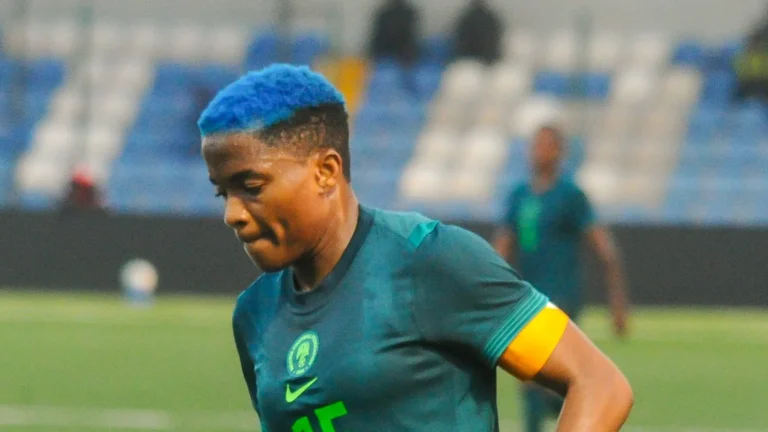
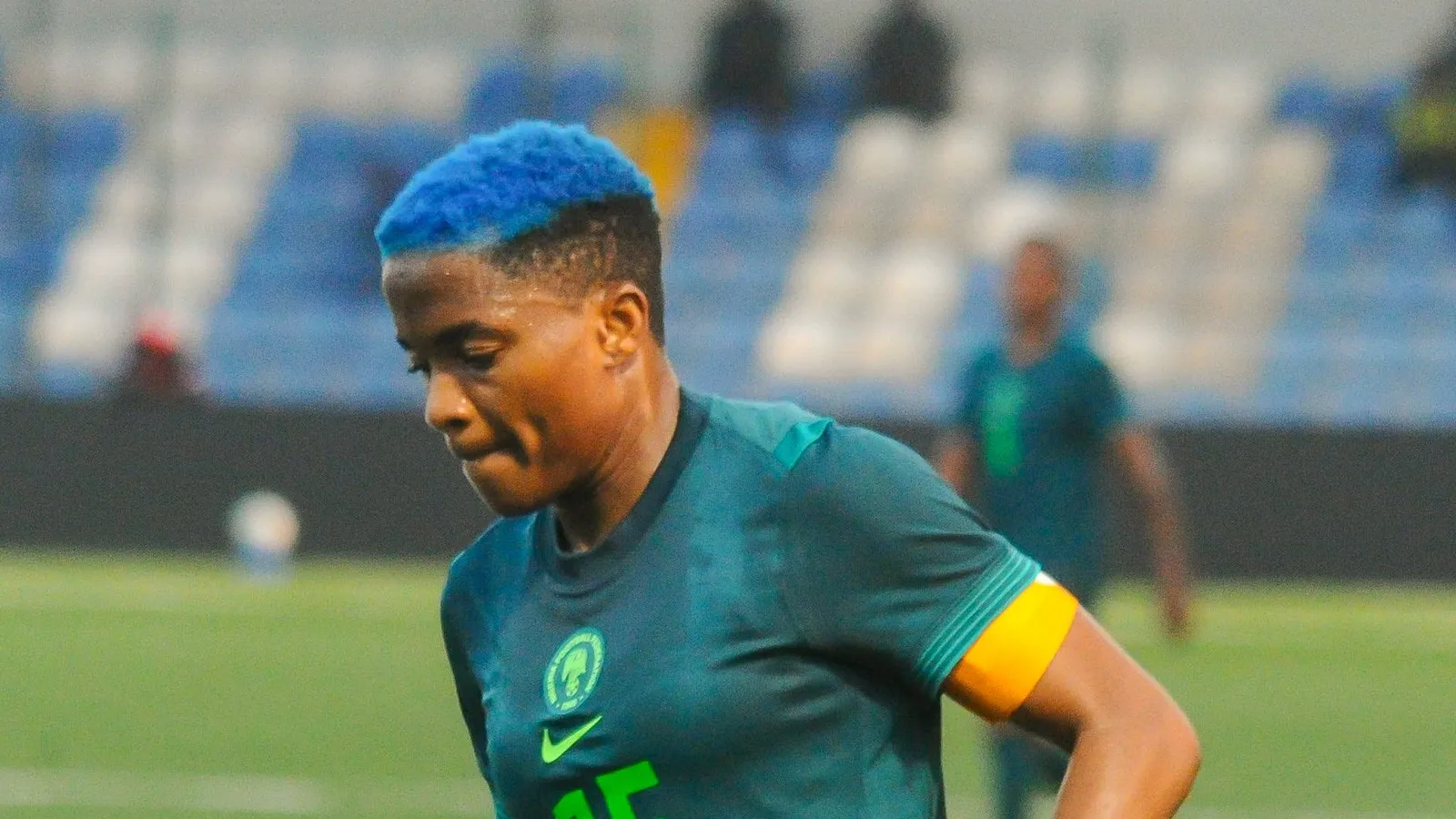
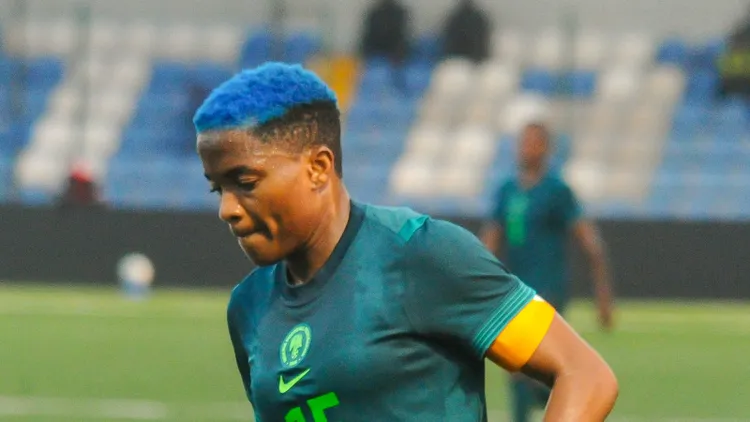
Super Falcons captain Rasheedat Ajibade has been selected as one of 13 elite footballers to participate in the second edition of FIFA’s prestigious Player Impact Programme. This nine-month initiative, designed to empower professional players to act as catalysts for social change, offers a global platform for Ajibade to scale her grassroots health project. The announcement cements her status not only as a pivotal figure on the pitch but as a significant influencer in the sphere of international sports development.
The selected cohort represents a diverse cross-section of global talent, featuring luminaries such as Spain’s 2023 World Cup winner Alexia Putellas, England’s promising forward Michelle Agyemang, and former Indian national team captain Sunil Chhetri, who makes history as the program’s first male participant. Alongside Ajibade, Zambia’s Racheal Kundananji stands as the only other African representative, highlighting the growing influence of African talent in global leadership discussions. Other participants include Casey Phair (Korea Republic), Gabi Nunes (Brazil), Hina Sugita (Japan), Kenza Dali (France), Maria Sanchez (Mexico), Phallon Tullis-Joyce (USA), and Rebekah Stott (New Zealand).
Evolution of the FIFA Player Impact Programme
The FIFA Player Impact Programme is a strategic endeavor by the world governing body to bridge the gap between elite performance and social responsibility. Building upon a successful pilot scheme launched in 2025 specifically for women, this second edition has expanded its scope to include a broader range of global icons. The program serves as an accelerator, providing players with the professional tools, networking opportunities, and potentially the seed funding required to transition their personal social initiatives from conceptual ideas to sustainable, impactful realities.
The structure of the program is rigorous. In June 2026, the majority of the cohort converged in Boston for a three-day Impact Accelerator Workshop. During this intensive period, participants engaged with experts in social enterprise, project management, and communications to refine their proposals. The culmination of this nine-month journey is scheduled for December, where the participants will gather in London to present their refined project strategies to their peers and FIFA leadership.
The Rash Hygiene Hub: A Mission for Grassroots Development
At the heart of Ajibade’s involvement is the Rasheedat Ajibade Foundation. The foundation’s flagship initiative, the "Rash Hygiene Hub," is a specialized program designed to provide comprehensive health education to young female footballers across Nigeria. The project focuses on critical, often overlooked aspects of athlete development, including personal hygiene, reproductive health, and mental wellness.
In the context of the Nigerian grassroots football ecosystem, such initiatives are vital. Many young female athletes face systemic barriers that extend beyond the lack of facilities, including inadequate information regarding health management and a stigma surrounding mental health support. By integrating these lessons into the training routines of grassroots clubs, Ajibade’s hub provides the foundational knowledge necessary for these young girls to sustain long-term athletic careers.
Chronology of Engagement and Strategic Roadmap
The trajectory of this program is mapped across a strategic timeline that ensures accountability and professional growth:
- June 2026: Eleven of the 13 participants, including Ajibade, attend the Impact Accelerator Workshop in Boston. This phase focused on strategic planning and identifying scalable milestones for each project.
- July–November 2026: The implementation phase. During these months, participants are encouraged to pilot their initiatives, gather impact data, and refine their operational models based on the training received in Boston.
- December 2026: The final presentation in London. The cohort will convene to present the tangible outcomes of their projects to a panel of FIFA stakeholders. This stage is critical, as it serves as the primary gateway for securing additional mentorship and potential financial investment from FIFA to ensure the projects’ longevity.
Global Context and Comparative Analysis
The inclusion of Rasheedat Ajibade in such a high-profile cohort serves as a significant indicator of the shifting priorities within international football governance. Historically, FIFA’s engagement with grassroots initiatives was often decentralized or managed through national associations. By creating a direct pipeline between elite players and the governing body, FIFA is effectively decentralizing its social impact efforts, leveraging the personal brand and local knowledge of its biggest stars.
The cohort represents a balanced mix of global footballing cultures. For instance, the presence of Sunil Chhetri and Racheal Kundananji underscores a strategic push to include voices from regions where football is rapidly developing both as a sport and as a vehicle for social transformation. When compared to the 2025 pilot, this iteration is markedly more inclusive, suggesting that FIFA intends to continue scaling the program to include a more diverse range of ambassadors.
Broader Implications for Nigerian Football
The timing of this announcement is particularly auspicious for Nigeria. The nation is currently experiencing a renaissance in women’s football. With the Flamingos recently crowned as world champions at the U17 level, and the senior Super Falcons preparing for high-profile friendlies in Algiers, the profile of the women’s game in Nigeria is at an all-time high.
However, the transition from elite youth success to sustainable senior-level performance often hinges on the support systems available to players during their formative years. Ajibade’s work addresses this critical vulnerability. If the Rash Hygiene Hub receives substantial funding from FIFA in December, it could serve as a blueprint for other Nigerian athletes to formalize their philanthropic efforts.
The analytical perspective on this development is clear: the success of the Super Falcons is no longer just a matter of tactical proficiency on the field; it is becoming increasingly tied to the professionalization of the support systems surrounding the game. By stepping into this role, Ajibade is not just acting as a captain, but as an architect of the next generation of Nigerian female football excellence.
Statements and Internal Perspectives
While specific quotes from the individual sessions in Boston have remained confidential, the sentiment shared by the cohort during the announcement reflected a unified commitment to social change. England’s Michelle Agyemang, in a statement provided by FIFA, encapsulated the philosophy of the group: "It is also important to give back to the community you come from." This ethos of "giving back" is the central thread that ties together the diverse projects, ranging from hygiene education in Nigeria to mental health awareness in other parts of the world.
For the Nigerian football public, the implication is that their national captain is operating at a level that transcends sport. The visibility offered by being placed in a cohort with global icons like Alexia Putellas is not merely an honor; it is a platform that forces international observers to recognize the depth of the Nigerian game beyond the scorelines.
Future Outlook and Conclusion
The real measure of the program’s success will materialize in the coming months. As the project enters the final evaluation phase, the ability of the Rash Hygiene Hub to demonstrate measurable impact will be the deciding factor in its long-term viability. FIFA’s involvement provides a stamp of credibility that can be leveraged for further partnerships with NGOs, local government bodies, and corporate sponsors in Nigeria.
If Ajibade successfully navigates the December presentation, the potential for the Rash Hygiene Hub to expand into a national program is significant. This would not only enhance the well-being of young Nigerian female footballers but also solidify the reputation of Nigerian athletes as leaders who are capable of managing complex social projects on the global stage.
As the world looks toward London in December, the focus will be on whether the initiative can secure the necessary support to move from a boutique health project to a cornerstone of the Nigerian grassroots football development system. For Rasheedat Ajibade, the challenge is clear: to ensure that her legacy, both on and off the field, is one that leaves the door wide open for the next generation of Super Falcons.