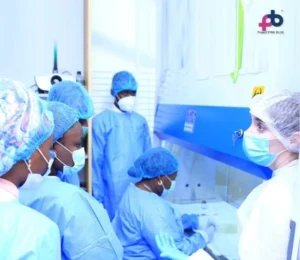
The Liberia College of Physicians and Surgeons (LCPS) has achieved a significant milestone in the nation’s medical trajectory, securing a five-year accreditation from the West African College of Physicians (WACP) for its Faculty of Community Health. This formal recognition, announced on September 15, 2026, solidifies Liberia’s status as a regional hub for postgraduate specialist training and marks a critical advancement in the country’s mission to achieve self-sufficiency in medical education. The accreditation, which follows an exhaustive institutional audit, serves as a testament to the rigorous standards now being met within the Liberian healthcare ecosystem.
The WACP’s endorsement of the LCPS program is not merely a bureaucratic certification; it represents a validation of the pedagogical and clinical infrastructure built over the past decade. By aligning its Community Health residency program with established West African standards, the LCPS has ensured that Liberian-trained specialists are equipped with the competencies required to navigate the complex public health challenges facing the sub-region.
The Path to Accreditation: A Rigorous Evaluation
The journey toward this five-year accreditation began in earnest with a comprehensive assessment conducted in June 2026. A three-member delegation from the WACP, led by the distinguished Professor Hadiza Agbo, arrived in Monrovia to scrutinize every facet of the training program. The delegation’s mandate was to determine whether the LCPS possessed the necessary depth to maintain regional standards in medical pedagogy.
The evaluation process was multifaceted, encompassing an investigation into faculty strength, the adequacy of the training environment, the quality of clinical facilities, and the availability of essential learning resources. The delegation’s inspection extended to key teaching hospitals, most notably the John F. Kennedy Medical Center and Redemption Hospital. These institutions serve as the bedrock of clinical rotation for residents, and the WACP’s approval underscores that these facilities meet the stringent requirements for high-level specialist instruction.
Professor Agbo and her team reviewed not only the classroom-based curriculum but also the practical, hands-on opportunities afforded to residents. The focus on "clinical exposure" is vital, as Community Health specialists must be adept at disease surveillance, community-based healthcare delivery, and the systemic management of health promotion programs. By passing this rigorous review, the LCPS has demonstrated that its residency program is not only theoretically sound but also practically robust.
Historical Context: Building Capacity from the Ground Up
To understand the significance of this accreditation, one must look at the historical landscape of medical education in Liberia. Before the establishment of the LCPS in 2013, Liberia lacked a local mechanism for training medical specialists. For decades, the nation relied on foreign-trained doctors, a model that was both economically draining and insufficient to meet the healthcare needs of a growing population.
The founding of the LCPS was a watershed moment in Liberia’s post-conflict reconstruction. The college was established with the explicit mandate to institutionalize specialist training, thereby reducing the country’s historical "brain drain" and the heavy reliance on overseas fellowships. Since its inception thirteen years ago, the institution has made steady, incremental progress.
The record reflects a steady output of medical talent: to date, the LCPS has successfully trained 166 specialist doctors across various medical disciplines. This achievement has provided a foundation of local expertise that proved invaluable during health crises and daily clinical operations alike. The current accreditation for the Community Health program is the latest in a series of institutional victories designed to elevate the status of Liberian medical degrees to compete with those from more developed academic environments in the West African sub-region.
The Scientific Assembly and the New Guard
The timing of this accreditation announcement coincides with one of the most important events on the Liberian medical calendar: the 10th Scientific Assembly and Convocation. Held at the Ellen Johnson Sirleaf Ministerial Complex in Congo Town, this year’s assembly serves as both a celebration of institutional growth and a showcase for the next generation of specialists.

The 2026 convocation is set to graduate 11 new specialist doctors, a cohort that highlights the diversity of training now available within the country. The breakdown of these graduates—two in Pediatrics, three in Internal Medicine, one in Obstetrics and Gynecology, and five in Surgery—illustrates the breadth of the LCPS’s current reach. While the Community Health accreditation is the focus of this year’s announcement, the graduation of these specialists across four other critical disciplines signals that the college is successfully balancing expansion with quality assurance.
The Critical Role of Community Health
Community Health is often described as the backbone of public health. Unlike specialized surgery or internal medicine, which often focus on the individual patient, Community Health practitioners focus on the "health of the collective." In a post-pandemic world, the importance of this discipline has never been higher.
The curriculum for the accredited program covers a wide array of essential services:
- Disease Surveillance: Tracking outbreaks at the community level to prevent localized health issues from becoming national crises.
- Health Promotion and Education: Developing strategies to influence public behavior and improve long-term health outcomes.
- Research: Conducting evidence-based studies to tailor health interventions to the unique sociocultural needs of the Liberian population.
- Health Systems Management: Ensuring that resources are allocated efficiently to reach remote and underserved populations.
By obtaining regional accreditation for this specific discipline, the LCPS ensures that its graduates are not only capable of working in urban centers but are also trained to lead public health initiatives across the entire West African region.
Implications and Future Outlook
The five-year accreditation period provides a stable framework for the LCPS to plan future growth. Beyond the prestige associated with WACP recognition, there are tangible benefits that will impact the college’s operational capacity:
- Professional Collaboration: The accreditation facilitates easier movement and collaboration between Liberian specialists and their counterparts in the West African region. This is expected to open doors for joint research projects and clinical exchange programs.
- Resource Attraction: Regional recognition often serves as a signal to international donors and health organizations that an institution is a reliable partner for investment in medical infrastructure.
- Educational Mobility: Graduates from the accredited program will likely face fewer barriers when seeking cross-border practice or further specialization within the West African College of Physicians’ network.
- Public Health Leadership: As Liberia continues to rebuild its health systems, the presence of locally trained, regionally recognized experts in Community Health will be vital for informing national policy and disaster response strategies.
Official Response and Strategic Alignment
While the college continues to celebrate the achievement, the leadership of the LCPS has signaled that this is part of a broader, long-term strategic plan. The accreditation is viewed as an essential step toward aligning Liberia with the African Union’s "Agenda 2063" goals for health, which prioritize the development of regional centers of excellence.
The delegation from the WACP, in their formal commendation, noted that the efforts of the LCPS to expand its institutional capacity have been consistent and commendable. They highlighted the college’s willingness to integrate feedback from the accreditation process into its daily operations as a key factor in their success.
As Liberia looks toward the future, the ability to train its own workforce remains a top priority. The 166 doctors already trained have laid the groundwork; the 11 graduating this week represent the continuity of that vision. With the Community Health program now fully accredited, the LCPS has secured its role as a premier institution of medical learning, ensuring that the next generation of Liberian doctors will be equipped to lead the charge in public health, both within their borders and across the wider West African region.
In conclusion, the accreditation of the Community Health program is a clear indicator that the Liberia College of Physicians and Surgeons is maturing into a world-class training institution. By meeting the stringent benchmarks of the West African College of Physicians, Liberia has not only enhanced its own medical prestige but has also strengthened the collective health security of the West African sub-region. The coming years will undoubtedly see the impact of this achievement as these newly minted specialists take their places in the hospitals, clinics, and health departments of the nation.