The race to lead the World Health Organization (WHO) as its next Director-General has entered a critical pre-nomination phase, characterized by intense digital diplomacy, strategic networking, and sharply defined geographical alliances. As the official September 24 deadline approaches for prospective candidates to officially enter the contest, an empirical social media analysis of nearly 7,500 direct professional interactions reveals profound structural and institutional dividing lines. These digital footprints—captured across professional networking platforms—offer unprecedented early insights into how candidates are attempting to stitch together coalitions spanning sovereign state ministries, regional voting blocs, major European regulatory bodies, and Washington-based biosecurity circles.
The emerging landscape is currently defined by a head-to-head digital contest between Dr. Hans Henri Kluge, the WHO Regional Director for Europe, and Dr. Hanan H. Balkhy, the WHO Regional Director for the Eastern Mediterranean. Their active online campaigns are accompanied by the prospective candidacies of Indonesian Health Minister Budi Gunadi Sadikin, who commands a massive domestic following on consumer-facing social media, and former Qatari Public Health Minister Dr. Hanan Mohammed Al-Kuwari, who has largely maintained a traditional, non-digital diplomatic posture.
While online likes, comments, and shares do not constitute formal state endorsements, mapping these interactions provides a crucial analytical window into the geopolitical networks, institutional loyalties, and professional ecosystems that will influence the ultimate election outcome in Geneva.

Chronology and Election Context
The election cycle for the WHO Director-General follows a strict multilateral timeline managed by the organization’s Executive Board and World Health Assembly. Prospective candidates must formally submit their nominations ahead of the September deadline, kicking off a months-long campaign trail where contenders must pitch their administrative visions to sovereign member states. The formal selection process typically culminates in interviews and a vote by the WHO Executive Board, followed by confirmation at the World Health Assembly.
The upcoming election takes place against a backdrop of severe fiscal strain, post-pandemic institutional restructuring, and shifting geopolitical alignments. The agency continues to grapple with sustainable financing models, equitable access to medical countermeasures, and the lingering diplomatic fallout from major donor states altering their funding and engagement strategies. Consequently, the next Director-General will inherit an organization under immense pressure to reform its operational architecture while maintaining global health security oversight.
Contrasting Leadership Models: Technical Stewardship Versus Participatory Diplomacy

An evaluation of the initial campaign announcements and manifestos highlights a stark contrast in leadership philosophies between the front-running contenders.
Dr. Hanan Balkhy’s campaign is built upon a narrative of clinical frontline credibility, state-sovereign legitimacy, and rigorous scientific stewardship. In her official nomination announcement, her tone was authoritative, explicitly expressing gratitude toward Saudi leadership, including King Salman and Crown Prince Mohammed bin Salman. Balkhy systematically linked her professional background as a pediatrician and infectious diseases specialist to the establishment of Saudi Arabia’s national infection control authorities and her hands-on management of the MERS-CoV crisis. Regional commentators have widely celebrated her candidacy as a historic milestone for women in global health leadership, framing her bid as an inspiration for women and girls across the Arab world.
Expanding her platform from clinical expertise to international health diplomacy, Balkhy utilized her engagements at regional committee meetings in Addis Ababa and Timor-Leste to promote mutual capacity building, "One Health" collaborations, and the strengthening of local manufacturing and regulatory infrastructure.
In contrast, Dr. Hans Kluge’s campaign employs a bottom-up messaging strategy anchored in administrative transparency, participative dialogue, and institutional consensus-building. His tone is inclusive, marked by active listening and deliberate deference to member states—a deliberate tactic designed to mitigate potential hesitations surrounding a European candidacy. Kluge connects his career as a field-tested public health physician to decades of operational crisis management in high-conflict and complex zones, including Somalia, Liberia, Siberia, Myanmar, and the Central African Republic.
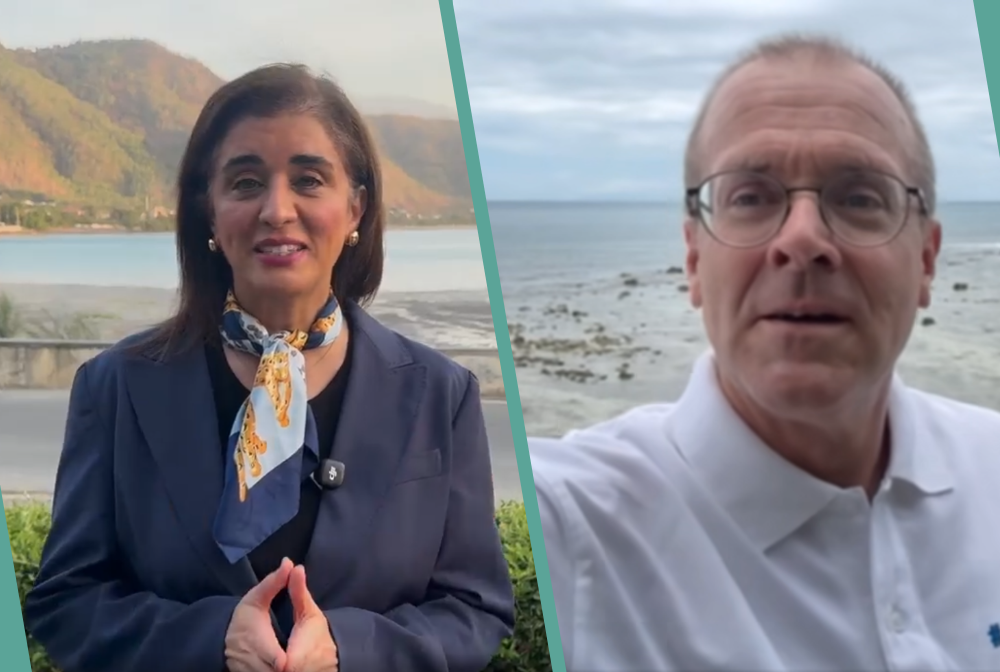
In his official campaign manifesto, titled "Rebuilding WHO Together," Kluge formalizes a platform focused on structural institutional reform, sustainable financing, and a networked "One WHO." His campaign tours across Africa, framed as a professional homecoming, and his advocacy for health workforce equity emphasize placing local health workers and primary healthcare at the absolute center of universal health coverage.
Sovereign Bases and Regional Strongholds
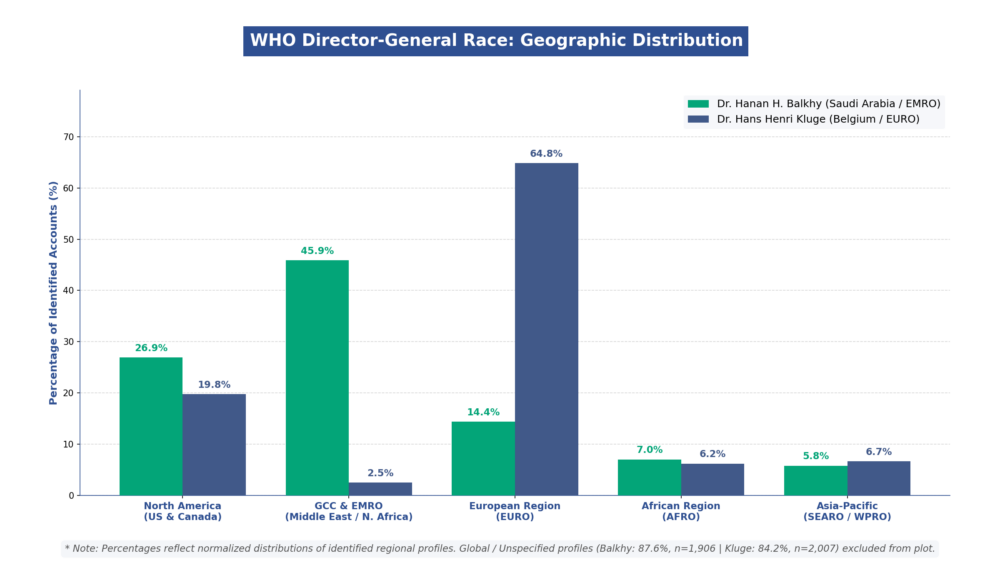
Translating digital narratives into tangible political momentum requires solid state-level alignment. Granular data mapping reveals that each candidate’s digital network closely mirrors the administrative and political architecture of their respective home regions.
Kluge’s digital interactions are consistently anchored by European officials, led prominently by the Belgian diplomatic corps, with figures such as the Ambassador of Belgium to Finland, Karel Tousseyn, and Belgian Ambassador to India, Didier Vanderhasselt, frequently engaging with his posts. A wider European footprint is visible through active cabinet-level participation, including Latvian Health Minister Hosam Abu Meri, Monegasque Minister for Social Affairs and Health Christophe Robino, Irish Minister of State for Mental Health Mary Butler, and Swedish Global Health Ambassador Karin Tegmark Wisell. Furthermore, programmatic updates have drawn direct engagement from the official WHO Bangladesh country office.
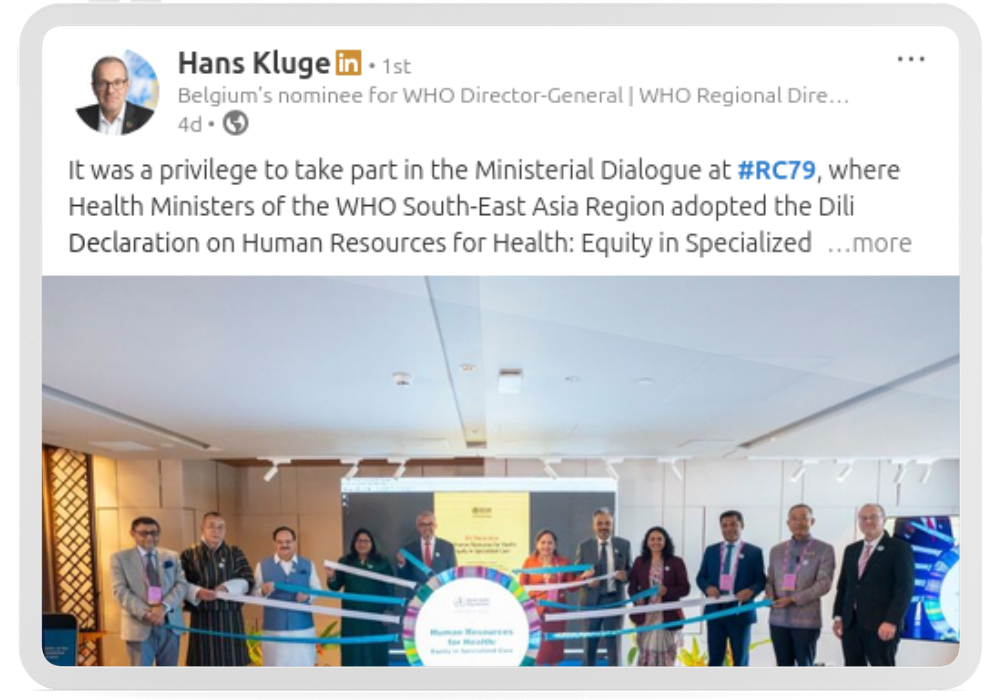
Conversely, Balkhy’s digital base is highly consolidated around Saudi government and regulatory authorities who demonstrate sustained, repeat engagement. Her platform footprint features senior leadership from the Saudi Ministry of Health, including Chief of Staff Fahad Alkhowaiter, Assistant Deputy Minister Abdulaziz Alrabiah, and Risk Management Director Najla Almutairi, alongside leadership from the Saudi Food and Drug Authority (SFDA). Across the Eastern Mediterranean, her regional network is reinforced by figures such as Egyptian Ministry of Health Assistant Minister Hatem Amer, Omani Ministry of Health Head of AMR Abdullah Alqayoudhi, and former Sudanese Health Minister Akram Ali Eltom.
Battle for the Pivotal African Regional Vote
A decisive battleground in any WHO Director-General election is the African regional bloc (AFRO), representing 47 sovereign member states that frequently vote in unison and wield immense collective influence within the World Health Assembly. Both Kluge and Balkhy targeted the AFRO regional committee meetings to secure diplomatic traction across the continent.
Kluge’s collaborative, bottom-up model attracted sustained engagement from regional technical experts, public health advocates, and institutional representatives across Africa. His network featured repeat interactions with Africa CDC Senior Country Representative for Ethiopia and Mauritius Aniekeme Uwah, WHO Regional Office for Africa Programme Support Specialist Pascal Mulindwa, West African Health Organization (WAHO) Healthcare Services Director Virgil Lokossou, and Africa CDC acting Deputy Director General Tajudeen Raji.
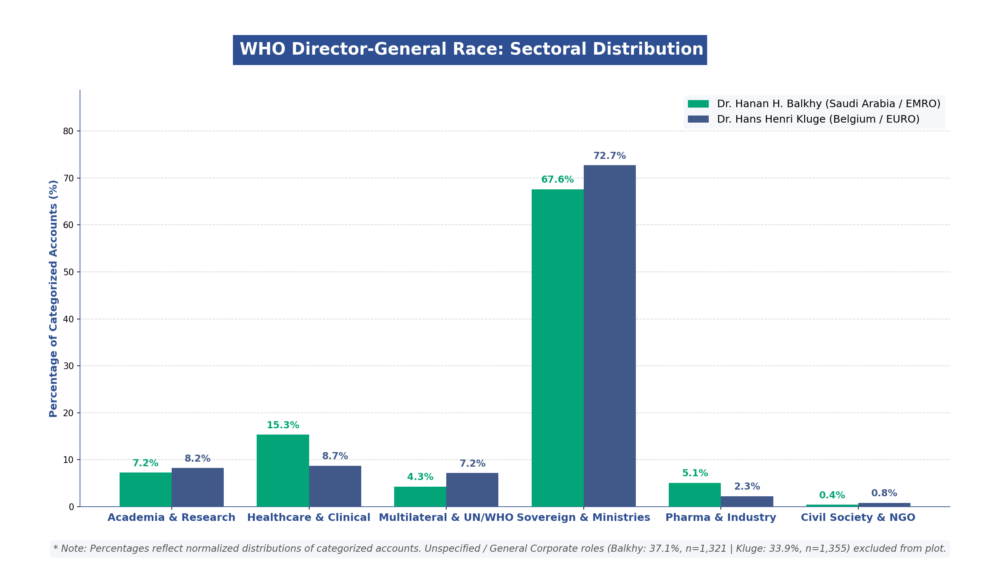
In parallel, Balkhy’s campaign update centered on the African continent triggered immediate digital momentum among operational and institutional leaders on the ground. Her engagement metrics were driven by Institut Pasteur de Dakar CEO Ibrahima Socé Fall, UNICEF Human Resources Manager Stanley Kilel, International Planned Parenthood Federation (IPPF) Regional Director for Africa Claudia Shilumani, and former Africa CDC Acting Director Ahmed Ogwell Ouma. This continental footprint was further bolstered by leadership from the Ethiopian Public Health Institute and the African Union, signaling substantial reach into technical networks across Africa.
Geopolitical Reach: Washington Biosecurity and EU Executive Machinery
Beyond regional voting blocs, candidate networks reflect strategic positioning within key global centers of geopolitical power.
Balkhy maintains discernible digital connections to United States security and public health institutions. High-ranking U.S. government advisers and biosecurity experts—including former presidential adviser Larry Kerr and former U.S. Ambassador Jimmy Kolker—have sustained regular engagement across her updates. Additional interactions involve former CDC leader Scott McNabb, CDC Senior Global Health Adviser Lynn Filpi, and Health and Human Services Senior Global Health Officer Angela Monahan. Observers note that these ties suggest a capacity to serve as an effective diplomatic bridge for the United States within multilateral health governance frameworks.
Meanwhile, Kluge’s digital footprint demonstrates deep administrative integration within the heart of the European Union’s executive machinery. Senior officials from the European Commission’s Directorate-General for Health and Food Safety (DG SANTE), the European Health Emergency Preparedness and Response Authority (DG HERA), and the European Health and Digital Executive Agency (HaDEA) frequently interact with his platform. This indicates that Kluge’s campaign directly intersects with the day-to-day regulatory and health security apparatus of the European Union, even as the European Commission officially maintains a neutral stance without issuing a formal endorsement.
Economic Ecosystems: Big Pharma Versus Specialized R&D and Clinical Networks
Economic and academic alignments further demarcate the two primary campaign ecosystems, offering potential avenues to bridge global health funding deficits through public-private partnerships.
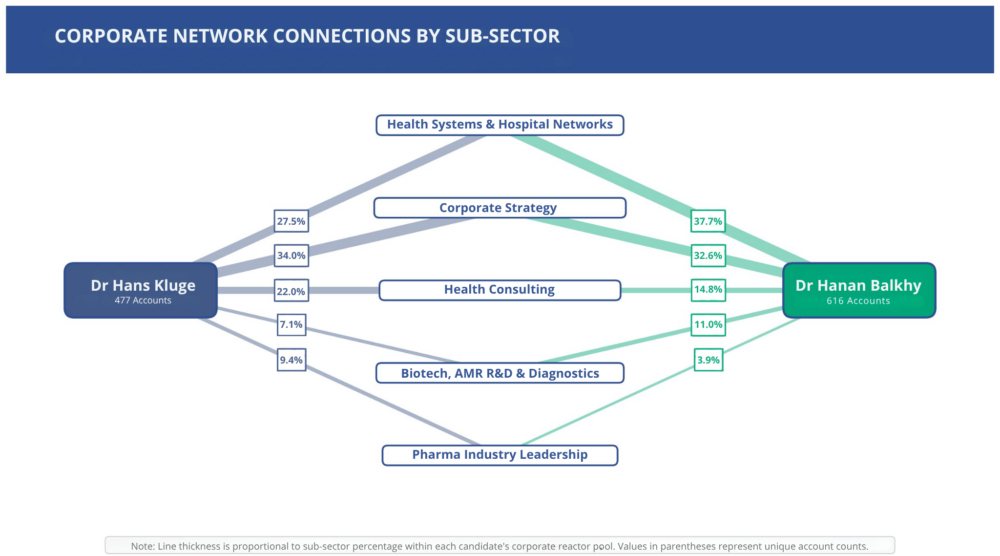
Kluge’s platform maintains high visibility within the established European industrial healthcare sector. His digital interactions feature C-suite executives from multinational pharmaceutical companies and trade federations, including Bayer AG Board Member Stefan Oelrich, European Federation of Pharmaceutical Industries and Associations (EFPIA) Director General Nathalie Moll, and Vaccines Europe Executive Director Sibilia Quilici, alongside representatives from Astellas Pharma, Johnson & Johnson, and MSD Italia.
In contrast, Balkhy’s economic and corporate connections concentrate heavily on specialized research and development networks, hospital administration, and antimicrobial resistance (AMR) pioneers. Her platform engages leaders such as King Abdullah Bin Abdulaziz University Hospital CEO Nesreen Alwallan, Swiss biotech firm BioVersys CEO Marc Gitzinger, Roche Pharma Global Head of Infectious Diseases Michael Lobritz, and representatives from Sanofi and AstraZeneca.
Academic Pedigree and Civil Society Anchors
The strategic split extends into academic and civil society circles. Kluge draws heavily from health policy, economics, and civil society architects, featuring engagement from London School of Economics Professor Elias Mossialos, Bocconi University Professor Aleksandra Torbica, former Médecins Sans Frontières International President Joanne Liu, and representatives from the European Public Health Alliance (EPHA).
Conversely, Balkhy mobilizes a coalition of clinical researchers, epidemiologists, and patient advocates. Her network includes Boston University Center on Emerging Infectious Diseases Founding Director Nahid Bhadelia, Mohammed Bin Rashid University Professor Abiola Senok, WHO Taskforce of AMR Survivors Chair Vanessa Carter, and Harvard Medical School Director Emeritus John G. Meara.
Public Commentary and Internal Institutional Critiques
Analysis of public commentary under official nomination announcements reveals divergent narrative environments. Reactions to Balkhy’s announcement emphasize scientific authority, regional progress, and the historic symbolic impact of female leadership from the Arab world. Former Afghan Health Minister Wahid Majrooh praised her courage and leadership during complex geopolitical crises, while policy adviser Alissar Rady emphasized that it is time for women to lead global health.
Conversely, Kluge’s platform serves as a forum for both institutional celebration and internal critique. While supporters praise his communicative warmth and crisis-tested diplomacy during humanitarian emergencies, his open-door approach has also acted as a lightning rod for internal structural grievances. Critical commentary from technical experts—such as WHO classification committee specialist Patricia Welch Saleeby—has warned against past reorganizations and the reliance on external management consulting firms, while other WHO officials have highlighted the diplomatic hurdles required to align Eastern Mediterranean and African member states behind a European-led reform agenda.
Implications for the Future of Global Health
As the nomination window closes, the early digital campaigns demonstrate that the next WHO Director-General must navigate a complex web of online influence, regional diplomacy, and structural critique. The distinct strategies pursued by Dr. Balkhy and Dr. Kluge underscore fundamental choices in how member states envision leading the organization through its next era. Whether candidates can successfully convert early digital engagement and professional networking into real-world sovereign trust will ultimately determine the trajectory of global public health governance in the years ahead.