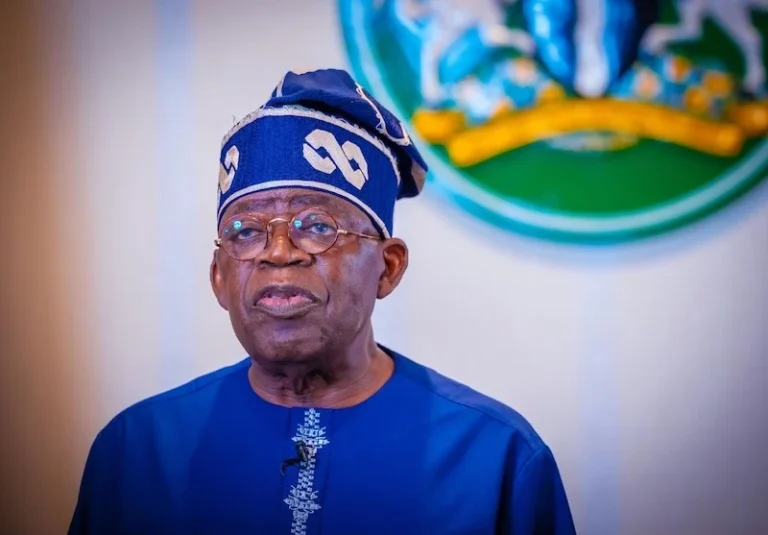
The political landscape in Nigeria’s oil-rich Rivers State witnessed a significant demonstration of alignment on Saturday as a massive coalition of supporters converged on the 40,000-capacity Adokiye Amiesimaka Stadium in Port Harcourt. Amid vibrant displays of solidarity, political chants, and a sea of party colors, the gathering culminated in a bold and strategic pledge: to mobilize at least three million votes for President Bola Tinubu ahead of the 2027 general elections.
The political rally, which drew thousands of enthusiastic participants from across the 23 local government areas of Rivers State, underscored shifting political dynamics in the Niger Delta region. The event served not only as a show of strength for the incumbent administration but also as a launchpad for grassroots mobilization strategies aimed at embedding the "Renewed Hope" agenda deep into the communities, markets, and households of the state.
A Star-Studded Political Gathering at Adokiye Amiesimaka Stadium
The atmosphere inside the Adokiye Amiesimaka Stadium was electric as dignitaries, political heavyweights, and grassroots mobilizers arrived to a rousing reception from the packed stands. Among the prominent figures welcomed by the cheering crowd were President Bola Tinubu, First Lady Senator Oluremi Tinubu, Vice President Kashim Shettima, and Senate President Godswill Akpabio.
Also present at the high-profile gathering were key state stakeholders, including the Rivers State APC Presidential Campaign Council Coordinator and Minister of the Federal Capital Territory, Nyesom Wike, alongside Rivers State Governor Siminalayi Fubara. The presence of both federal and state-level political actors signaled a rare cross-party and coalition-driven approach to solidifying the President’s political base in a historically contested geopolitical zone.
The stadium event featured colorful cultural performances, solidarity speeches from various interest groups, and coordinated chants backing the socio-economic and political reforms of the current federal administration. Speakers at the podium emphasized the need for unity, continuity, and accelerated regional development, framing the 2027 electoral contest as pivotal for consolidating infrastructural and economic gains in Rivers State and the wider Niger Delta.
Taking Politics Beyond the Stadium: The Grassroots and Humanitarian Outreach
While the stadium rally provided the grand spectacle, a critical component of the weekend’s activities unfolded away from the limelight. The mobilization campaign placed heavy emphasis on door-to-door engagement, market outreach, and direct community interaction, spearheaded by the APC Presidential Campaign Council (PCC) Women Mobilisation Directorate.
Dr. Betta Edu, serving as Co-Director of the APC PCC Women Mobilisation Directorate, led a dedicated team of organizers into local communities, traditional institutions, and bustling commercial hubs across Port Harcourt. Rather than relying solely on traditional political speeches, the directorate integrated humanitarian interventions into its political strategy.
As part of the outreach, the delegation visited several local hospitals and healthcare facilities within Port Harcourt. There, they engaged directly with women, children, and vulnerable demographics, providing medical outreach services, essential supplies, and humanitarian support. organizers noted that this approach was deliberately crafted to humanize the political process, demonstrating tangible care and concern for grassroots populations who often feel disconnected from national politics.
Furthermore, the directorate toured local markets to interact with traders, market women, youth associations, and community leaders. These sessions were utilized to sensitize citizens on the importance of active participation in the electoral process, voter registration updates, and community-level mobilization ahead of the 2027 polls. The engagement was explicitly tied to the vision of First Lady Senator Oluremi Tinubu, whose nationwide initiatives focus heavily on women’s empowerment, health, and social inclusion.
The Strategic Importance of Rivers State in Nigeria’s Electoral Calculus
To understand the weight of the three-million-vote pledge, political analysts point to the strategic significance of Rivers State in national elections. As one of the most populous and economically vital states in the South-South geopolitical zone, Rivers State has historically been a fierce battleground for major political parties.
In past election cycles, voter turnout and margins from the Niger Delta have played a decisive role in national outcomes. By securing a committed support base and aiming for a target of three million votes, the organizers are signaling an aggressive strategy to expand the ruling party’s footprint in a region traditionally viewed as a stronghold for the opposition.
The collaboration between federal heavyweights, state actors, and grassroots mobilization structures suggests a unified electoral machinery designed to overcome historical political friction. Observers note that the alignment of key political figures in Rivers State creates a unique operational environment for the ruling All Progressives Congress as it looks toward 2027.
The Renewed Hope Agenda and Public Reception
The weekend mobilization campaign was framed around the core pillars of President Tinubu’s Renewed Hope Agenda, which encompasses economic reforms, infrastructure development, social safety nets, and security stabilization.
During the engagements, community leaders and grassroots representatives voiced their perspectives on the current economic realities, acknowledging the temporary hardships brought about by sweeping national reforms such as the removal of fuel subsidies and foreign exchange unification. However, the mobilization teams emphasized that these structural adjustments are foundational steps required to build a resilient, diversified economy capable of delivering long-term prosperity.
The integration of health interventions and economic empowerment dialogues helped bridge the gap between policy formulation in Abuja and daily realities at the grassroots level. By addressing immediate humanitarian needs while simultaneously casting a vision for the future, the organizers sought to build sustainable trust and loyalty among the electorate.
Implications and Outlook Ahead of 2027
The grand rally and subsequent grassroots outreach in Rivers State mark an early intensification of political activities leading up to the 2027 general elections. While the official campaign period is governed by the guidelines of the Independent National Electoral Commission, political parties have increasingly adopted proactive, year-round engagement strategies to build momentum.
The pledge of three million votes sets a high benchmark for the coordinators and supporters in Rivers State. Achieving this ambitious target will depend heavily on sustained grassroots mobilization, the continuous delivery of tangible dividends of democracy, and the maintenance of political cohesion among the diverse factions currently backing the administration within the state.
As the dust settles on the vibrant events at the Adokiye Amiesimaka Stadium and the community outreach programs across Port Harcourt, the political spotlight remains firmly fixed on the Niger Delta. How these local mobilization efforts translate into voter registration, PVC collection, and eventual ballot box participation will be closely watched by political analysts, opposition parties, and electoral stakeholders alike as the march toward 2027 gathers unstoppable pace.