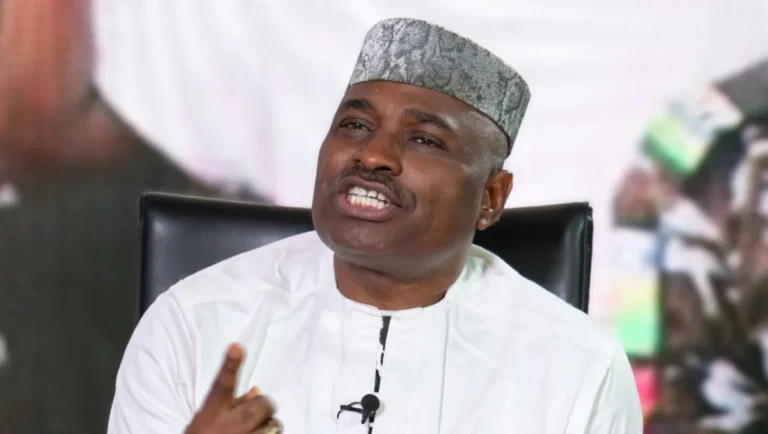
The Nigerian entertainment landscape paused on November 6 to acknowledge the 58th birthday of Kenneth Okonkwo, a figure whose career trajectory has been inextricably linked with the birth and exponential growth of the modern Nollywood industry. As he reaches this milestone, colleagues, industry analysts, and a vast audience of followers are reviewing a career that transitioned from the nascent stages of home-video production in the early 1990s to the globalized, high-definition standards of the current Nigerian cinema scene. Born on November 6, 1968, Okonkwo’s professional evolution mirrors the broader narrative of the Nigerian creative economy—a sector that has grown from a localized entrepreneurial venture into one of the country’s most significant non-oil export assets.
A Legacy Forged in Living in Bondage
To understand the cultural impact of Kenneth Okonkwo, one must analyze the genesis of the Nigerian film industry. In 1992, the release of the direct-to-video film Living in Bondage acted as the catalyst for what would eventually become the world’s second-largest film industry by volume. Okonkwo’s portrayal of Andy Okeke—a man whose ambition leads him into the dark, occultic underbelly of Lagos—served as the archetype for the Nollywood protagonist.
The performance was not merely a display of dramatic range; it was a societal mirror. At a time when Nigeria was grappling with economic instability and rapid urbanization, the themes presented in Living in Bondage resonated deeply with audiences across the country. By anchoring this production, Okonkwo became more than an actor; he became a cultural icon. The film’s success established a distribution model that bypassed traditional cinema houses, relying instead on VHS tapes and later VCDs, which allowed Nigerian stories to reach rural and urban demographics alike.
Chronology of a Storied Career
Okonkwo’s journey is characterized by a deliberate expansion of his professional identity. His path from legal studies to the silver screen and eventually into the political arena provides a unique case study of a celebrity navigating the shifting social tides of Nigeria.
- 1992: The breakout moment. The release of Living in Bondage establishes Okonkwo as a household name.
- 1994–2000: The consolidation phase. Okonkwo features in a string of successful productions that cemented the "Golden Era" of Nollywood, characterized by intense moral storytelling and family drama.
- 2005–2010: The transitional period. As the industry began to shift toward digital cinematography and higher production values, Okonkwo transitioned into more mature, patriarch-figure roles, maintaining his relevance as a seasoned veteran.
- 2015–2023: The political pivot. Moving beyond the screen, Okonkwo increasingly utilized his public platform to engage in political discourse, culminating in high-profile involvements in national electoral processes and policy advocacy.
- 2024: Reaching the 58-year milestone. Okonkwo is currently recognized as an elder statesman of the industry, balancing intermittent screen appearances with sustained public interest in his advocacy work.
Supporting Data and Industry Context
The growth of the industry in which Okonkwo played a foundational role is quantifiable. According to data from the Nigerian Bureau of Statistics and UNESCO, the motion picture and music recording sector contributes significantly to Nigeria’s GDP, often growing at rates that outpace other non-oil sectors. In the early 1990s, the industry was an informal network of traders and enthusiasts. Today, it is a multi-billion dollar enterprise.
Okonkwo’s career trajectory correlates with these shifts. In his early years, the actor was paid in the context of a low-budget, high-turnover market. As the industry modernized, the introduction of private equity, institutional investment, and international streaming platforms like Netflix and Amazon Prime Video changed the financial dynamics of the profession. Okonkwo’s ability to remain a recognizable face throughout these technological and economic transitions—from the era of analog tape to the era of global streaming—is a testament to his adaptability.
Professional Reception and Industry Reactions
On the occasion of his birthday, tributes have poured in from various segments of the Nigerian creative class. Industry veterans have praised his discipline and his ability to remain scandal-free in an industry often plagued by tabloid sensationalism.
"Kenneth represents the bridge between the old guard and the new," noted an anonymous executive producer in a recent industry forum. "His early work taught us how to monetize local stories, while his later political activism has taught us that the influence of an actor extends far beyond the duration of a film."
While Okonkwo has been polarizing at times due to his vocal political stances—a common trait for high-profile figures in Nigeria’s heated political climate—there is a consensus regarding his artistic contribution. He is frequently cited by younger actors as a pioneer who proved that one could build a sustainable, respectable, and long-term career in Nigerian entertainment.
The Intersection of Entertainment and Politics
One of the most defining aspects of Okonkwo’s later career has been his move into public service and political advocacy. In the Nigerian context, the transition from entertainment to politics is not unique, but the level of intellectual rigor Okonkwo brings to the table has been noted by analysts. His background in law has often informed his commentary on constitutional matters and human rights.
This shift has implications for the "celebrity-politician" model in Nigeria. It suggests that as the entertainment industry matures, its participants are increasingly viewing their platforms as tools for social and political engineering. Whether one agrees with his specific political affiliations or not, his involvement underscores the blurring lines between pop culture and public governance, a trend that is likely to increase as the "Nollywood generation" continues to age into leadership roles.
Analyzing the Impact of a Pioneer
The implications of Kenneth Okonkwo’s 58-year milestone go beyond a mere birthday celebration. It provides an opportunity to evaluate the "Sustainability of Stardom" in a volatile industry. Unlike industries in Hollywood or Bollywood, where established infrastructure supports the longevity of actors, Nollywood has historically been a churn-and-burn environment.
Okonkwo’s longevity provides a model for how veteran actors can remain relevant. By diversifying his skill set—moving from pure acting into production, public speaking, and legal advocacy—he has mitigated the risks associated with the inevitable decline of youth-centered screen popularity. His career suggests that for the next generation of Nollywood stars, longevity will require a combination of artistic versatility and active participation in the broader sociopolitical fabric of the nation.
Looking Toward the Future
As Kenneth Okonkwo moves toward his sixth decade, the discourse surrounding his career is likely to transition from his early performances to his role as a mentor and an elder statesman. The industry is currently facing a new set of challenges: piracy, the need for better infrastructure, and the quest for international recognition. The veterans who remain—including Okonkwo—are the repositories of the institutional knowledge required to navigate these hurdles.
Fans continue to circulate clips from his early work, not merely out of nostalgia, but because those performances remain the bedrock of Nigerian storytelling. The character of Andy Okeke, in particular, remains a staple of Nigerian pop-culture references, proving that while technology changes, the power of a well-executed, culturally resonant performance is timeless.
In summary, the 58th birthday of Kenneth Okonkwo serves as a lens through which we can view the history of modern Nigerian entertainment. From the cramped sets of early 1990s Lagos to the expansive stages of current political and social discourse, Okonkwo’s life and work encapsulate the aspirations, the growing pains, and the eventual triumph of a uniquely Nigerian industry. As the industry continues to evolve, the legacy of those who laid its foundation remains a critical component of its ongoing narrative, ensuring that figures like Okonkwo are not just remembered as performers, but as architects of a cultural movement that has captured the attention of the world.