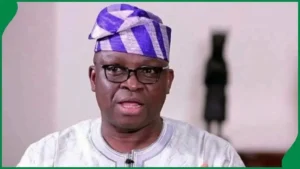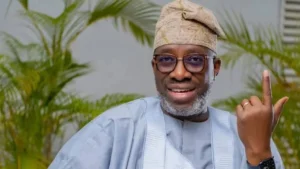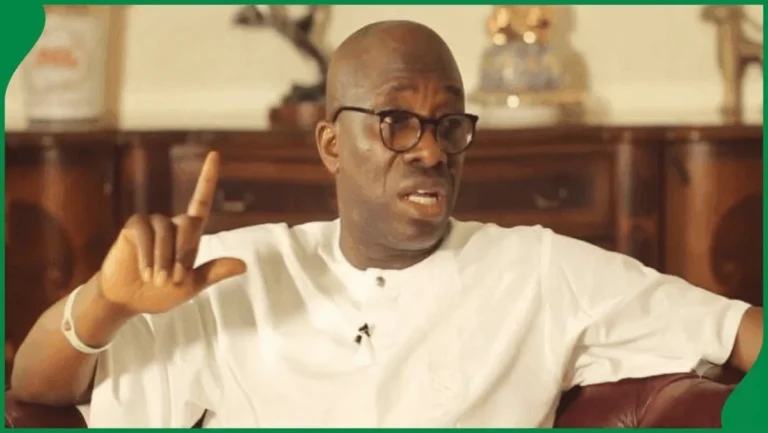
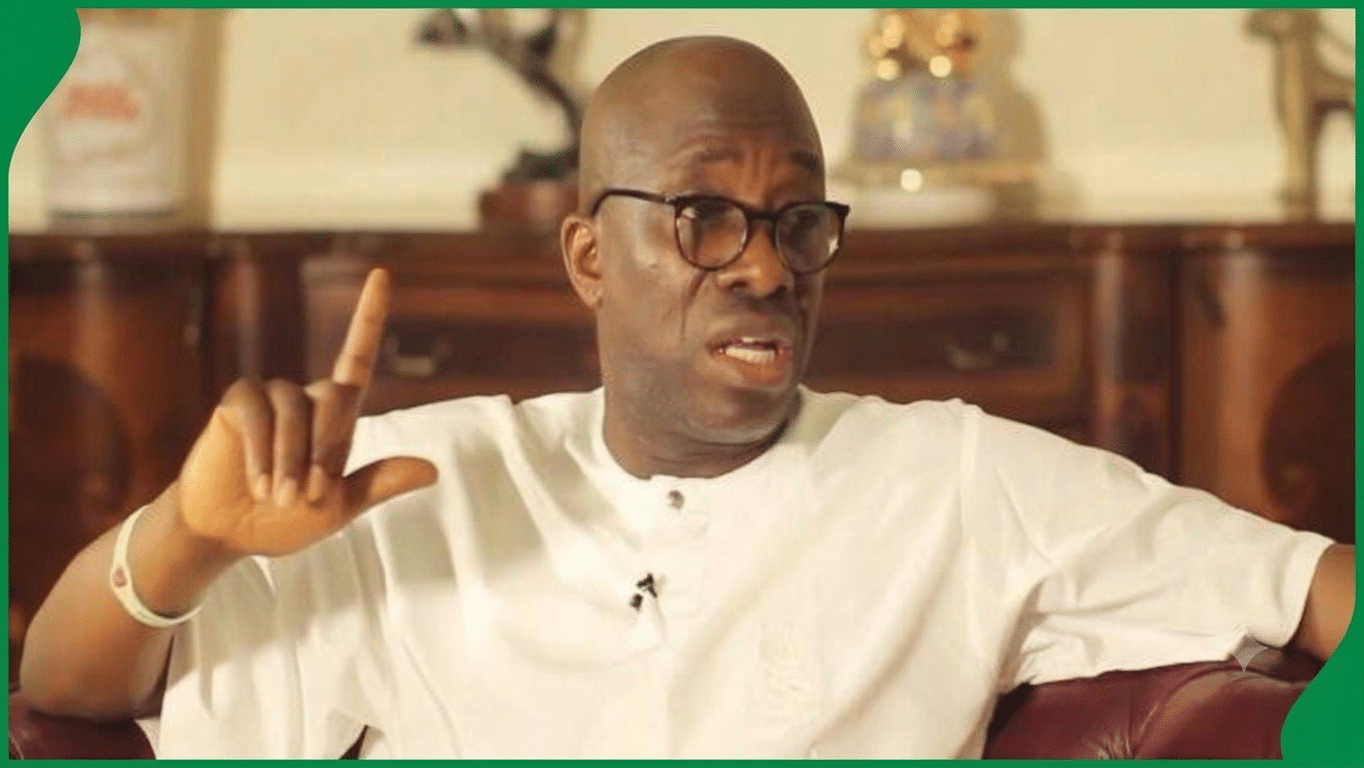
Former Peoples Democratic Party (PDP) chieftain Segun Sowunmi has articulated a nuanced political strategy, asserting his continued support for the administration of President Bola Ahmed Tinubu while deliberately refraining from a formal transition into the ruling All Progressives Congress (APC). During a high-profile appearance on Channels Television’s Politics Today, the veteran politician clarified that his reluctance to join the ruling party is rooted in a desire to preserve his autonomy as a voice of constructive opposition.
The Rationale Behind Political Independence
Sowunmi’s position highlights a complex dilemma often faced by high-profile political figures who find themselves ideologically aligned with a sitting president while remaining wary of the constraints imposed by party machinery. By maintaining his status as an independent actor, Sowunmi believes he is better positioned to serve the public interest.
"One of the reasons why I have not joined the APC formally is that I have been asking myself that a great number of people in the country look to me to provide an opposition voice," Sowunmi stated. "I want to be sure that if there be anything that would be too much to contend with in the APC, even though I’m supporting the President, I should still retain some independence to say this is not right."
This approach allows Sowunmi to act as a bridge between the ruling party and the critical segments of the electorate. By not being tethered to the party’s internal disciplinary mechanisms, he retains the freedom to critique specific policy outcomes without the immediate threat of anti-party activity accusations.
Contextualizing the Security Landscape: The Ribadu Letter
A significant pillar of Sowunmi’s argument for independence is his recent proactive engagement with national security institutions. In an open letter addressed to the National Security Adviser (NSA), Nuhu Ribadu, Sowunmi sought to draw attention to the rising tide of inflammatory political rhetoric. He argued that the current climate of political discourse—marked by ethnic profiling and threats to national unity—requires a non-partisan observer to sound the alarm.
His decision to reach out to the NSA independently serves as a practical demonstration of his political philosophy. By operating outside the APC, he argues that his interventions are perceived as being motivated by national interest rather than the partisan maneuvering of a party loyalist. This distinction is critical in a polarized environment where security concerns are often viewed through the prism of political affiliation.
Navigating the New Electoral Landscape
The political calculation behind Sowunmi’s stance is also informed by the legislative realities introduced by the 2022 Electoral Act. The act has fundamentally altered the timeline for political participation, removing some of the urgency that previously forced politicians to declare their party allegiances long before election cycles began.
Sowunmi noted that the current provisions within the Electoral Act allow for greater flexibility regarding party membership. For a politician of his stature, the need to secure a party ticket is not as immediate as it was under older electoral frameworks. Consequently, he views the decision to join the APC as a strategic move to be made at a time that maximizes his influence, rather than a prerequisite for supporting the current administration. He characterized the APC as a well-structured political entity, suggesting that his entry into the party is a matter of "when" rather than "if," provided the conditions align with his personal and political objectives.
Political Background and Historical Alignment
To understand the weight of Sowunmi’s current position, one must consider his history within the Nigerian political landscape. Having been a key figure within the PDP, his transition toward supporting a Tinubu-led government represents a significant shift in the broader power dynamics of the country.
The PDP, which held power at the federal level from 1999 to 2015, has faced significant internal challenges in recent years, particularly regarding internal cohesion and ideological clarity. Sowunmi’s departure from the traditional binary of "APC vs. PDP" reflects a growing trend among senior political analysts and party stakeholders who argue that the country’s challenges—ranging from economic instability to security threats—require a departure from rigid, personality-driven party politics.
By explicitly stating, "I’m not supporting any other person. I’m supporting the President," Sowunmi is effectively attempting to decouple his loyalty from the institutional baggage of any single political party. This is a rare stance in Nigerian politics, where party membership is typically viewed as a holistic commitment.
Broader Implications for Nigerian Governance
The implications of Sowunmi’s strategy are twofold. First, it introduces a form of "critical support" that could potentially soften the edges of the opposition. If influential figures from former opposition parties continue to validate the administration’s goals while maintaining a critical eye on its execution, the government may find it easier to build broad-based consensus for its policies.
Second, this strategy tests the tolerance of the ruling party. It remains to be seen whether the APC will accept a figure who operates with such high levels of independence. In the past, political parties in Nigeria have been known to demand total allegiance, often viewing dissent as a betrayal. If Sowunmi is successful in maintaining this middle ground, it could signal a shift toward a more mature political culture where criticism is viewed as a functional component of governance rather than an act of hostility.
Analysis of Current Political Challenges
As of November 2026, the administration of President Tinubu is contending with significant fiscal reforms and inflationary pressures that have strained the household economies of many Nigerians. The public’s demand for an "opposition voice" that is both credible and informed, as mentioned by Sowunmi, is at an all-time high.
Data from recent socio-economic reports indicates that citizens are increasingly frustrated with the pace of economic recovery. In such an environment, figures who hold the government accountable—but do not necessarily call for its removal—are becoming essential for social stability. Sowunmi’s role, therefore, serves as a safety valve. By articulating his concerns directly to state actors like the NSA, he provides a conduit for grievances that might otherwise manifest as civil unrest or radicalization.
The Path Forward
Looking toward the future, the political trajectory of Segun Sowunmi will be closely monitored by both APC stalwarts and those remaining in the PDP. His strategy relies on the assumption that the political environment is becoming more nuanced and that the electorate is increasingly looking for leaders who prioritize national interest over party dogma.
Whether or not he eventually formalizes his entry into the APC, his current path serves as a case study in modern political maneuvering. It highlights the potential for individual political actors to exert influence without the constraints of traditional party hierarchies. For the ruling administration, the challenge will be to ensure that the "independence" voiced by supporters like Sowunmi is treated as a constructive critique rather than a threat.
Ultimately, the Nigerian political landscape is undergoing a period of redefinition. With the next general election cycle approaching in the coming years, the role of independent, bridge-building political actors will likely become more prominent. Segun Sowunmi’s deliberate choice to remain unaligned while providing qualified support to the executive branch reflects a pragmatic approach to a complex and volatile political environment, prioritizing long-term national stability over short-term partisan gain.