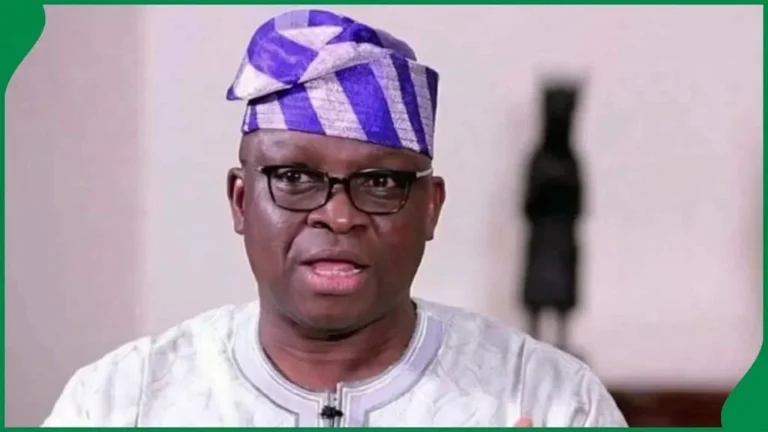
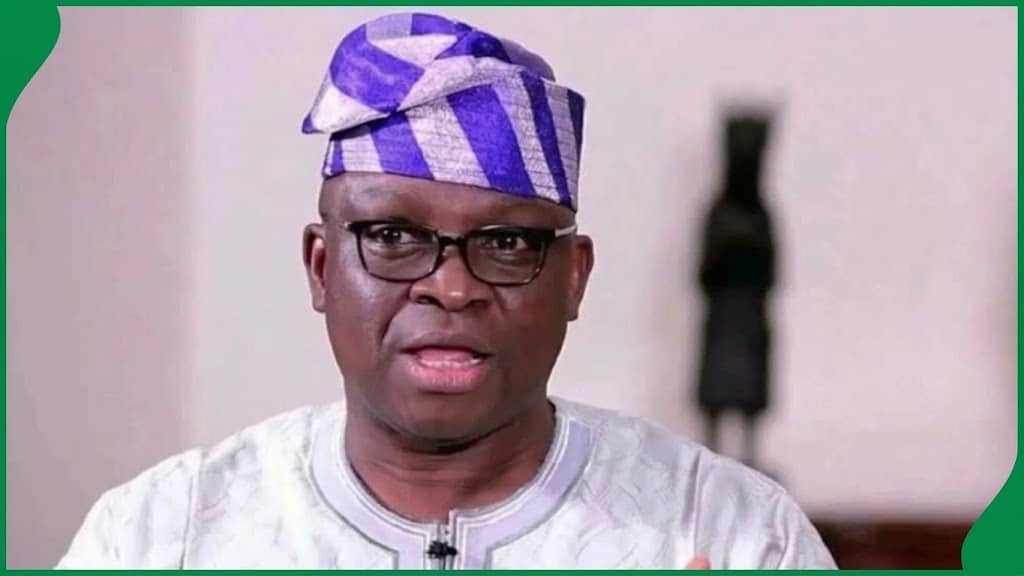
The former governor’s remarks, delivered during an appearance on TVC News’ flagship program, "Journalists’ Hangout," represent a growing divide in the discourse surrounding the political legitimacy of former leaders in the current administration. Fayose’s comments were prompted by Obasanjo’s recent, highly publicized criticisms of the Bola Ahmed Tinubu administration, specifically regarding the socioeconomic impact of current fiscal and structural reforms on the Nigerian populace.
A History of Confrontational Politics
Ayodele Fayose, known for his abrasive and direct political style, argued that Obasanjo’s propensity for criticizing successive administrations—including those of the late Umaru Yar’Adua and Goodluck Jonathan—is a calculated attempt to maintain relevance rather than a genuine pursuit of national interest. According to Fayose, the former president operates under a self-prescribed doctrine that he is the sole arbiter of governance standards in Nigeria.
"We are overrating an Obasanjo. That’s the truth," Fayose stated during the broadcast. "It is his style. Nobody gets it done better than Obasanjo in life. If anybody wants to talk, it is either Obasanjo or nobody."
This critique extends beyond mere rhetoric, as Fayose attempted to contextualize his assessment by citing alleged past political maneuvers. He specifically pointed to Obasanjo’s failed attempts to secure political leverage for his daughter, Iyabo Obasanjo, during her tenure in public office. Fayose alleged that the former president had reached out to former Ogun State Governor Olusegun Osoba to lobby for support for her political ambitions, suggesting that even a former president of Obasanjo’s stature faces significant hurdles in translating his personal influence into electoral success for his associates.
The Debate Over Governance and Accountability
The core of the dispute rests on the role of former presidents in providing oversight for sitting governments. While Obasanjo has maintained that his critiques are intended to hold the current leadership accountable, particularly in light of rising inflation and the removal of the petrol subsidy, Fayose posits that such criticism lacks the necessary component of constructive policy alternatives.
"Criticizing is good. I criticize people. But you must equally provide a solution, not just running your mouth to say that Obasanjo says this because you have a name, because you are a former president," Fayose asserted.
This perspective highlights a broader debate within Nigerian political circles regarding the "elder statesman" role. Proponents of Obasanjo’s interventions argue that his experience—having served as both a military head of state and a two-term democratically elected president—gives him a unique vantage point to warn the government of potential systemic failure. Conversely, figures like Fayose argue that these interventions are often timed to undermine the credibility of the current administration, potentially destabilizing the political climate rather than facilitating reform.
Historical Precedents and Security Concerns
Fayose’s rebuttal took a historical turn when he challenged Obasanjo’s moral authority to critique the Tinubu administration’s management of security. He invoked the 2003 military operation in Odi, Bayelsa State, where federal forces engaged in a destructive campaign against militants. Fayose argued that the violence associated with that era should disqualify the former president from lecturing the current administration on the intricacies of managing modern security challenges.
By drawing this comparison, Fayose is attempting to shift the narrative from the current economic hardships to the historical record of the critic himself. This tactic is common in Nigerian political discourse, where the past actions of elder statesmen are frequently used to deflect or invalidate their present-day criticisms.
The Tinubu Factor: Political Dues and Legitimacy
Central to Fayose’s defense of the current administration is the concept of "paying dues." He maintained that President Bola Tinubu is a seasoned political veteran who has earned his position through decades of grassroots engagement and institutional building within the Nigerian political landscape. Consequently, he argued that the President should be afforded the "breathing room" to govern without the constant interference of predecessors.
The implications of this stance are significant. As the Tinubu administration grapples with the implementation of its "Renewed Hope" agenda—characterized by the unification of exchange rates and the removal of fuel subsidies—the government faces pressure from multiple fronts. Economic indicators, such as the rising cost of living index and the volatility of the Naira, have provided fertile ground for opposition voices and critics like Obasanjo.
Supporting Data and Socioeconomic Context
The current economic landscape remains the primary catalyst for the friction between these political figures. According to data from the National Bureau of Statistics (NBS), inflation rates in Nigeria have reached multi-decade highs, driven largely by the high cost of transportation and food items. The removal of the fuel subsidy, while framed by the government as a necessary step for long-term fiscal sustainability, has led to immediate, acute hardship for millions of low-income Nigerians.
The World Bank’s recent economic updates on Nigeria have underscored the necessity of these reforms while simultaneously warning that the short-term impact on poverty levels could be severe if not balanced with robust social safety nets. This duality—the necessity of structural reform versus the immediate social cost—forms the bedrock of the tension. Obasanjo’s critique, which echoes the frustrations of many citizens, stands in direct opposition to the administration’s narrative that the "pains of today are the gains of tomorrow."
Political Implications and Future Outlook
The clash between Fayose and Obasanjo serves as a microcosm of the fragmentation within the Nigerian political elite. As the 2027 electoral cycle begins to cast its shadow over political discourse, the alliances and rivalries of the past are being recalibrated.
For the Tinubu administration, the support of vocal political figures like Fayose—who is a member of the opposition Peoples Democratic Party (PDP)—is strategically significant. It suggests that the President’s political outreach efforts are succeeding in creating a cross-party coalition of support that transcends traditional party lines. However, it also highlights the volatility of such support, as political loyalties in Nigeria are often fluid and subject to change based on the prevailing political winds.
Conclusion
The debate between Ayodele Fayose and Olusegun Obasanjo is unlikely to conclude with a consensus. It reflects two fundamentally different philosophies regarding governance and the role of former leaders in a developing democracy. While Obasanjo represents the traditional view of the "father of the nation" who feels entitled to speak truth to power, Fayose represents a newer, more confrontational school of thought that demands that those who have occupied the highest offices be judged by their own historical records before they attempt to dictate the trajectory of current administrations.
As Nigeria continues to navigate its current economic challenges, the frequency of such public disagreements is expected to increase. Whether these critiques provide the necessary catalyst for policy adjustment or merely serve as a distraction from the fundamental work of governance remains a subject of intense national debate. For now, the administration must balance the cacophony of voices from the political elite with the urgent need to address the socioeconomic realities of the average Nigerian citizen.