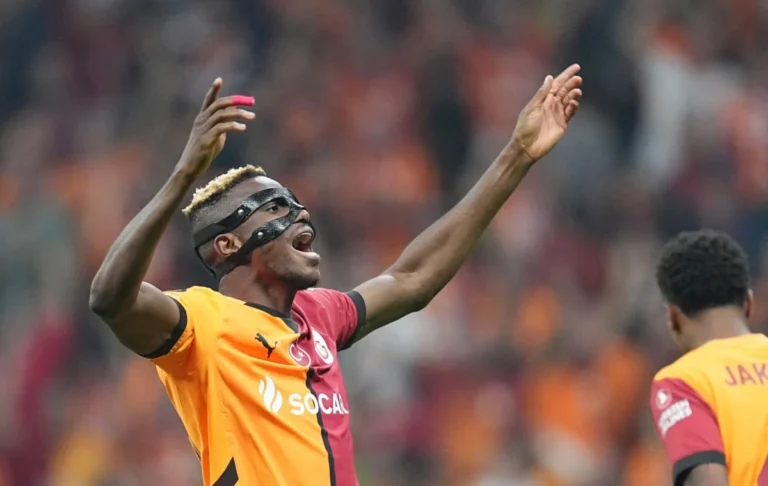
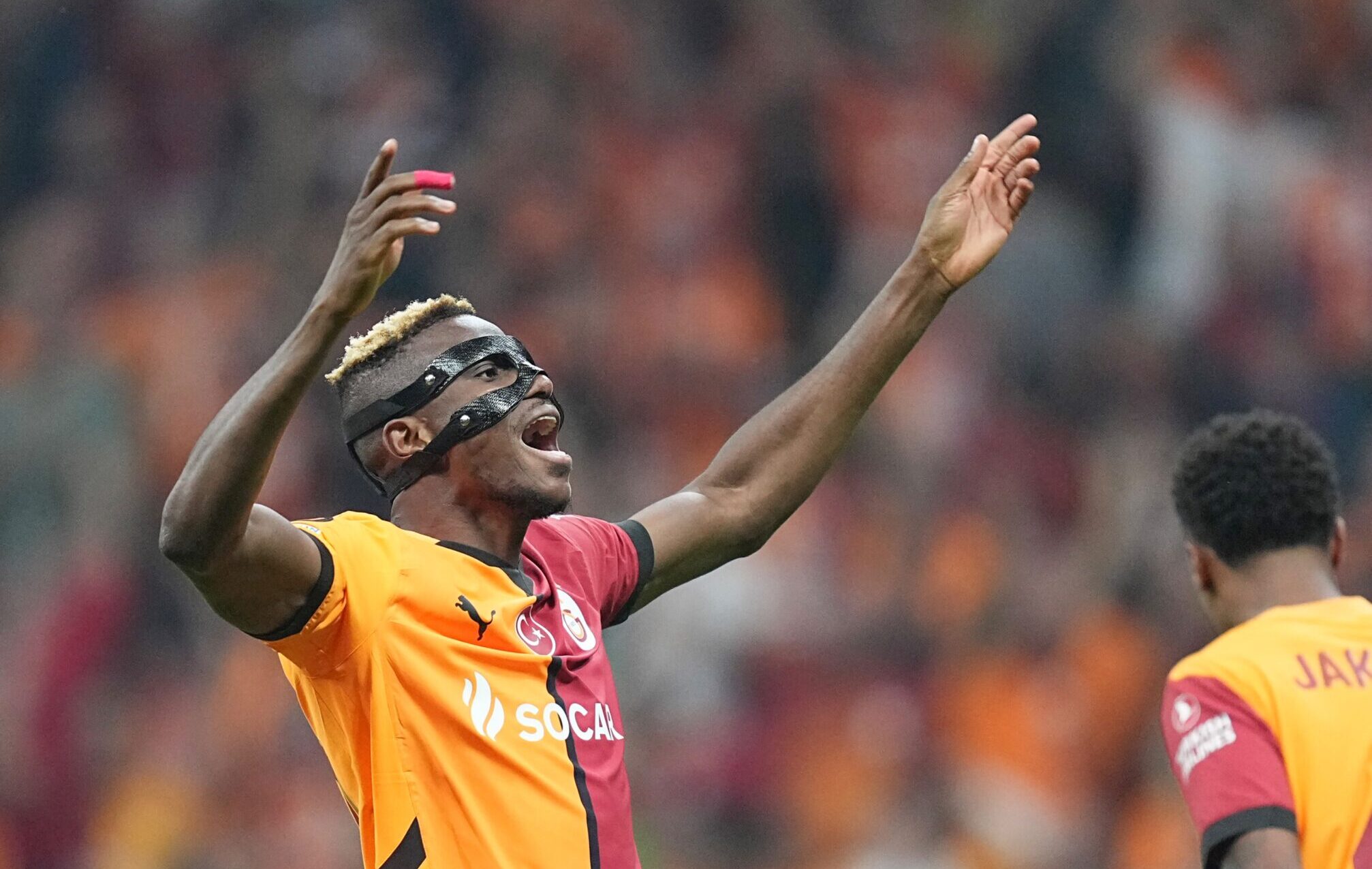
The Nigerian national team, the Super Eagles, has been dealt a significant blow to their tactical preparations for the upcoming 2027 Africa Cup of Nations (AFCON) qualifiers as star forward Victor Osimhen is set to undergo emergency surgery on his left knee. The announcement, confirmed by his Turkish club, Galatasaray, on Friday, has cast serious doubt over the striker’s availability for the pivotal double-header against the Taifa Stars of Tanzania, scheduled for mid-November.
According to the official medical report released by the Istanbul-based giants, the injury was sustained during the club’s recent high-stakes UEFA Champions League clash against German side VfB Stuttgart. Initial pitch-side assessments suggested a strain, but subsequent diagnostic imaging at the Maslak Acıbadem Hospital revealed a more complex issue: a "loose body" within the left knee joint. This clinical finding necessitates an arthroscopic procedure to ensure the long-term integrity of the joint, with the club confirming that their lead physician, Dr. Yener İnce, will oversee the operation.
A Pattern of Medical Disruptions
The timing of this injury is particularly frustrating for both the player and the Nigerian coaching staff. Osimhen, whose career has been characterized by explosive performances and prolific goal-scoring, has increasingly found himself battling a recurring cycle of physical setbacks. This latest development follows a season already punctuated by medical absences.
Earlier in September, the 27-year-old was forced to sit out the opening two qualifying matches against Madagascar and Guinea-Bissau. That absence was attributed to a moderate-to-advanced strain with internal bleeding in his right adductor muscle, an injury sustained during a league fixture against Istanbul Basaksehir on September 4. Although he was initially named in head coach Éric Chelle’s preliminary squad for those encounters, his failure to meet the recovery benchmarks forced a late withdrawal, disrupting the team’s offensive rhythm.
The current situation mirrors that earlier frustration. By withdrawing him from Saturday’s domestic clash against Amed Sportif Faaliyetler, Galatasaray has signaled that they are prioritizing his long-term recovery over immediate fixture availability. Whether the striker will be fit enough to join the Super Eagles camp in Uyo for the November 13 showdown remains an open question, with club officials yet to provide a specific return-to-play timeline.
Strategic Implications for the Super Eagles
The potential absence of Osimhen creates a tactical vacuum for Éric Chelle. The Super Eagles’ attack is significantly more potent when the striker is leading the line, providing not just finishing ability but also the physical presence required to hold up play against compact defenses.
Nigeria’s campaign in Group L is entering a decisive phase. With Tanzania already guaranteed a spot in the 2027 AFCON as co-hosts alongside Kenya and Uganda, the qualifying dynamic is unique. While Tanzania’s participation is secured, the matches remain competitive for ranking purposes and team cohesion, and the remaining teams in the group—Nigeria, Madagascar, and Guinea-Bissau—are effectively battling for the secondary qualification pathway.
For the Super Eagles, the home fixture in Uyo on November 13 is a must-win to consolidate their standing. The return leg, scheduled for November 17 in Tanzania, will test the squad’s depth. Coach Chelle has spent much of his recent tenure experimenting with alternative attacking configurations, yet the reliance on Osimhen’s individual brilliance remains a hallmark of the current Nigerian setup. Should the medical staff rule him out, the technical crew will be forced to look toward players like Victor Boniface, Ademola Lookman, or Kelechi Iheanacho to shoulder the burden of goal production.
Clinical Context and Recovery Expectations
The procedure Osimhen is scheduled to undergo—arthroscopic surgery—is a minimally invasive technique used to diagnose and treat joint problems. By inserting a thin tube with a camera into the knee, surgeons can visualize the interior of the joint and remove the identified "loose body."
In sports medicine, the prognosis for such procedures is generally positive, provided there is no underlying cartilage damage. However, the recovery timeline is non-negotiable. Following an arthroscopic removal of a loose body, athletes typically undergo a period of inflammation management followed by a progressive rehabilitation program. Depending on the size and location of the fragment, the recovery period usually ranges from two to six weeks.
Given that the Nigeria-Tanzania matches are less than three weeks away, the window for a return to full competitive fitness is extremely tight. Any attempt to accelerate the recovery process risks turning a minor mechanical issue into a chronic, long-term condition. Both the Nigerian Football Federation (NFF) and Galatasaray’s medical department are expected to maintain close communication to manage the player’s workload effectively.

The Broader Context of Nigerian Football
This injury comes at a time when the Nigerian football community is already grappling with broader concerns regarding the recognition and health of its top talent. Recent developments, including the omission of top-tier players like Osimhen and Ademola Lookman from the CAF Awards nominations, have sparked widespread debate among fans and analysts. While the physical health of players is a private matter between the club and the individual, the repeated absence of the national team’s talismanic figure underscores the fragility of the current squad’s reliance on a handful of high-profile stars.
The Super Eagles’ recent form has been inconsistent, and the lack of a stable, injury-free core has made it difficult for the coaching staff to implement a consistent tactical identity. With the 2027 AFCON tournament on the horizon, the focus must shift toward squad depth. The upcoming matches against Tanzania offer a platform for fringe players to prove their mettle in the absence of the team’s primary offensive outlet.
Looking Ahead: The Road to 2027
As the Super Eagles prepare for the November international window, the eyes of the nation will remain fixed on the recovery room at Maslak Acıbadem Hospital. While the medical team has not yet ruled him out of the qualifiers, the standard procedure for such injuries suggests a cautious approach.
For Victor Osimhen, the focus is undoubtedly on returning to the pitch with the same intensity that made him a household name in Serie A and now in the Turkish Süper Lig. For the Super Eagles, the challenge is twofold: preparing for the Taifa Stars without their star striker and ensuring that the squad’s overall performance does not falter under the pressure of injury-related volatility.
The NFF is expected to issue an update on the squad list early next week, once the results of the post-operative review are shared by Galatasaray’s medical team. Until then, Nigerian supporters are left to hope for a swift recovery for one of the continent’s most lethal marksmen, acknowledging that while his absence is a blow, it also presents an opportunity for the team to demonstrate the resilience and depth required to compete at the highest level of African football.
The timeline for the coming days remains fluid. The surgical intervention on Saturday will be the critical turning point. Following the operation, the medical staff will assess the joint’s stability, which will determine whether Osimhen can begin light training or if he will require an extended layoff. The football world waits, as the Super Eagles prepare for what promises to be a testing encounter in Uyo, with or without their talisman.