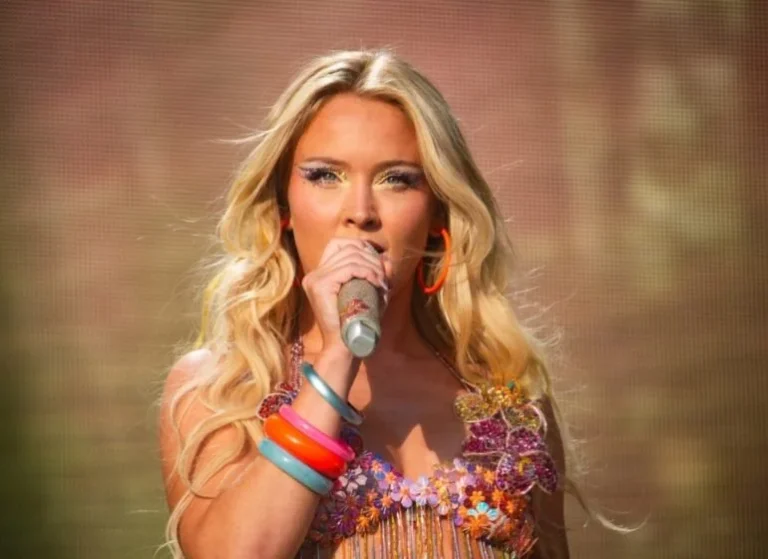
Swedish pop star Zara Larsson has openly rebuked the White House following the unauthorized and controversial use of her song Midnight Sun in a social media video highlighting an Immigration and Customs Enforcement (ICE) operation. The digital clip, which was originally published on TikTok, featured enforcement officers detaining, handcuffing, and escorting alleged undocumented immigrants into law enforcement vehicles, all set to the uplifting and atmospheric strains of Larsson’s musical composition.
The incident has reignited a broader, persistent debate surrounding the intersection of popular culture, political messaging, copyright ethics, and the contentious landscape of United States immigration enforcement. Following an immediate and widespread online backlash, the White House quietly removed the audio track from the video. However, the remediation did little to quell the controversy, prompting the Grammy-nominated artist to take to her own social media channels to address the matter directly, denounce the tone of the footage, and reflect on the profound human implications of modern immigration policies.
Anatomy of the Controversy and Social Media Backlash
The contested TikTok video was part of a broader digital strategy employed by government communications teams seeking to leverage popular short-form video platforms to showcase federal law enforcement activities. The footage captured visceral, high-stakes moments of ICE operations, depicting individuals being subjected to physical restraints and loaded onto transport vehicles. By pairing this tense, dramatic, and inherently distressing imagery with a commercially released pop song, the video creators generated an incongruous juxtaposition that immediately drew the ire of online observers, copyright advocates, and fans of the Swedish artist.
When the video first surfaced, online users quickly tagged Larsson, alerting her to the commercial and political appropriation of her intellectual property. The realization that her art was being utilized to soundtrack state-sanctioned enforcement actions left the artist deeply unsettled. Rather than launching an immediate legal tirade, Larsson’s initial public reaction was characterized by a profound sense of sorrow rather than mere professional indignation.
Addressing her followers in a follow-up video clip, Larsson shared a segment of the original ICE footage to contextualize her distress and articulate her perspective. “I do not even know what to say. I saw some comments. I got tired of this, obviously. Some people are like, she is going to be pissed. I am just really sad,” she confessed to her audience.
Larsson elaborated that her “heart is heavy” when contemplating the systemic realities faced by migrants and expressed a poignant wish that she could directly engage the individual responsible for curating the video. “I wish I could help you remember that you and I are not that different at all. We are not that different from the people in the video either,” she noted, emphasizing a shared humanity that she believes is frequently erased in bureaucratic and political discourse.
A Plea for Empathy and the Critique of Dehumanisation
Moving beyond the immediate copyright infringement, Larsson used the platform afforded to her celebrity status to dissect the underlying messaging of the ICE video. She argued that the geographical and circumstantial lottery of birth dictates the vast array of privileges individuals receive, noting that millions of people worldwide lack the systemic opportunities afforded to citizens of wealthier nations. Consequently, many embark on perilous journeys simply to secure a safer, more stable future for themselves and their children.
“I do not understand how it could be the worst thing in the world to be an undocumented immigrant,” Larsson remarked, challenging the stigmatizing rhetoric often weaponized against non-citizens. She stressed that her critique transcended standard partisan talking points or legislative debates over immigration reform, focusing instead on the intrinsic dignity of the human beings impacted by such enforcement actions.
“If you want to talk about politics and immigration, that is really not what this is. This video is so dehumanising. These people in this video are real people. The majority of undocumented people are regular people with jobs. They are just trying to have a better future,” she asserted.
Furthermore, the singer questioned the artistic and conceptual mismatch of pairing such divisive, emotionally charged footage with her specific track. Midnight Sun, she explained, was written and produced as an exploration of human connection, ecological harmony, and our place within the broader universe. Utilizing a song designed to foster unity as the soundtrack for state coercion and separation, she argued, actively subverts its artistic intent and deepens societal fractures. “It is wild, especially with this song, which is about feeling connected to nature and feeling connected to the universe, to people, essentially. And this creates a massive divide for the people,” she added.
A Growing Precedent: Musicians Clash with Political Campaigns
Zara Larsson is far from the first high-profile recording artist to find their intellectual property co-opted by political entities or government offices without explicit consent. The intersection of American politics and pop music copyright has increasingly become a legal and public relations battleground, with artists across various genres continuously drawing boundaries regarding how their creative works are deployed.
In July of the preceding year, pop superstar Ariana Grande publicly warned the administration of Donald Trump to cease using her musical catalogue to promote and validate hardline immigration policies. Similarly, singer-songwriter Sabrina Carpenter voiced her strong opposition in 2025, formally requesting that the White House exclude her and her artistic output from what she characterized as an inhumane political agenda.
The phenomenon extends far beyond contemporary pop acts. Storied musical icons and international superstars—including Swedish pop legends ABBA, Canadian powerhouse Céline Dion, and American icon Beyoncé—have all previously issued formal objections, cease-and-desist letters, or public rebukes after their chart-topping hits were played at political rallies, promotional briefings, or government-produced social media campaigns without proper licensing or artist endorsement.
These recurring incidents highlight a persistent structural vulnerability in digital media management within government agencies, where content creators frequently pull trending audio tracks from public platforms like TikTok or Instagram without verifying copyright clearances, securing synchronization licenses, or considering whether the original creators would endorse the contextual messaging.
Broader Implications and Legal Frameworks
The unauthorized use of copyrighted music by government bodies raises significant legal and ethical questions regarding fair use, government expression, and intellectual property rights. While copyright law provides certain exemptions for government works or educational use, commercial platforms like TikTok operate under specific licensing agreements that generally require proper authorization for synchronization—the pairing of musical compositions with visual media. When a federal agency utilizes a proprietary track to underscore a political or law enforcement message, it steps outside standard consumer use, placing creators in a difficult position where their art is co-opted to endorse policies or actions they may personally find objectionable.
From a public relations perspective, incidents of this nature present immediate complications for institutional communications teams. The rapid removal of the audio track from the White House’s TikTok post indicates an acknowledgement of the misstep, yet the swift reaction from the artist underscores the immediate velocity of modern digital accountability. In an era where social media allows artists to bypass traditional public relations channels and speak directly to millions of fans within minutes, unauthorized media usage carries an immediate and visible reputational cost.
As governments increasingly turn to dynamic, social-first video platforms to engage younger demographics and communicate policy enforcement, the friction between institutional messaging and artistic autonomy is unlikely to subside. For artists like Zara Larsson, the episode serves as both a defense of personal intellectual property and a platform to advocate for a more empathetic, human-centric discourse surrounding global migration, ensuring that the faces behind administrative statistics are recognized as living, breathing individuals rather than mere background elements in a digital campaign.