Last week, a devastating Israeli attack on Lebanon resulted in a tragic loss of life, leaving over 300 people dead and more than 2,000 injured. In the aftermath of this significant escalation, a controversial narrative emerged from certain conservative commentators, suggesting that the strikes were not merely punitive but had, in fact, disrupted a potentially destabilizing political plot orchestrated by Hezbollah to overthrow the Lebanese government. This claim, however, remains largely unverified by official sources and has sparked intense debate regarding its veracity and underlying motivations.
The Genesis of a Contested Narrative
The theory that the Israeli offensive preempted a coup attempt quickly gained traction in specific media circles. Erick Stakelbeck, a prominent conservative American commentator known for his YouTube channel focusing on Middle Eastern affairs, enthusiastically articulated this viewpoint just two days after the assault. "It seems Israel uncovered this plot by Hezbollah to essentially overthrow the Lebanese government," Stakelbeck declared, adding, "And Lebanon apparently averted a major disaster here, thanks to the Israeli air force." Stakelbeck’s platform boasts over a million followers, lending considerable reach to his assertions.
However, the origins of this compelling, yet unsubstantiated, claim predate even Stakelbeck’s commentary. DW’s investigation into the online propagation of this narrative revealed that the earliest identifiable mention surfaced not from official Israeli or Lebanese channels, but from a social media user identified as Sufyan al-Samarrai. Al-Samarrai, with nearly 225,000 followers on X (formerly Twitter), is recognized for his staunchly anti-Iran and pro-Israel commentary. Merely an hour after the Israeli attacks commenced last Wednesday afternoon, al-Samarrai posted in Arabic that "Israel thwarted a… coup against the Lebanese government." Crucially, his tweet provided no source for this information, yet it was swiftly amplified across social media by other users sharing similar political leanings.
Following its initial spread on social media, the coup story transitioned into mainstream regional media. Outlets in Lebanon, publishing in both Arabic and French, began to report on the alleged plot. For instance, Lebanon’s MTV channel stated a day after the Israeli attack that, "According to informed sources, Hezbollah was planning to arrest ministers, members of parliament and political figures, and to target the prime minister by bombing the Grand Serail or his residence." The report concluded that this "Beirut coup" was intended to "terrorize the Lebanese people… [and] was thwarted by the Israeli strike," framing the Israeli military action as a protective intervention.
Official Silence and the Unanswered Questions
Despite the widespread dissemination of this narrative, official confirmation has been conspicuously absent. None of the entities purportedly involved or directly impacted—neither Hezbollah, nor the Lebanese government, nor the Israeli government—have corroborated the existence of such a plot. DW’s inquiries directed to Israel’s Ministry of Defense and military concerning these claims had not received a response by the time of publication, leaving a significant void in official statements. This silence from key players underscores the speculative nature of the coup allegations, inviting skepticism about their factual basis.
The lack of official endorsement from any of the involved parties is a critical detail in evaluating the claims. In a region fraught with political tensions and complex alliances, unconfirmed reports, especially those originating from highly partisan sources, are often viewed with caution. The absence of a definitive statement from Israeli authorities, who would presumably benefit from publicizing such a significant intelligence success, further weakens the credibility of the narrative. Similarly, the Lebanese government’s silence, even in the face of reports about an attempt to overthrow it, raises questions about the internal security situation and the actual threat perception.
Factors Lending Credibility and Their Deconstruction
Several elements contributed to the initial believability of the coup narrative, even if they were ultimately revealed to be misleading or misinterpreted.
One such factor was the announcement by Lebanon’s Prime Minister on April 12 that he would not be traveling to the United States for scheduled talks with Israel, citing "current internal circumstances." This decision was interpreted by some observers as a clear indication that he was compelled to remain in Lebanon to address an unfolding internal crisis, possibly a coup attempt. While the Prime Minister’s reasons for canceling his trip could be varied, in the highly charged political atmosphere, this action was easily folded into the developing coup narrative.
Another intriguing, though quickly debunked, rumor involved the means by which Israel allegedly targeted mid-tier Hezbollah members during the Wednesday strikes. The rumor suggested that these individuals were all participating in a Zoom call, and their locations were somehow revealed through the online meeting platform, making them vulnerable to air strikes. This technologically advanced scenario added a layer of intrigue and apparent sophistication to the intelligence operation. However, a spokesperson from Zoom definitively refuted this rumor. They clarified that the company only collects "approximate geographic data" via IP addresses, identifying a city or region, not a precise address. Furthermore, Zoom stated that it does not retain such information, and even if it did, the data would not be detailed enough to facilitate targeted air strikes. This technical refutation stripped away a key, albeit fantastical, detail that had lent a veneer of advanced intelligence gathering to the coup story.
Finally, Hezbollah’s complex and often contentious relationship with other factions within the Lebanese government has historically created an environment where internal power struggles are plausible. Hezbollah, through its political wing and allied Amal party members, holds seats in the country’s cabinet, yet its critics frequently accuse the group of having unduly "captured" the Lebanese state. This deep-seated political friction, occasionally escalating into direct confrontation (such as the 2008 clashes in Beirut), provided a fertile ground for the idea of an attempted coup to take root in the public imagination. The perception of Hezbollah as a "state within a state" contributes to the readiness of some to believe in its capacity and willingness to exert direct, forceful control over the government.
Hezbollah’s Enigmatic Role and Strategic Ambiguities
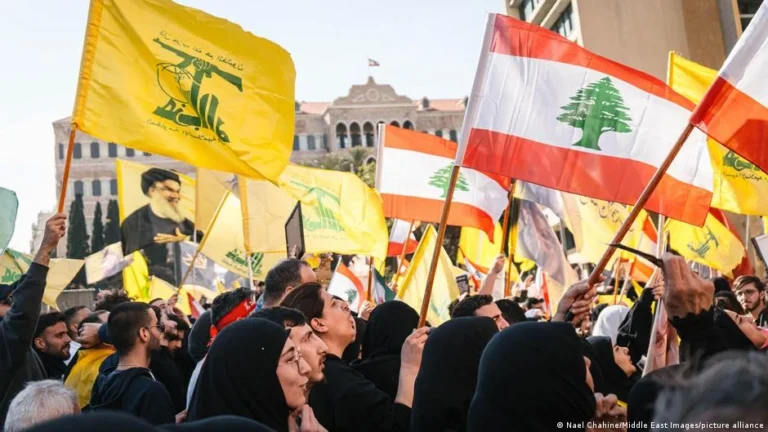
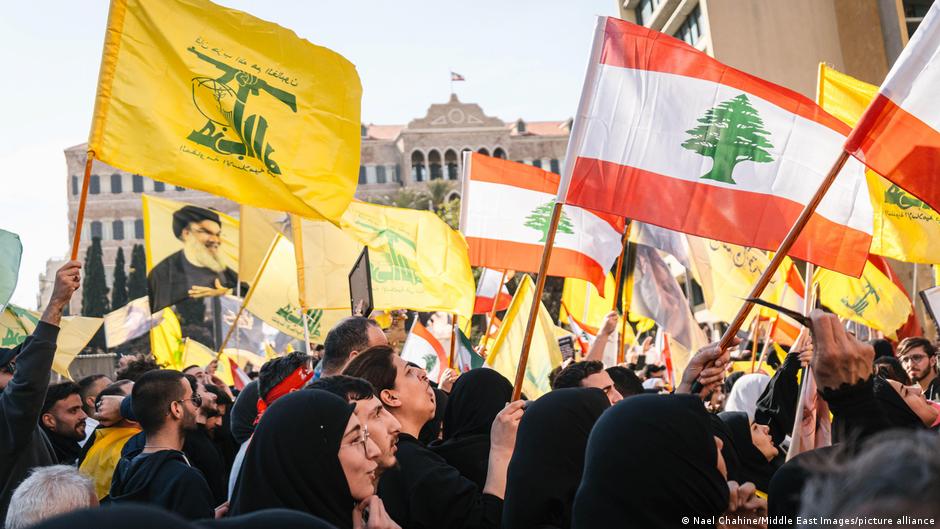
Hezbollah’s influence in Lebanon is undeniable and multifaceted. Ostensibly representing Lebanon’s Shiite Muslim population, which constitutes approximately 30% of the country, the group is widely described as a "state within a state." This characterization stems from its extensive social welfare programs, significant political outreach, and, critically, a formidable military wing that is widely considered to be more powerful and better equipped than Lebanon’s own national army.

Hezbollah strategically positions itself as a staunch defender of Lebanese sovereignty, particularly in the context of ongoing conflicts with Israel in southern Lebanon. The group actively engages Israeli forces in the region, where Israel has established what it terms a "buffer zone" for security purposes. This role as a resistance movement against perceived Israeli aggression is central to Hezbollah’s popular appeal and legitimacy among its base.
However, Hezbollah also maintains an undeniable and strong alliance with Iran, a relationship that frequently places Lebanon in the crosshairs of regional geopolitical rivalries. In early March, following the assassination of Iran’s supreme leader, Hezbollah launched rockets at Israel, precipitating a significant escalation in Israeli retaliatory attacks on Lebanese territory. This sequence of events has fueled accusations from Hezbollah’s detractors that the group is prioritizing Iran’s strategic interests over Lebanon’s stability, effectively dragging the country into conflicts on behalf of a foreign power. This perception is particularly contentious among a majority of Lebanese citizens who consistently express a desire to avoid being drawn into regional wars.
More recently, senior Hezbollah members have openly voiced criticism of the Lebanese government’s willingness to engage in negotiations with Israel. This stance underscores the ideological chasm between Hezbollah’s hardline anti-Israel posture and the Lebanese government’s efforts to navigate complex diplomatic pathways. Mahmoud Qomati, a senior Hezbollah member, in a YouTube interview last month, drew a provocative parallel between the Lebanese leadership and France’s Vichy government, which collaborated with Nazi Germany during World War II. While asserting Hezbollah’s commitment to national stability, Qomati also made a stark declaration: "We are capable of turning the country upside down, we are capable of overthrowing the government… but we are not doing anything." This statement, while emphasizing restraint, simultaneously highlights Hezbollah’s perceived capacity for forceful intervention, further complicating the narrative surrounding its intentions and potential actions.
Expert Consensus: An Unlikely Coup Scenario
Despite the political tensions and Hezbollah’s demonstrated capabilities, experts largely dismiss the likelihood of a coup attempt at this particular juncture. Amal Saad, a political scientist and leading expert on Hezbollah at the UK’s Cardiff University, provides a compelling strategic rationale for why a coup would be counterproductive for Hezbollah at this time. "Hezbollah has always been averse to civil strife but is even more so in the war context because of the displaced," Saad explains. She points to the staggering figure of "over a million" Lebanese citizens displaced from southern Lebanon due to the ongoing conflict. Saad argues that any civil unrest, such as a coup, would severely exacerbate the humanitarian crisis, directly impacting the very population Hezbollah purports to represent and protect. "That’s why a coup now is not on the cards," she concludes.
Further corroborating this assessment, a former senior Israeli defense official, speaking anonymously during an online panel, expressed similar skepticism. "I don’t think a coup is a real possibility," he stated. He offered a nuanced perspective on the dynamics within the Lebanese military, noting that "if Hezbollah initiated a coup, the Shia soldiers in the army would fight with the Lebanese army. Whereas if the Lebanese army decided to dismantle Hezbollah, they’d likely defect or not participate." This analysis suggests that a Hezbollah-led coup would likely fracture the national army along sectarian lines, potentially sparking a wider civil conflict, an outcome that Hezbollah has historically sought to avoid, especially during periods of external pressure. The group’s strategic calculations prioritize maintaining internal cohesion, even if fragile, to focus on its external adversaries.
Regional Geopolitics and Conflicting Interpretations of the Attacks
The narrative of a thwarted coup must also be viewed within the broader context of regional geopolitics and the complex interplay of diplomatic efforts and military actions. The recent Israeli attack occurred against a backdrop of tentative diplomatic maneuvers, including a ceasefire agreed upon by the United States and Iran. However, it quickly became apparent that Lebanon was not explicitly included in this initial regional ceasefire, creating a period of heightened uncertainty for the country.

Amidst this evolving landscape, new talks between Lebanon and Israel commenced in Washington on Tuesday, with a primary objective to address Hezbollah’s role in Lebanon. This diplomatic track adds another layer of complexity to the interpretation of the Israeli strikes and the subsequent coup allegations.
The belief in the coup story, or its rejection, appears to be deeply intertwined with pre-existing political affiliations and perspectives within Lebanon. Makram Rabah, a professor at the American University of Beirut, offered one interpretation, writing for the local media outlet Now Lebanon: "The country woke up to the possibility of peace under the mistaken impression that the Iran-US ceasefire somehow included Lebanon. Hezbollah, instead of asking how the displaced might return to their homes, appears to have moved directly to the more urgent national priority of toppling a government still invested in ending the bloodshed." This perspective suggests that Hezbollah’s alleged coup attempt was a cynical move to undermine a government seeking peace, driven by a miscalculation of regional diplomatic shifts.
However, a starkly contrasting view was put forth by the Francophone citizen media initiative Libnanews. This outlet countered vigorously, stating, "The Israeli account of a Hezbollah coup appears to be a pretext for disproportionate bombing of Lebanon." Libnanews argued that "What bothered Israel was not an imaginary putsch. What bothered Israel was the dynamics of negotiations [between the US and Iran]." The publication posited that the US-Iran talks, by opening up the possibility of a broader regional ceasefire, threatened to restrict Israel’s military freedom of maneuver in Lebanon. Consequently, Israel, according to Libnanews, "did not prevent a coup that never happened. It used a political pretext to justify an offensive of overwhelming violence, at a time when diplomatic dynamics might escape it. And it was Lebanon, once again, that paid the heaviest human price." This analysis frames the Israeli attacks and the accompanying coup narrative as a calculated political and military strategy to reassert dominance and influence regional diplomatic outcomes.
Conclusion: A Narrative Under Scrutiny
The Israeli attack on Lebanon, which caused extensive casualties and devastation, has been inextricably linked to a highly contested narrative of a foiled Hezbollah coup. While conservative commentators and certain regional media outlets enthusiastically propagated this story, tracing its origins to a partisan social media user, it has been met with a resounding silence from official channels—Hezbollah, the Lebanese government, and the Israeli government alike. Furthermore, key elements that initially lent credibility to the story, such as the Prime Minister’s canceled trip and the "Zoom call" rumor, have either been subject to alternative interpretations or directly debunked by technical experts.
Expert analysis suggests that a coup would be strategically illogical for Hezbollah at this time, given the ongoing humanitarian crisis and the potential for severe internal strife. Instead, the "coup" narrative appears to serve distinct political functions, either as a justification for Hezbollah’s alleged actions in the eyes of its critics or, more cynically, as a pretext for Israel’s military actions aimed at disrupting regional diplomatic processes and asserting its strategic interests. In this complex and often opaque geopolitical landscape, it is Lebanon and its people who continue to bear the brunt of the violence, paying the heaviest human price for contested narratives and strategic maneuvers. The events underscore the critical importance of scrutinizing information, especially in conflict zones, where truth can become a casualty of war and political expediency.