The geopolitical landscape of the Middle East has undergone a profound transformation throughout 2026, marked by a shift in power dynamics within the "axis of resistance"—a network of militant groups aligned with and supported by Tehran. Recent observations in Iraq, where paramilitary forces were recorded echoing the specific anti-Western and anti-Israeli rhetoric traditionally utilized by the Houthi movement in Yemen, signal a hardening of ideological alignment across the region. This development occurs against the backdrop of an intensifying conflict between Iran and a coalition led by the United States and Israel, which began in late February 2026. As traditional proxies like Hezbollah face degradation from sustained military pressure, the Houthi movement has emerged not merely as a regional actor, but as the most dynamic and potentially dangerous component of Iran’s broader strategic architecture.
Chronology of the 2026 Escalation
The current regional instability can be traced back to the onset of direct hostilities between the United States, Israel, and Iran in February 2026. Following these initial strikes, various factions within the axis of resistance—including Hamas in Gaza and Hezbollah in Lebanon—sought to retaliate against US and Israeli interests. For several months, the Houthis remained relatively peripheral to the direct kinetic exchange. However, this changed significantly by late summer.
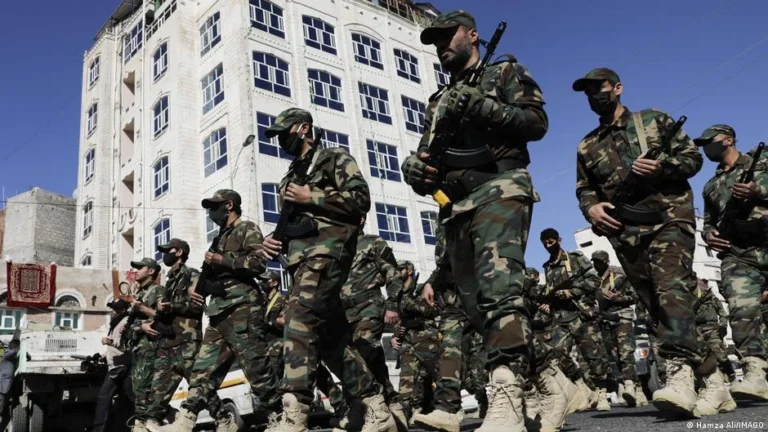
In August and September 2026, the Houthis launched an aggressive territorial campaign, seizing additional segments of the Yemeni coastline and establishing firm control over several strategic islands in the Red Sea. This expansion was not merely tactical; it represented a deliberate effort to project power over global energy transit routes. By mid-September, analysts at the Institute for the Study of War (ISW) noted that the Houthis were actively creating a "resistance-controlled body of water," directly challenging the international status quo of maritime trade and oil exports.
Strategic Shift and the Vacuum Left by Hezbollah
For decades, Hezbollah served as the preeminent pillar of Iranian influence, providing Tehran with a sophisticated deterrent against Israel and a model of political-military integration. However, recent Israeli military operations have significantly degraded Hezbollah’s operational capacity, neutralizing its command structures in Syria and weakening its domestic position in Lebanon.
The vacuum created by Hezbollah’s attrition has been filled by the Houthis, who are demonstrating capabilities that exceed the previous benchmarks set by their Lebanese counterparts. A pivotal moment occurred this week when the Houthis reportedly downed a Saudi F-15 fighter jet using a modified surface-to-air missile. While Hezbollah has historically engaged with Israeli drones and aircraft, the successful destruction of a high-performance jet marks a new escalation in the technological sophistication of the Houthi arsenal.

Experts suggest that the Houthi leadership, particularly Abdul Malik al-Houthi, is consciously modeling his public persona and strategic rhetoric after the late Hezbollah leader Hassan Nasrallah, who was killed in 2024. Yet, while Nasrallah acted as the "fixer" or coordinator for the axis, al-Houthi is now commanding a level of leverage that exceeds his predecessor. The recent evidence of Iraqi paramilitary groups coordinating attacks on Saudi infrastructure at the behest of, or in alignment with, Houthi-directed strategies suggests that the center of gravity within the axis has shifted from Beirut to Sanaa.
Economic and Territorial Implications
The Houthi strategy is intrinsically linked to the control of regional choke points. The Bab el-Mandeb Strait, which connects the Red Sea to the Gulf of Aden, is a vital artery for global oil and commodity shipments. By establishing a permanent military presence on the islands within this corridor, the Houthis have effectively created a second front for Iran, mirroring the ongoing struggle for control in the Strait of Hormuz.
The economic implications are severe. With the Houthis acting with increased autonomy, they are less susceptible to the diplomatic pressures that might constrain a more integrated political entity like Hezbollah. The group’s refusal to participate in the international financial system—or to provide basic public services to the Yemeni population—insulates them from standard economic sanctions. Their governance model, which centers on a "zero-sum" ideology of perpetual struggle, ensures that all available resources are diverted to the military effort, further entrenching their control over the Yemeni territory they occupy.
The Question of Iranian Command and Control
A significant point of contention among regional analysts remains the degree of direct control Tehran exercises over the Houthi movement. Unlike Hezbollah, which has historically functioned as a direct arm of the Iranian Islamic Revolutionary Guard Corps (IRGC), the Houthis maintain a distinct domestic constituency and a localized ideological project.
Andreas Krieg of King’s College London argues that the Houthis possess a higher degree of agency than other proxies. "Tehran can enable them, arm them, and benefit from their actions, but it cannot necessarily switch them on and off at will," Krieg noted. This autonomy is viewed by some as a liability for Iran, while others suggest it provides the Houthis with a "psychological advantage" that makes them more effective, as they are not perceived as mere puppets but as ideological crusaders in their own right.
Conversely, Farea al-Muslimi of Chatham House points to the deepening integration of the two entities. The transfer of sophisticated weaponry and reports of coordination regarding the closure of the Bab el-Mandeb suggest that the relationship is moving toward a more formal alliance. The alignment has tightened significantly over the past 24 months, with Houthi leaders increasingly framing their local struggles against the Saudi-led coalition as a subset of the broader, existential war against the US and Israel.

Human Cost and Regional Stability
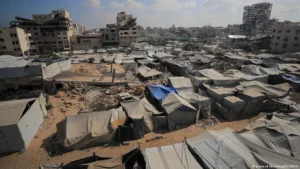
The human cost of this strategic pivot has been devastating for the Yemeni people. According to the United Nations, the intensification of fighting since the beginning of September 2026 has resulted in the displacement of at least 125,000 civilians. The Houthi reliance on martyrdom-focused rhetoric has proven particularly dangerous to the local population, as the leadership has shown a willingness to sacrifice civilian infrastructure to maintain military pressure on their adversaries.
The international community, led by the US and regional partners, faces a complex dilemma. Traditional military campaigns aimed at dislodging the Houthis have historically failed, and the group’s lack of participation in global markets renders economic sanctions largely ineffective. The Houthi doctrine of "divine test through hardship" means that external pressure, such as airstrikes on critical infrastructure or the blockade of ports, is often incorporated into their internal propaganda as proof of their righteousness.
Future Outlook and Policy Challenges
As the war enters its next phase, the "axis of resistance" appears to be re-orienting itself around the Houthis. The implications for the Middle East are profound: a, emboldened, technologically proficient, and ideologically rigid actor now controls the entry point to the Red Sea, effectively holding a significant portion of the world’s energy supply hostage.
For policymakers in Washington and Riyadh, the challenge is twofold. First, they must address the immediate security threat posed by the Houthis’ anti-ship and anti-air capabilities. Second, they must determine how to decouple the Houthi movement from its Iranian support system—a task that has become increasingly difficult as the ideological and military bonds between Tehran and Sanaa have solidified.
The emergence of the Houthis as the most prominent force in the axis of resistance suggests that the regional conflict is no longer confined to the borders of the Levant. It has expanded into a truly maritime and continental struggle, one that pits the interests of the international maritime order against a coalition that is increasingly decentralized, ideologically uncompromising, and strategically lethal. As the conflict continues, the Houthi model—defined by its autonomy and extreme disregard for the status quo—may well become the defining template for regional militancy for the remainder of the decade.