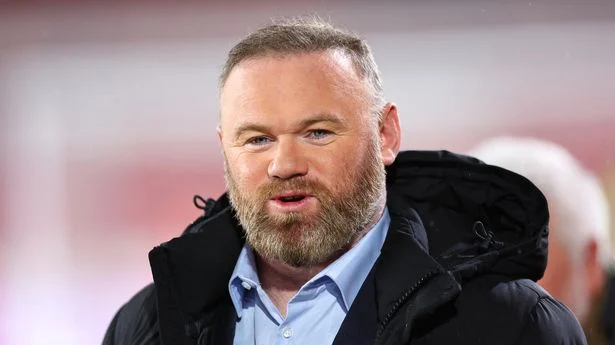
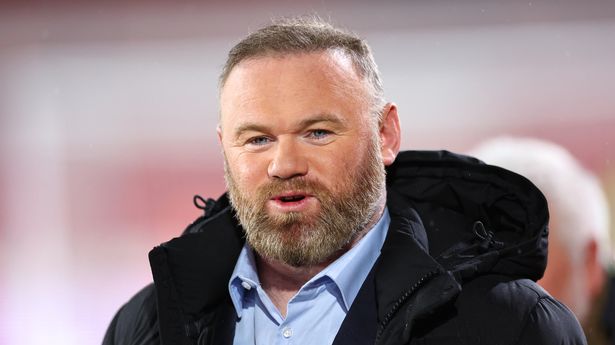
Manchester United’s legendary former captain and all-time leading goalscorer, Wayne Rooney, has launched a blistering critique of the current first-team squad, placing the burden of responsibility for the club’s ongoing decline squarely on the shoulders of the players. Following a demoralizing performance against Bournemouth that left the visiting supporters incensed, Rooney’s assessment highlights a widening chasm between the expectations of the club’s historic identity and the lackluster reality of its current output.
The discourse surrounding the club’s internal struggles has shifted from tactical dissatisfaction to questions of fundamental character. Rooney, who remains a deeply influential figure in the history of Manchester United, explicitly argued that the squad is failing to protect interim manager Michael Carrick, who has been left to navigate a public relations and performance nightmare largely alone.
The Anatomy of the Bournemouth Collapse
The match against Bournemouth serves as a microcosm of the systemic issues currently plaguing the club. The performance was characterized by a lack of intensity, poor defensive transitions, and a noticeable absence of collective urgency. At the full-time whistle, the visceral reaction from the traveling supporters was not merely one of disappointment, but of profound anger—a sentiment that Rooney believes is entirely justified given the lack of visible effort on the pitch.
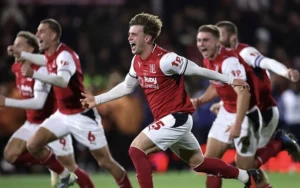
In his post-match analysis, Rooney pointed to the visual evidence of the players walking toward the away end after the defeat. He noted that the body language of the players was disconnected from the emotional investment of the fans, suggesting that the squad is currently devoid of the grit and resilience that once defined Manchester United’s championship-winning sides.
Rooney’s Assessment of the Dressing Room Culture
Rooney’s comments centered on a lack of accountability. He questioned the work rate, the speed at which the players reacted to loose balls, and the overall level of passion displayed under the current pressure. "I don’t think the players have a leg to stand on," Rooney remarked, emphasizing that the standards required to represent the club are being consistently missed.
Perhaps most damning was his desire to confront the squad directly: "I’d love to go into that dressing room and sit them down and ask what they are doing. What type of performances do you think these are?" This sentiment reflects a growing concern among pundits and former players that the current dressing room lacks the leadership necessary to arrest the club’s slide. According to Rooney, even if there are individuals within the group who care about the club’s trajectory, they are being effectively neutralized by a broader culture of apathy.
Historical Context and Recent Performance Metrics
To understand the weight of Rooney’s criticism, one must consider the historical context of Manchester United’s decline. Since the departure of Sir Alex Ferguson in 2013, the club has struggled to find a consistent identity. Despite significant financial investment in the transfer market—spending hundreds of millions on marquee signings—the club’s trophy cabinet has remained largely stagnant relative to its domestic rivals.
Statistically, the current season has been one of the most challenging in the post-Ferguson era. The team’s metrics regarding expected goals (xG), ball progression, and defensive recoveries have all dipped below the averages maintained by top-four contenders. The match against Bournemouth was not an isolated incident but rather the latest in a series of lackluster results that have seen the club drop points against teams lower in the Premier League table.
Key performance indicators (KPIs) such as distance covered per match and high-intensity sprints have consistently ranked in the lower half of the league for Manchester United this season, supporting Rooney’s assertion that the team is not "getting to the ball quickly enough."
The Chronology of the Current Crisis
The current turmoil did not occur in a vacuum. The timeline of the 2024-2025 season has been marked by a lack of stability:
- Pre-Season Expectations: High hopes were pinned on tactical adjustments and squad refinement during the summer window.
- The Early Campaign: An inconsistent start led to early pressure on the coaching staff.
- The Mid-Season Slump: A string of poor results across both domestic and European competitions culminated in a loss of confidence within the squad.
- The Bournemouth Incident: The recent defeat acted as a flashpoint, triggering open criticism from club icons.
This sequence of events has left the club in a precarious position. With the January transfer window approaching, the pressure is mounting on the board to make decisive structural changes, though, as Rooney noted, the solution may lie within the players themselves rather than external recruitment.
Official Responses and Internal Dynamics
While the club’s official communications have remained focused on unity and the need for a "collective response," the disconnect between the boardroom, the coaching staff, and the supporters is palpable. Michael Carrick, tasked with holding the group together, has largely focused on tactical discipline in his press conferences. However, the criticism from an figure as prominent as Wayne Rooney forces the conversation toward player psychology and professional standards.
Other former players have echoed similar concerns, noting that the "United way"—a historical commitment to attacking football and relentless intensity—has been replaced by a cautious, reactive approach that fails to intimidate opponents. The lack of vocal leadership on the pitch, often cited as a deficiency in recent years, appears to have reached a breaking point.
Broader Implications for the Club
The implications of this ongoing crisis extend far beyond a single match or a single season. Manchester United risks losing its status as a primary destination for elite talent if it cannot demonstrate a clear pathway to competitiveness. Furthermore, the alienation of the fan base—symbolized by the reactions at Bournemouth—could have long-term commercial and cultural impacts.
If the players fail to respond to the mounting public pressure, the club may be forced into a total overhaul of the squad, which presents its own financial and logistical challenges. The "rebuild" narrative, which has been the dominant theme at Old Trafford for over a decade, is now being scrutinized for its lack of tangible results.
Analytical Conclusion: A Crisis of Identity
The fundamental issue highlighted by Rooney is not necessarily one of raw talent, but of professional application. The modern Premier League is an environment where the margins between success and failure are razor-thin, dictated by physical intensity and mental fortitude. When a team loses these attributes, even the most tactically astute managers struggle to deliver results.
As the season enters its most critical phase, the focus will remain on whether the current squad can find the internal motivation to rectify these issues. Rooney’s critique serves as a stark reminder that the history of Manchester United was built on players who took personal responsibility for their performance. For the current generation, the challenge is to prove that they are not just "drifting" through their contracts, but are capable of embodying the competitive spirit that the club’s supporters demand.
The coming weeks will likely determine the fate of the current coaching structure and the long-term direction of the squad. Whether this public call to action serves as a catalyst for change or merely highlights the depth of the division remains to be seen. However, one thing is certain: the era of patience from the fan base has come to an end, and the players are now firmly in the spotlight, with nowhere left to hide.