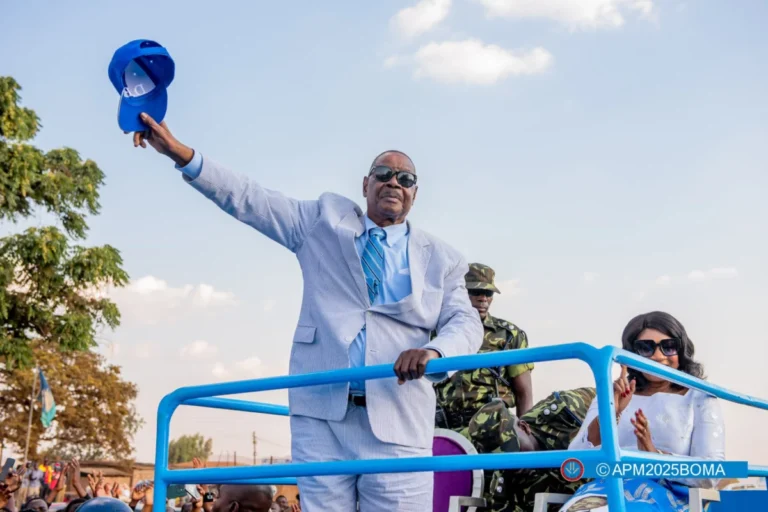
A seemingly innocuous government press release, intended to quell whispers about Malawi’s Vice-President, Jane Mayemu Ansah, has inadvertently cast a spotlight on a more profound and enduring trend: the escalating concentration of executive power within the Office of the President. Issued on March 28, 2026, by the Office of the President and Cabinet (OPC) and bearing the signature of Chief Secretary Justin Saidi, the statement vociferously refuted social media claims alleging that Ansah was being “victimised and systematically sidelined.” Characterizing these allegations as “false, baseless and deliberately misleading,” the release invoked Section 90(1) of Malawi’s constitution, which mandates that presidential decisions be expressed in writing under the president’s signature. Yet, the very act of deploying the nation’s most senior civil servant to counter unverified online speculation suggests that the underlying issues are far more substantial than mere political gossip, touching upon critical aspects of governance, accountability, and the internal balance of power within the Malawian executive.
The Genesis of Controversy: DoDMA’s Disputed Transfer
At the heart of the unfolding drama lies the contentious transfer of the Department of Disaster Management Affairs (DoDMA) from the Office of the Vice-President to the OPC. This administrative reorganisation, initially framed as part of a broader public sector reform agenda, carries significant implications for disaster governance, donor confidence, and the functional autonomy of the vice-presidency. Chief Secretary Saidi first announced this move on January 10, 2026, alongside the transfer of responsibility for public sector reforms itself to the OPC. While presented as a mere bureaucratic adjustment, in practical terms, these changes effectively stripped the Vice-President of her most substantive operational portfolio.
The timing and context of this transfer are crucial. In November 2025, shortly after commencing his second term in office, President Peter Mutharika had specifically delegated oversight of DoDMA to Vice-President Ansah. This delegation had briefly elevated her role, assigning her a direct and critical function in the nation’s administrative machinery. However, within weeks of this assignment, a public relations crisis erupted around Ansah’s Christmas 2025 visit to Nottingham, United Kingdom. Reports circulated widely, detailing an estimated cost of $97,000 in official travel expenses for the trip. The public outcry and media scrutiny surrounding this expenditure were intense, questioning the propriety of such a lavish outlay during a period of severe economic hardship for many Malawians. By January 2026, mere weeks after the Nottingham controversy, DoDMA was swiftly moved out of her office, raising immediate questions about a potential punitive link between the public backlash and the administrative restructuring.
Budgetary Reflections and Parliamentary Concerns
The implications of DoDMA’s transfer soon manifested in the national budget for the 2026/27 fiscal year. Parliament approved an allocation of K6.81 billion (approximately $3.9 million USD) for the Office of the Vice-President, marking a noticeable reduction from the previous year’s budget. This budgetary cut, while explained by Finance Minister Joseph Mwanamvekha as a structural adjustment linked to the transfer of public sector reform responsibilities to the OPC, did not escape scrutiny. During parliamentary debate, Dedza MP Joshua Malango voiced significant apprehension, warning that the reduced allocation could severely impede critical functions, particularly disaster management, given the crucial role DoDMA plays.
The bureaucratic adjustments, therefore, are far from trivial. DoDMA is not merely another government department; it is the linchpin of Malawi’s crisis-response architecture. The agency is responsible for coordinating humanitarian and disaster responses nationwide, working in close collaboration with vital international partners such as the United Nations, the International Red Cross and Red Crescent Movement, and numerous international non-governmental organizations across Malawi’s 18 local councils. Its institutional placement, therefore, carries tangible operational consequences, especially as Malawi faces an intensifying wave of climate shocks.
Malawi on the Frontline of Climate Crisis and Food Insecurity
Malawi is highly vulnerable to the impacts of climate change, experiencing increasingly frequent and severe extreme weather events. Since the onset of the 2025/2026 rainy season, the country has been grappling with devastating floods that have affected over 160,000 people. Reports indicate several dozen deaths, with thousands of households displaced, particularly in the Nkhotakota district, where communities have been repeatedly submerged. Compounding this humanitarian crisis, the government has declared a nationwide state of disaster as approximately four million Malawians confront acute food insecurity during the lean season, a period when food stocks are typically at their lowest before the next harvest.
Against this dire backdrop, the transfer of DoDMA occurred precisely as the flood season intensified and the food crisis deepened. Governance specialists widely regard changes in reporting lines and administrative structures in the midst of an emergency response as inherently risky, potentially disrupting critical coordination mechanisms and delaying vital aid delivery. While the immediate impact of the reorganisation on operational performance remains to be fully assessed, the timing alone has sparked considerable concern among observers of Malawian governance.
A Pattern of Centralisation: Echoes of the Past
This is not the first instance of such institutional maneuvering within Malawi’s executive. In 2020, during his first term, President Mutharika similarly removed DoDMA from the Office of the Vice-President. That action followed a landmark decision by the Constitutional Court, which annulled the disputed 2019 presidential election results and reinstated then-Vice President Saulos Chilima. At that time, DoDMA was elevated to a standalone ministry, a move widely interpreted by political analysts as a deliberate attempt to curtail Chilima’s political influence and diminish his operational portfolio following his unexpected return to office.
However, the current situation with Vice-President Ansah presents a nuanced difference. Unlike Chilima, who emerged as a formidable political rival with an independent support base, Ansah is not perceived as a challenger to Mutharika’s authority. She served as his running mate and previously chaired the Malawi Electoral Commission, notably presiding over the very 2019 election that was later annulled. Her political fortunes are, therefore, closely intertwined with the presidency, making her an unlikely target if the primary aim were to contain a political challenger.
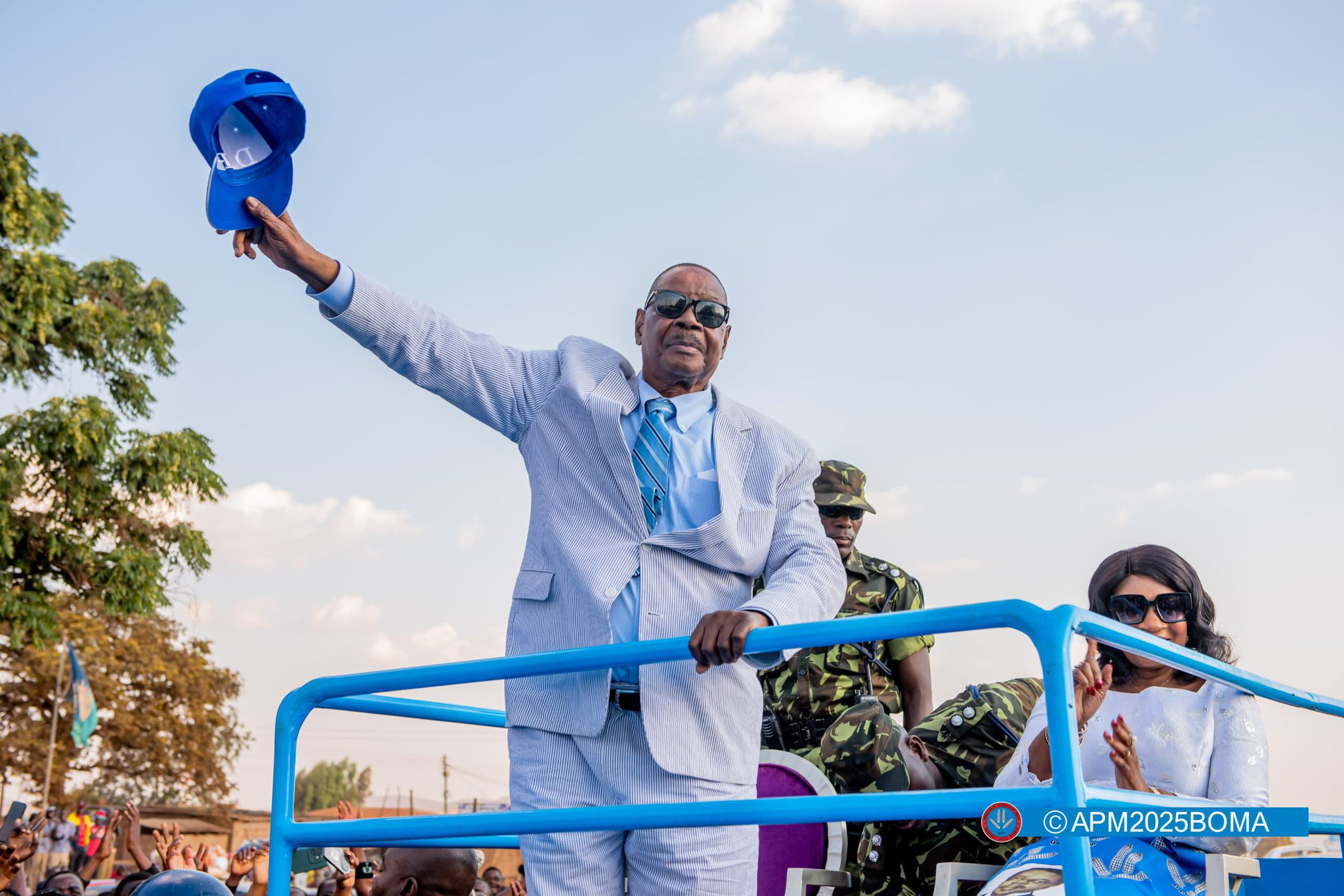
This distinction suggests that the drivers behind the current restructuring may lie elsewhere. Potential factors include the political fallout from the Nottingham travel controversy, which may have necessitated a public demonstration of accountability or a reshuffling of responsibilities. Alternatively, internal factional dynamics within the ruling Democratic Progressive Party (DPP) could be at play, or the move could simply reflect a governing style that gravitates towards centralisation, especially when the administration faces external pressures or internal scrutiny.
Constitutional Ambiguity and Executive Discretion
Malawi’s constitutional framework grants the vice-president limited institutional independence. Section 79 of the constitution stipulates that the vice-president exercises powers conferred by the constitution, by legislation, and significantly, by the president. In practice, this provision means that the vice-president’s substantive responsibilities are largely at the discretion of the president. This inherent flexibility in defining the vice-president’s role can, at times, lead to a situation where the office holder remains formally in place, attending cabinet meetings, but gradually loses significant operational responsibilities and administrative authority.
The OPC statement, in its defense of Ansah, explicitly stated that she “continues to fully discharge her constitutional duties, including participating in Cabinet meetings.” While technically true, critics argue that cabinet attendance alone does not equate to real administrative authority or substantive influence over policy implementation, particularly when key operational departments are removed from one’s purview. This highlights a fundamental tension between constitutional provisions and practical governance, where presidential discretion can significantly alter the balance of power within the executive without violating explicit legal statutes.
Economic Vulnerabilities and Donor Confidence
The ongoing political and administrative maneuvers unfold against a backdrop of severe economic strain for Malawi. When President Mutharika returned to power in September 2025, he inherited an economy struggling with significant challenges. Inflation remained stubbornly high, exceeding 24% at the start of 2026, severely eroding the purchasing power of ordinary Malawians and exacerbating poverty. Public finances were under intense pressure, with the 2026/27 national budget projecting a fiscal deficit of approximately 9% of GDP – a level widely considered unsustainable.
In response to these fiscal pressures, the government has introduced a series of austerity measures, including reductions in ministerial fuel allocations, limits on vehicle purchases for government officials, and cuts to embassy staffing. These measures are critical for restoring fiscal stability and signaling commitment to prudent economic management. However, external partners and international financial institutions are watching the situation closely.
Malawi’s $175 million International Monetary Fund (IMF) Extended Credit Facility expired in May 2024 without completing a single program review, a clear indication of a breakdown in macroeconomic management and governance. The government is now actively seeking to negotiate a new IMF arrangement, which is widely seen as a prerequisite for unlocking broader financial support. Without a credible IMF program, major donors are unlikely to resume direct budget support, which is vital for the country’s development agenda and social programs. In November 2025, Ndiame Diop, the World Bank Vice President for Eastern and Southern Africa, issued a stark warning, stating that providing budget support without macroeconomic stability would be "like putting money into a leaking bucket." This sentiment underscores the critical importance of good governance, transparency, and predictable administrative structures in maintaining donor confidence.
The perceived instability emanating from the executive’s internal dynamics, particularly concerning the vice-presidency and the handling of crucial agencies like DoDMA, could complicate Malawi’s efforts to secure vital international financial assistance. Donors and multilateral institutions often link their support to indicators of good governance, institutional strength, and political stability. Any perception of arbitrary decision-making or power centralisation, especially when it affects critical crisis-response mechanisms, risks undermining these efforts.
Conclusion: A Precarious Balance
The episode surrounding Vice-President Jane Mayemu Ansah and the transfer of DoDMA is more than just an internal administrative reshuffle; it is a vivid illustration of the delicate and often precarious balance of power within Malawi’s executive. While the government maintains that the changes are purely administrative and aimed at efficiency, critics and observers point to a pattern of increasing centralisation that could weaken democratic institutions and accountability.
As Malawi navigates severe climate-induced disasters, a deepening food crisis, and formidable economic headwinds, strong and stable governance is paramount. The operational effectiveness of agencies like DoDMA, combined with the perception of a functional and balanced executive, are crucial not only for addressing immediate humanitarian needs but also for securing the long-term confidence of both its citizens and its international partners. The current developments signal a period of intense scrutiny for President Mutharika’s administration, highlighting the multifaceted challenges inherent in governing a nation grappling with both political complexities and pressing humanitarian imperatives.
This article was made possible by a partnership with the Centre for Investigative Journalism Malawi.