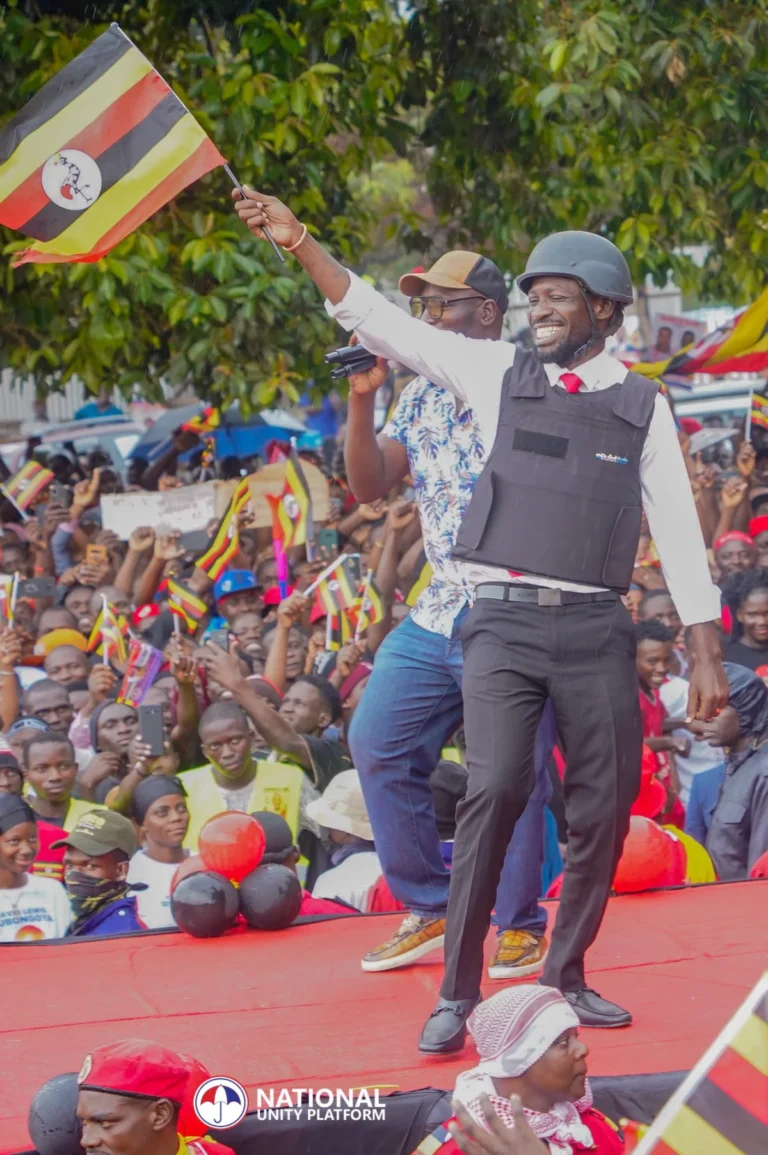
Two months after another contentious presidential election in Uganda, President Yoweri Museveni, a figure who has dominated the nation’s political landscape for nearly four decades, continues to grapple with persistent pressure from his formidable opposition leader, Robert Kyagulanyi Ssentamu, popularly known as Bobi Wine. The transformation of a charismatic pop star into a defiant politician has injected a new, vibrant, and often volatile dynamic into Ugandan politics, challenging the established order in unprecedented ways. Bobi Wine’s recent transition from the bustling streets of Kampala to a self-imposed exile in the United States underscores the severe risks and escalating repression faced by those who dare to contest Museveni’s prolonged grip on power. From his vantage point abroad, the 44-year-old activist has embarked on a determined mission: to galvanize international support, advocate for sanctions against the 81-year-old president, and expose what he describes as a systematic dismantling of democratic institutions in his homeland.
Meanwhile, back in Uganda, the machinery of the state continues its relentless crackdown on Bobi Wine’s allies and supporters, a clear signal of the regime’s resolve to quash dissent. Speaking at a public lecture at George Washington University, Bobi Wine articulated a stark warning, urging the international community to cease legitimizing Museveni’s government and calling on development partners to terminate cooperation. His concerns extend beyond Uganda’s borders, cautioning that the "mode of dictatorship" prevalent in the East African nation could be exported, destabilizing other countries in the region. This assertion highlights the broader implications of Uganda’s political trajectory, positioning it as a bellwether for democratic regression in Africa.
The Rise of a ‘Ghetto President’
Bobi Wine’s journey from the impoverished slums of Kamwokya in Kampala to the forefront of national politics is a narrative deeply resonant with a significant portion of Uganda’s young, disenfranchised population. Born in 1982, Robert Kyagulanyi Ssentamu carved out a hugely successful career as a musician, earning the moniker "Ghetto President" through his socially conscious lyrics that often critiqued inequality, corruption, and political oppression. His music, a blend of reggae, dancehall, and traditional African rhythms, became the soundtrack for a generation yearning for change.
In 2017, he made a seismic leap from entertainment to activism, winning a by-election for the Kyadondo County East constituency. This victory was more than just a parliamentary seat; it was a powerful demonstration of his ability to mobilize voters outside established political party structures, tapping into a deep well of popular discontent. His "People Power" movement, characterized by its red berets – a symbol later controversially banned by the government – rapidly evolved into a formidable political force. Under the banner of the National Unity Platform (NUP), Bobi Wine mounted a highly publicized presidential bid in the 2021 elections, presenting himself as the youthful antithesis to Museveni’s decades-long rule. He promised to dismantle what he termed a "kleptocracy," advocating for comprehensive reforms aimed at economic justice and democratic accountability.
Challenging President Museveni, often referred to as "Mzee" (respected elder) and seen by his rural base as the indispensable guarantor of stability who brought order out of the chaos of the 1980s, comes at an immense personal and political cost. In the 2021 election, widely criticized for irregularities and a heavily skewed playing field, Museveni of the ruling National Resistance Movement (NRM) secured a seventh term with 58.64% of the vote, while Bobi Wine officially garnered 34.83%. However, Bobi Wine and his supporters vehemently disputed these results, citing widespread fraud, intimidation, and violence. The air in Kampala, while carrying the scent of daily life, also carries the palpable weight of Museveni’s feared name, and for those who dare challenge him, life has often devolved into a nightmare, as exemplified by Bobi Wine’s current exile.
A Desperate Escape and the Price of Dissent
Speaking to the Mail & Guardian from the United States, Bobi Wine recounted the harrowing circumstances of his departure, asserting that his flight was not an act of permanent retreat but a strategic move "to live to fight another day." He firmly believes that had he remained in Uganda, his life would have been in grave peril. For nearly 60 days following the disputed January 15, 2021, presidential election, Bobi Wine became Uganda’s most wanted man, his residence in Magere placed under a suffocating military siege involving drones and elite counter-terrorism units. Yet, against all odds, he managed to slip through the dragnet on the very night Museveni was declared the winner.
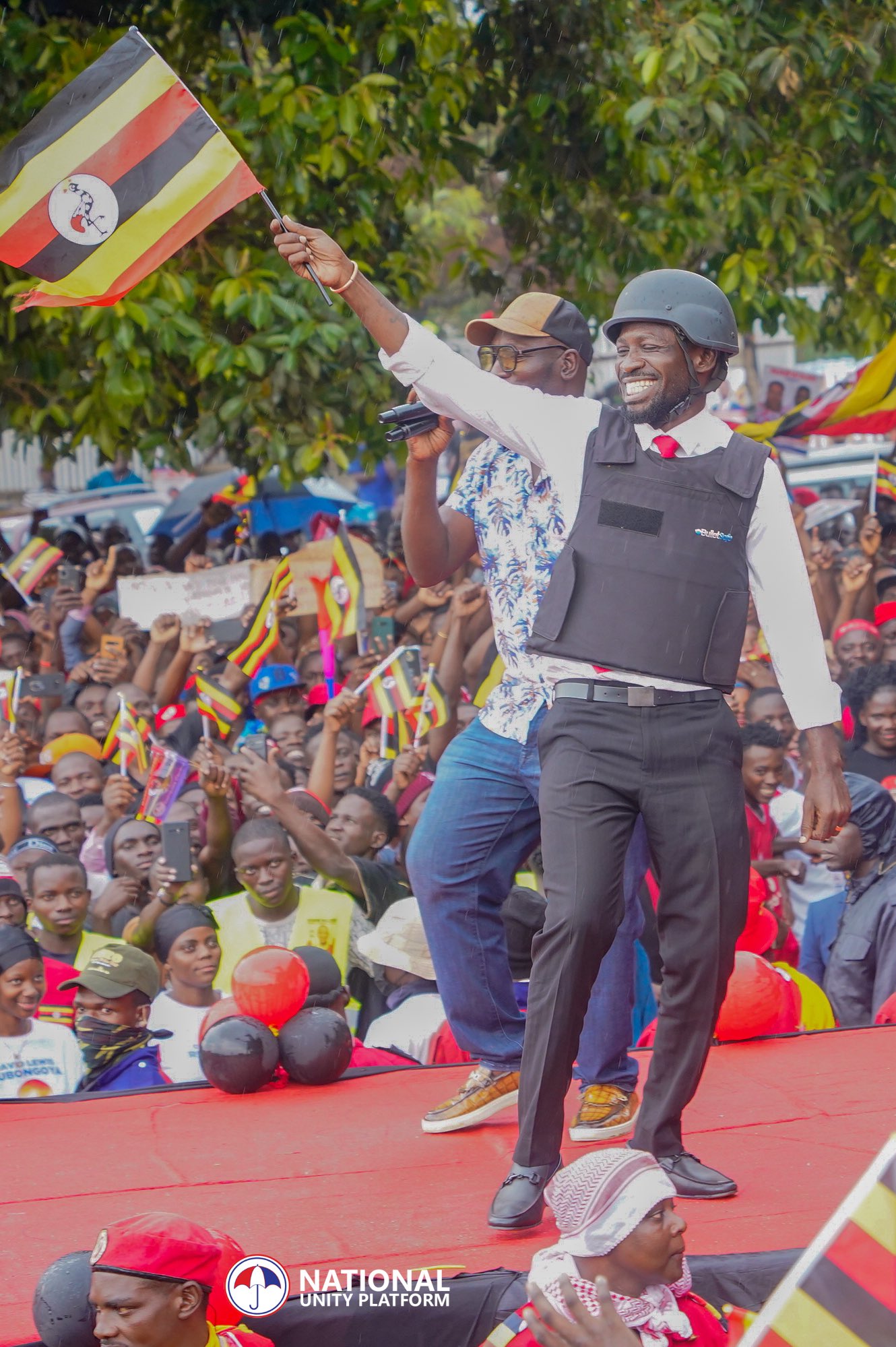
"The day after the elections, I was raided, but I was able to escape from my house. On another raid a few days later, my house was overrun, my wife severely beaten, and my family members tortured," he revealed. "My wife was later hospitalized and was facilitated to escape from the hospital. Then she also had to escape Uganda with our children." He declined to disclose their current whereabouts, emphasizing the need for their safety. While his family sought refuge abroad, Bobi Wine remained in Uganda, relying on an intricate network of "boda boda" (motorcycle taxi) riders and local supporters who provided food, shelter, and clandestine transport. During this period, security forces conducted extensive raids on the homes of his associates, intensifying the dragnet.
Remarkably, Bobi Wine credits some of Museveni’s own enforcers with facilitating his escape. "There are many oppressed men and women in uniform, and these are the people who helped me to escape. That’s why, to me, the issue is about the Ugandan people versus their oppressors," he stated, highlighting a simmering discontent even within the state’s security apparatus. His audacious escape ignited significant internal friction within the Ugandan government. The police disciplinary unit within the directorate of counter-terrorism arrested nine of the sixteen counter-terrorism guards assigned to him, charging them with "neglect of duty," a move that underscored the high-stakes nature of the incident and the embarrassment it caused the regime.
Bobi Wine’s successful evasion also meant he avoided a direct confrontation with the military, particularly with Museveni’s son, General Muhoozi Kainerugaba. Muhoozi, a prominent and often controversial figure, has openly employed bullying tactics on social media platforms like X (formerly Twitter), often referring to Bobi Wine disparagingly as "KaBobi." More chillingly, Muhoozi has publicly threatened to "behead" Bobi Wine or "castrate" his associates, statements that amplify the climate of fear and repression. While these threats undoubtedly spurred Bobi Wine into exile, he maintains they have not diminished his political ambitions. "My fight is in Uganda. I am aware that no one but us, the youth, will save us from the oppressors," he asserted, reiterating his commitment to the struggle.
The Maimed Voice of the Youth
Bobi Wine firmly believes that if Ugandan youths do not push for change now, the task will become even more arduous in the future. "We cannot wait for anyone to come save us. It’s our present and future. Let’s deal with it ourselves," he declared, echoing the sentiment of a generation that feels increasingly marginalized. Ahead of the 2021 elections, a significant portion of the youth vowed to vote against what they termed "geriatric autocracy" in favor of dynamic, youthful leadership that better understood their challenges. This sentiment was particularly strong in urban centers like Kampala, where Bobi Wine first rose to celebrity as a musician.
Uganda has one of the youngest populations globally, with approximately 77% of its populace under the age of 30. According to the World Bank, Kampala exhibits the highest concentration of youth aged 18-30, comprising 32.7% of the city’s population. This demographic dividend, however, presents a significant challenge. "We are the majority and are supposed to be the most productive for our country, but that is not the case," Bobi Wine lamented. A largely unskilled youthful population faces limited job opportunities, contributing to high rates of unemployment and underemployment. Many citizens feel the acute pinch of rising food and fuel prices, exacerbating socio-economic discontent.
While Bobi Wine serves as the prominent face of this youthful resistance, countless other young Ugandans have borne the brunt of the regime’s wrath. He highlighted the plight of those who were not as fortunate to escape, citing cases like Arnold Mukose, a journalist with Alternative Digitalk Media, who was abducted. The Committee to Protect Journalists (CPJ) categorized Mukose’s case as a "forced disappearance." Angela Quintal, CPJ Africa director, issued a stern call: "Ugandan authorities must urgently reveal the journalist’s whereabouts and ensure that journalists can work without fear of being arrested or disappearing."
Another tragic instance is that of Natabi Fauzia, the wife of Bobi Wine’s assistant, Sheriff Najja, who was abducted on March 12 at the family residence when she failed to account for her husband’s and Bobi Wine’s whereabouts. Bobi Wine further claimed that more than 20 of his associates have been killed by the regime since January 2021, painting a grim picture of escalating human rights abuses. These incidents are not isolated; human rights organizations like Amnesty International and Human Rights Watch have consistently documented widespread abuses, including arbitrary arrests, torture, and extrajudicial killings targeting opposition members, journalists, and human rights defenders. The UN Human Rights Office has also expressed concerns over the shrinking civic space and restrictions on fundamental freedoms in Uganda.
Museveni’s Enduring Legacy and Contradictions
For four decades, Yoweri Kaguta Museveni has not merely occupied the presidency; he has meticulously woven himself into the very fabric of Uganda’s existence. To his loyalists and much of the rural populace, he is the "Sower," the father of the nation, or "Mzee," a revered elder who brought stability and development after years of turmoil. To his detractors, he represents the immovable object against which all political opposition eventually breaks, a symbol of autocratic entrenchment.
The "old man with a hat," as some refer to him, rose to power in 1986 following a tumultuous period that saw the ousting of Milton Obote and a brief, unstable military government led by Tito Okello Lutwa. Museveni, then leading the National Resistance Army (NRA), defied the Nairobi Peace Agreement signed in December 1985 – an accord brokered by Kenyan President Daniel Arap Moi to prevent a total military takeover. A month later, his forces captured key military installations and advanced on Kampala, seizing power and ushering in an era of relative peace after decades of civil strife under Idi Amin and Obote. Museveni frequently reminds the nation of this achievement, positioning himself as the indispensable architect of Uganda’s stability and progress.
However, a stark contradiction lies in his earlier pronouncements. Upon taking power, Museveni famously declared, "The problem in Africa is leaders who overstay." This tagline, initially a cornerstone of his reformist image, has been conveniently shelved. Instead, his current argument is remarkably different: "Some people think that being in power for a long time is a bad thing, but the more you stay, the more you learn. I am now an expert in governance." This shift reflects a gradual but deliberate consolidation of power, marked by constitutional amendments that removed presidential term limits in 2005 and the presidential age limit in 2017, effectively paving the way for his perpetual rule.
Bobi Wine, who was merely four years old when Museveni first came to power, frequently questions this fundamental betrayal of original principles. "He sounded like a reformist. He told the people that the problem Africa had was leaders who overstayed their welcome in power. But guess what? 40 years later, he is still in power, unwanted, just like the leaders he complained about," Bobi Wine lamented. In a particularly scathing indictment, he added, "If I were to be honest, Idi Amin was 10 times better than Museveni," a statement that, while provocative, underscores the depth of frustration and disillusionment among the opposition.
Implications and the Path Forward
Bobi Wine has emerged as a poster boy for African opposition politics, embodying a young, pop-culture-driven resistance to long-standing authoritarian regimes. His international campaign seeks to apply targeted pressure, similar to the Magnitsky Act sanctions, on Ugandan officials implicated in human rights abuses and corruption. He argues that continued financial aid and diplomatic recognition without accountability only emboldens the regime.
The implications of the ongoing political standoff are far-reaching. Domestically, the continued suppression of dissent, coupled with economic hardships, risks further radicalizing a predominantly young population, potentially leading to greater instability. The question of succession also looms large, with General Muhoozi Kainerugaba widely seen as being groomed for the presidency, raising fears of dynastic rule and further entrenching the NRM’s power. This prospect is met with deep skepticism and resistance from the opposition, who view it as an attempt to bypass democratic processes entirely.
Regionally, Bobi Wine’s warning about the "export of dictatorship" resonates in a continent where several leaders have clung to power for extended periods. Uganda’s role as a key regional player in counter-terrorism efforts (e.g., contributing troops to AMISOM in Somalia) and its hosting of a large refugee population complicate the international community’s response. Western powers often find themselves in a delicate balancing act, weighing strategic security interests against the imperative to promote democracy and human rights. This often results in a muted response to abuses, which critics argue undermines democratic principles globally.
The challenge for the international community is to find effective mechanisms to support democratic aspirations and human rights in Uganda without inadvertently destabilizing a crucial partner in a volatile region. This could involve more robust diplomatic pressure, targeted sanctions on individuals responsible for abuses, and increased support for civil society organizations and independent media. For Bobi Wine and his supporters, the struggle is existential. Despite the immense personal cost and the formidable power of the state, the "Ghetto President" remains committed to his fight, believing that the future of Uganda ultimately rests in the hands of its youth. His exile, while a temporary setback, has amplified his voice on the global stage, ensuring that Uganda’s political crucible remains under an international spotlight.