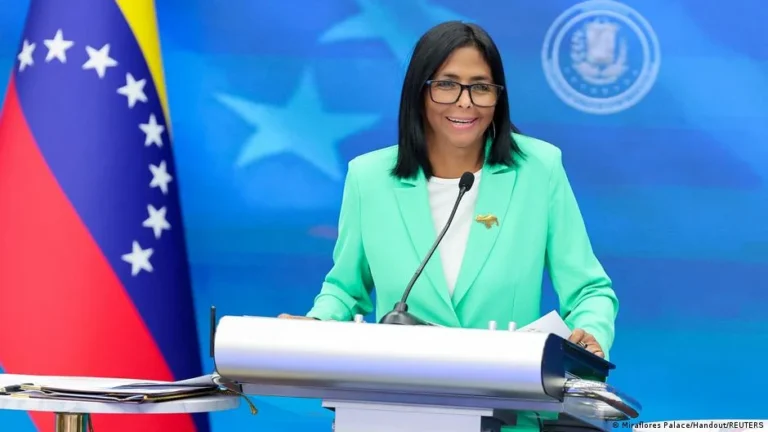
Following the dramatic capture of then-President Nicolas Maduro by US special forces on the morning of January 3, a seismic shift in Venezuela’s political landscape began, setting the stage for an unprecedented period of re-evaluation and realignment. Initially, the response from Caracas was one of fierce defiance. Then-Vice President Delcy Rodriguez swiftly condemned the operation as an act of "kidnapping" and publicly vowed that Venezuela would staunchly resist what she termed an illegal intervention by the United States. This initial posture, steeped in the revolutionary rhetoric long characteristic of the United Socialist Party of Venezuela (PSUV), suggested a protracted and hostile confrontation.
However, the tone emanating from the Venezuelan capital underwent a remarkable and swift transformation. Just a single day after Maduro’s ouster, US President Donald Trump expressed a surprising degree of confidence, stating his belief that Rodriguez was "essentially willing to do what we think is necessary to make Venezuela great again." This pronouncement hinted at behind-the-scenes negotiations and a pragmatic pivot by the new interim Venezuelan leadership. Indeed, on that very same day, the newly appointed interim president, Delcy Rodriguez, extended an invitation to the US government to "work together on a cooperative agenda." This abrupt diplomatic opening signaled a willingness to engage with Washington on terms that would have been unthinkable under Maduro’s leadership. Shortly thereafter, US Secretary of State Marco Rubio, a figure long critical of the socialist government in Venezuela, unveiled a comprehensive three-phase plan designed to guide the two nations toward a new era of cooperation and, implicitly, to reshape Venezuela’s future.
Background to a Nation in Crisis: The Road to Maduro’s Ouster
To fully comprehend the extraordinary events of early January, it is crucial to understand the tumultuous backdrop of Venezuela’s recent history. For years leading up to the intervention, Venezuela, a nation blessed with the world’s largest proven oil reserves, had been mired in a profound and multifaceted crisis. The socialist governments of Hugo Chávez and, subsequently, Nicolas Maduro, while initially benefiting from high oil prices, presided over a gradual but devastating economic collapse. Mismanagement, corruption, and a staunch anti-market ideology led to a precipitous decline in oil production, from over 3 million barrels per day in the early 2000s to less than 700,000 barrels per day by the mid-2020s. This collapse deprived the government of its primary revenue source, exacerbating hyperinflation that had raged since 2017, pushing millions into extreme poverty. Last year, the inflation rate soared to approximately 500%, effectively eroding the value of the national currency, the bolivar, almost instantly. By the time Maduro was ousted, 100 bolivars from a January paycheck were worth only 20 bolivars just weeks later. Between 50% and 80% of Venezuelan households were living in poverty, a stark testament to the economic devastation.
Politically, the country was deeply polarized. Maduro’s legitimacy was widely contested internationally, particularly after his controversial re-election in 2018, which was deemed fraudulent by numerous international observers. The United States, along with many Latin American and European nations, had recognized opposition leader Juan Guaidó as the legitimate interim president in 2019, further escalating tensions. The Trump administration had implemented a stringent sanctions regime targeting Venezuela’s oil industry and government officials, aiming to pressure Maduro’s removal. Accusations of drug trafficking, human rights abuses, and suppression of democratic freedoms against Maduro and his inner circle had also intensified. The military, a critical pillar of support for the PSUV, remained largely loyal to Maduro, but its cohesion was frequently questioned amid reports of internal dissent and corruption. The social fabric of Venezuela was fraying, marked by widespread food and medicine shortages, a crumbling infrastructure, and a mass exodus of over 7 million Venezuelans seeking refuge and economic opportunity abroad. This dire humanitarian situation provided a context in which radical change, even externally driven, might be perceived by many as a desperate hope for improvement rather than an affront to national sovereignty.
Chronology of a Rapid Power Shift
The sequence of events in early January unfolded with remarkable speed, illustrating the decisive nature of the US intervention and the pragmatism of the emerging Venezuelan leadership:
- January 3 (Morning): US special forces execute the capture of President Nicolas Maduro.
- January 3 (Day): Vice President Delcy Rodriguez issues a strong condemnation, labeling the operation a "kidnapping" and announcing national resistance against the United States.
- January 4: A dramatic reversal of tone. US President Donald Trump publicly expresses confidence in Rodriguez’s willingness to cooperate. Simultaneously, Interim President Delcy Rodriguez extends an official invitation to the US government to establish a "cooperative agenda." US Secretary of State Marco Rubio unveils a three-phase plan for cooperation between Washington and Caracas.
- January 5: With the crucial backing of the military high command and the Supreme Court, Delcy Rodriguez is formally sworn in as interim president before the National Assembly. This body has been chaired by her brother, Jorge Rodriguez, since January 2021, underscoring the family’s consolidated influence.
This rapid succession of events, from initial defiance to an open invitation for cooperation within 48 hours, highlighted a significant strategic pivot by Caracas, likely influenced by the immediate power vacuum and the overwhelming economic pressures facing the nation.
Phase 1: Consolidation of Internal Power
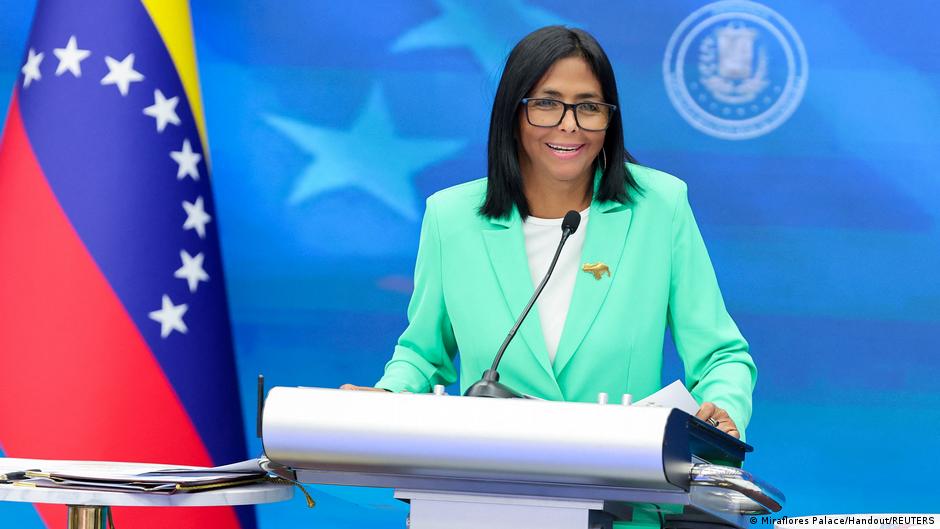
The first phase of Washington’s plan, focusing on the consolidation of internal power by the interim government, appears to have been executed with remarkable efficiency by Delcy Rodriguez. Within 100 days of taking office, she has moved decisively to fill the power vacuum left by Maduro’s ouster, establishing firm control over Venezuela’s key institutions. Her swearing-in before the National Assembly, sanctioned by both the military and the Supreme Court, conferred a semblance of constitutional legitimacy, albeit one born from an extraordinary external intervention. The presence of her brother, Jorge Rodriguez, as President of the National Assembly, further solidified her position, creating a formidable power nexus within the state apparatus.
Rodriguez embarked on a swift and strategic series of personnel changes designed to entrench her authority. Within weeks, she replaced at least 12 top officials across the judiciary, military, and various administrative bodies. The most prominent and symbolic shift occurred in March with the removal of Foreign Minister Vladimir Padrino Lopez. Padrino Lopez, a long-standing and influential figure within the Maduro regime, was widely believed to have been dismissed due to the perceived "debacle" surrounding Maduro’s capture, suggesting accountability for the security breach. He was replaced by Gustavo Gonzalez Lopez, a figure with a controversial past as the former head of SEBIN, Venezuela’s notorious secret service agency. Significantly, Rodriguez had already appointed Gonzalez Lopez as the head of her personal guard in early January, indicating a pre-existing trust and a strategic move to place loyalists in critical security roles. This swift and decisive action, particularly within the security apparatus, has largely prevented any significant power struggles from materializing. The Rodriguez government, despite its nascent status, appears stable, signaling a firm grip on the reins of power.
Caracas’s Pragmatic Shift: Playing by Washington’s Rules?
Despite numerous public denials from Caracas regarding direct foreign influence, evidence strongly suggests that Venezuela’s interim government is largely adhering to the script outlined by US Secretary of State Marco Rubio. The most telling indicator of this shift is the dramatic alteration in the official tone toward Washington. The fiery anti-imperialist rhetoric, a hallmark of the PSUV for decades, has been replaced by a newfound pragmatism and a willingness to engage.
In an early April interview with the prominent Spanish newspaper El País, National Assembly President Jorge Rodriguez, the interim president’s brother, explicitly stated that they were working "very professionally with the US government." While he maintained that Caracas was not receiving specific directives from Washington, the very use of terms like "professional" and "cooperation" stands in stark contrast to the PSUV’s historical denunciations of "US imperialists." Furthermore, Jorge Rodriguez signaled that the government was now open to implementing reforms, a significant ideological concession for a party that had long championed a socialist model resistant to external influence and market-oriented adjustments. This diplomatic pivot underscores a profound shift in priorities, driven by the immediate need for international legitimacy and, critically, economic relief. The PSUV, traditionally seen as an ideological bulwark against US influence, now finds itself navigating a complex path of accommodation, suggesting a recognition of the overwhelming geopolitical and economic realities facing the nation.
Phase 2: Economic Recovery – A New Direction for Venezuela
The second phase of the US-backed plan centers on economic recovery, a task of monumental proportions given Venezuela’s protracted crisis. For over a decade, the PSUV government under Maduro had been unable to curb hyperinflation or achieve any semblance of sustainable economic growth. Its policies had isolated Venezuela from global financial markets and stifled private investment, particularly in the crucial oil sector.
Under Delcy Rodriguez’s interim presidency, however, a radical departure from these policies has been swiftly enacted. Within weeks of her ascent, Rodriguez has spearheaded initiatives to open Venezuela’s vast oil sector to foreign private investors. This move, a direct reversal of the nationalistic resource policies of the Chávez and Maduro eras, aims to inject much-needed capital and expertise into the dilapidated oil industry, which has seen its production capacity severely eroded. This strategic shift has generated cautious optimism at home, with hopes that Venezuela’s beleaguered economy might finally begin to stabilize. Reinforcing this nascent confidence, the US rating agency Moody’s has already upgraded the country’s outlook to "stable," a significant endorsement that could encourage further international investment.
In a clear signal of this new economic orientation, Rodriguez delivered a video message at a major investor conference in Miami in late March. Her address was a direct appeal for foreign capital, targeting key sectors beyond oil, including construction, banking, insurance, and the manufacturing industry. This outreach represents a pragmatic embrace of market forces and foreign investment, a stark contrast to the previous government’s protectionist and state-centric economic model. The lifting of US sanctions on Venezuela, particularly those targeting the oil industry and specific individuals, serves as a powerful incentive for international companies to re-engage with the Venezuelan market. This confluence of policy changes and diplomatic gestures suggests a concerted effort to rebuild the economy by integrating it more fully into the global capitalist system, a strategy that would have been anathema to the previous regime.
Poverty: The Overriding Concern for Venezuelans

Despite the dramatic nature of Maduro’s capture and the external involvement in Venezuela’s political transition, the event did not trigger widespread national protests or a surge of nationalist outrage. This seemingly counterintuitive public reaction is best understood through the lens of the profound economic hardship faced by ordinary Venezuelans. As Juan Forero, the South America Bureau Chief for the Wall Street Journal, observed after returning from Venezuela in February, many Venezuelans were, in fact, "glad that Maduro is gone." Their primary concern was not abstract notions of sovereignty but the tangible hope that "things would get better" for their daily lives.
This sentiment is strongly corroborated by a comprehensive survey conducted in mid-2025 by the US institute Gallup. The survey revealed that an overwhelming 64% of respondents identified the country’s economic problems as their greatest concern. This finding is unsurprising given the devastating impact of hyperinflation and the widespread poverty that had become the lived reality for the majority of the population. In stark contrast, only 14% of those surveyed viewed the political situation itself as their number one problem, and a mere 1% cited the security situation as their top priority—a remarkable statistic for a country that has historically contended with one of the highest murder rates in the world.
These figures underscore a critical reality for the interim government: the most pressing issue for the populace is economic survival and improvement. This understanding was clearly articulated by Congress President Jorge Rodriguez in his El País interview, where he emphasized that "the most important thing right now is the economy." When pressed on the subject of democratic elections, he acknowledged that they would "happen eventually," but stressed that it was "too early to say when or in what form." This statement highlights the interim government’s strategic prioritization of economic stabilization over immediate democratic processes, a calculation likely informed by the public’s overwhelming focus on financial well-being.
However, the path to a more open and democratic Venezuela remains fraught with challenges. While the interim government has made some gestures of goodwill, such as the release of around 500 political prisoners since January, according to figures from the organization Foro Penal, roughly the same number remain in detention. This indicates a mixed approach, balancing conciliatory actions with continued authoritarian tendencies. Victor M. Mijares, a political scientist at the University of the Andes in Bogota, Colombia, critically noted to DW that "The reforms so far are not necessarily aimed at opening up and democratization, but rather at keeping the interim government in power indefinitely." He further suggested that the PSUV would likely have "little chance of winning new elections" if held today, especially given the controversy surrounding the last election victory in mid-2024, where opposition tallies indicated their candidate won by a large majority. Mijares, however, conceded that a "noticeable economic recovery could change their chances," providing a strong incentive for the current government to prioritize economic reforms above all else. WSJ correspondent Juan Forero echoed this sentiment, suggesting that Delcy Rodriguez’s government is strategically "playing for time," hoping that the United States, perhaps under a future presidential administration, might eventually lose interest in actively pushing for Venezuela’s democratization. The US has already signaled its goodwill by easing sanctions, potentially reinforcing this strategy of delay.
Phase 3: The Imperative for Elections – Will the US Pressure Endure?
The ultimate success of Washington’s three-phase plan hinges on the implementation of its third and final objective: a return to democratic elections. However, political scientist Victor M. Mijares harbors doubts about whether the interim government’s strategy of indefinite power retention, even if bolstered by economic recovery, can ultimately succeed in deterring US pressure for a democratic transition.
Mijares points to several key factors that suggest sustained US engagement. Firstly, a powerful faction within the US government, particularly figures like Secretary of State Marco Rubio, views the fight against socialism in Latin America with profound ideological seriousness. Rubio, the son of Cuban exiles, brings a personal conviction to this cause, making it unlikely that he would easily abandon the push for democratic reform in Venezuela. This ideological commitment ensures that the issue of Venezuela’s political future will remain high on the US agenda.
Secondly, significant pressure emanates from the US business community, particularly the influential oil industry. These entities, eager to access Venezuela’s vast energy resources, insist on the establishment of the rule of law and a stable, transparent legal framework before committing substantial capital. Without genuine democratic institutions and the predictability they offer, large-scale, long-term investments remain risky and unattractive. For former US President Donald Trump, the democratization of Venezuela also serves as a crucial "blueprint" for a "slow but less costly regime change" model that could be applied elsewhere, underscoring its strategic importance beyond immediate economic interests.
At the same time, the Venezuelan interim government faces an inherent dilemma. As Mijares explains, "Rodriguez would have to establish a legal framework to attract the necessary capital inflows, which as a transitional government, it is effectively unable to do." This paradox highlights the precarious legal and political position of the interim government. Its transitional nature limits its legitimacy to enact permanent, far-reaching legal reforms that would truly secure investor confidence. While it can make policy changes, the long-term enforceability and stability of these changes without a democratically elected, constitutionally recognized government remain questionable.
The tension between economic liberalization and genuine democratic transition thus defines Venezuela’s immediate future. While Delcy Rodriguez’s government has made significant strides in consolidating power and initiating economic reforms that have earned cautious approval from the US, the ultimate goal of Washington’s plan—free and fair elections—remains unaddressed. The interplay of US strategic interests, the demands of international capital, and the internal political calculations of the interim government will determine whether Venezuela moves toward a truly democratic future or settles for a stabilized but still authoritarian status quo. The coming months will be crucial in revealing the true trajectory of this pivotal post-Maduro era.