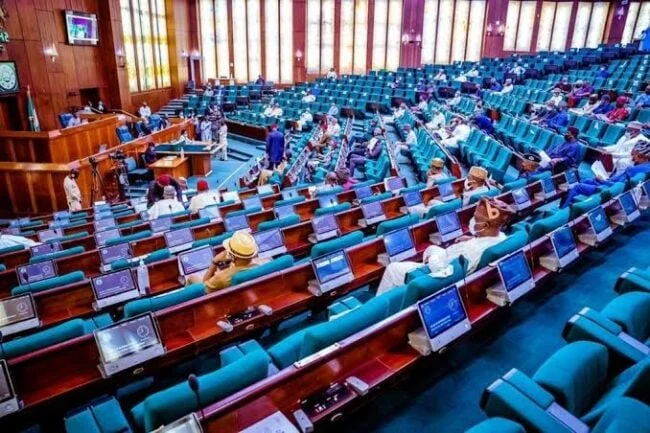
Members of the Special Ad-hoc Committee of the House of Representatives Committee on Constitution Review are poised to convene on Monday, July 21, 2026, to meticulously deliberate on the Executive State Police Bill, a landmark legislative initiative spearheaded by President Bola Tinubu. This pivotal meeting marks a significant stride in the nation’s ongoing quest to reform its security architecture and address pervasive challenges of insecurity through constitutional amendments.
The proposed legislation, a comprehensive framework designed to facilitate the establishment of State Police services across Nigeria, also aims to prescribe national minimum policing standards, ensuring a baseline of operational efficacy and human rights adherence. Hon. Benjamin Kalu, who chairs the Special Ad-hoc Committee, will preside over the debate concerning the bill’s 26 clauses. This critical review follows the bill’s successful passage through its Second Reading on Tuesday, July 14, 2026, a procedural milestone that indicates general approval of its principles by the House.
Navigating the Legislative Landscape: A Chronology of the State Police Bill
The journey of the State Police Bill through the legislative chambers has seen several procedural developments, reflecting the complexity and sensitivity of such a far-reaching constitutional alteration. An earlier iteration of the State Police Bill had been passed by the House on Thursday, June 11, 2026. However, this prior passage was subsequently reversed through a motion sponsored by Hon. Francis Waive, Chairman of the House Committee on Rules and Business. This reversal, a testament to the dynamic nature of legislative processes, paved the way for a more robust consideration of the executive proposal.
Following the re-evaluation, a Twelve-Member Conference Committee was constituted on Thursday, July 9, 2026. This committee’s mandate was to harmonize the decisions and perspectives of both chambers of the National Assembly regarding the State Police Services, a crucial step in ensuring legislative coherence and buy-in from both the House of Representatives and the Senate. The current executive bill, which subsequently passed its Second Reading on July 14, 2026, is the outcome of these ongoing legislative efforts to refine and push forward the monumental reform.
Core Tenets of the Executive Legislative Proposal: A Dual Policing System
At its heart, President Tinubu’s executive legislative proposal seeks to fundamentally alter several sections of the 1999 Constitution of the Federal Republic of Nigeria (as amended) to institute a dual policing system. Under this proposed framework, the Federal Police Service would retain its overarching responsibility for federal policing duties, including matters of national security, inter-state crimes, and federal investigations. Concurrently, individual states would be empowered to establish and operate their respective police services, tailored to their unique local contexts and security needs.
A critical component of this structural shift is the provision for the creation of State Police Service Commissions. These commissions are envisioned as independent bodies responsible for the oversight of appointment, discipline, and administration of personnel within the state-level police forces. This mechanism is designed to embed accountability and professionalism at the sub-national level, mitigating concerns about potential political interference in police operations.
The bill proposes extensive amendments to key constitutional sections, including Sections 84(4), 89(2), 121(3b) (by inserting a new subsection 3c), 124(4), 129(2), 153(1), 157(2), 158(1), 160 (by inserting a new subsection 3 immediately after subsection 2), 197(1), 201(2), and 204. Furthermore, it targets Chapter VI Part III, necessitating the deletion and substitution of Sections 214, 215, and 216. Significant revisions are also slated for the Second Schedule, Part I of the Third Schedule, Part III of the Fifth Schedule, and Section 318(1) of the 1999 Constitution. These comprehensive amendments underscore the profound impact the bill aims to have on Nigeria’s federal structure and governance.
Constitutional Guardrails and Operational Safeguards
The explanatory memorandum accompanying the legislative framework meticulously outlines the bill’s foundational principles and protective mechanisms. It explicitly states that the Federal Police Service will be preserved as the default police service in any state until a State Police Service is lawfully established and certified as operational. This provision ensures a seamless transition and avoids any security vacuums during the implementation phase. Moreover, it affirms the continuing federal policing role across all states and within the Federal Capital Territory, Abuja, emphasizing national cohesion in security matters.
A cornerstone of the proposed legislation is the establishment of "constitutional guardrails." These safeguards are designed to ensure civilian control over police forces, uphold human rights standards, enforce national minimum policing standards, guarantee the independence of police service commissions, foster intergovernmental cooperation, facilitate robust criminal information systems, regulate firearms control, and permit exceptional federal intervention in state policing. Federal intervention would be triggered only in cases of severe breakdown of order, serious incapacity of state police, threats to national security, or egregious abuse of power, providing a crucial safety net for the federation.
The bill, however, strategically leaves the detailed organization, operational procedures, command structures, certification processes, complaints mechanisms, financial grants, and broader implementation arrangements to subsequent Acts of the National Assembly and, where applicable, to the Laws enacted by the Houses of Assembly of individual states. This tiered approach allows for both national uniformity in core principles and local flexibility in operational specifics, reflecting the diverse realities of Nigeria’s states.
Strengthening Accountability and Defining Roles
One of the primary objectives of the Executive Bill is to bolster Nigeria’s security architecture by constitutionally delineating the respective roles of the Federal Police Service and the emerging State Police Services. This clarity is expected to minimize jurisdictional disputes, enhance coordination, and ultimately improve overall security outcomes. The bill also seeks to prescribe national minimum policing standards, ensuring that all police services, irrespective of their operational level, adhere to a benchmark of professionalism, efficiency, and respect for human rights.
Furthermore, the bill amends the definition of the public service of the Federation and the states. It proposes replacing references to the "Nigeria Police Force" with the "Federal Police Service" and explicitly recognizing members and staff of State Police Services and State Police Service Commissions as integral components of the public service. This institutional integration is vital for establishing legal clarity, ensuring appropriate remuneration, and providing avenues for career progression and pension benefits for state police personnel.
In a move to strengthen accountability while safeguarding operational independence, the bill proposes specific procedures for the removal of top police leadership. The Inspector-General of the Federal Police Service may be removed from office by the President, acting on an address supported by a two-thirds majority of the Senate, on grounds of misconduct, incapacity, or gross violation of the Constitution. Similarly, a State Commissioner of Police may be removed by the Governor, upon an address supported by a two-thirds majority of the State House of Assembly, for the same stated reasons. These provisions aim to balance executive oversight with legislative checks, preventing arbitrary removals and protecting the impartiality of police leadership.
A crucial aspect of the Executive Constitution Alteration Bill is the proposed replacement of Section 214 of the Constitution. This new section would formally establish a Federal Police Service for the Federation and a State Police Service for each state. However, a State Police Service would only become operational after it has been legally established by a law of the State House of Assembly and certified as meeting the national minimum policing standards prescribed by an Act of the National Assembly. Until these conditions are met, the Federal Police Service will continue to carry out policing functions in the affected state. Even after a State Police Service commences operations, the Federal Police Service will retain responsibility for federal policing duties and will be empowered to assist state police services when circumstances necessitate such support.
Background and Rationale: The Imperative for State Policing
The agitation for state policing in Nigeria is not new; it has been a recurring theme in national discourse for decades, driven by a confluence of factors. Nigeria, a vast and diverse federation of over 200 million people, faces complex and multifaceted security challenges ranging from banditry and kidnapping to insurgency, communal clashes, and urban crime. The current centralized policing system, with the Nigeria Police Force (NPF) operating under a single command structure from Abuja, has often been criticized for its perceived ineffectiveness, lack of local responsiveness, and logistical strains.
Proponents of state policing argue that a decentralized force, answerable to state governments and rooted in local communities, would be better equipped to understand and address localized security threats. They contend that community engagement, intelligence gathering, and rapid response capabilities would significantly improve with police personnel who are indigenous to the area, understand the local language and culture, and are directly accountable to the populace they serve. This aligns with the principles of true federalism, where states have greater autonomy and responsibility for their internal affairs, including security.
Moreover, the sheer numbers of personnel in the NPF are widely considered insufficient for a country of Nigeria’s size. With an estimated police-to-citizen ratio significantly below international standards, the existing force is stretched thin, leading to slow response times and often inadequate coverage, particularly in rural areas. State policing is seen as a viable solution to augment police presence and capacity across the nation.
However, concerns about the potential for abuse of power by state governors, partisan deployment of state police, funding disparities among states, and the risk of balkanization of national security efforts have historically stalled previous attempts at reform. The current executive bill, by incorporating "constitutional guardrails" and national minimum standards, seeks to address these legitimate concerns and build a framework that balances decentralization with accountability and national cohesion. President Tinubu’s administration has consistently emphasized its commitment to reforming critical sectors, with security being a top priority, making this bill a cornerstone of his governance agenda.
Potential Implications and Broader Impact
The successful passage and implementation of the State Police Bill would usher in one of the most significant constitutional and security reforms in Nigeria’s post-independence history. The implications are far-reaching and multifaceted:
- Enhanced Security Outcomes: Potentially, a more localized and responsive police force could lead to a reduction in crime rates, improved intelligence gathering, and more effective community policing strategies.
- Fiscal Decentralization: State governments would bear the financial burden of establishing, equipping, and maintaining their police services. This could lead to varying levels of police capacity across states, depending on their economic strength. It also necessitates robust fiscal responsibility frameworks.
- Accountability and Human Rights: The establishment of State Police Service Commissions and the constitutional guardrails aim to ensure civilian control and prevent human rights abuses. However, the actual effectiveness will depend on the independence of these commissions and the commitment of state governments to due process.
- Federal-State Relations: The bill redefines the power dynamics between the federal and state governments regarding security. While promoting decentralization, the provisions for federal intervention and national minimum standards seek to maintain a delicate balance and prevent states from operating in isolation.
- Training and Standardization: Ensuring uniform training, equipment, and professional standards across potentially 36 state police forces and the federal police will be a monumental task. The National Assembly’s role in prescribing national minimum policing standards will be crucial here.
- Inter-State Crime Management: Mechanisms for cooperation and coordination between different state police forces and the Federal Police Service will be essential for addressing crimes that transcend state borders, such as kidnapping and banditry, which often operate regionally.
- Political Landscape: The existence of state police forces could significantly alter the political landscape, empowering state governors with more direct control over security apparatus, a factor that has historically raised concerns about potential misuse for political ends.
Stakeholder Perspectives and Reactions
While specific statements on this particular iteration of the bill are yet to be widely reported, general sentiments regarding state policing in Nigeria are well-documented.
- Governors’ Forum: The Nigeria Governors’ Forum has historically been a strong advocate for state policing, citing the unique security challenges faced by their respective states and the limitations of the centralized NPF. They are likely to welcome President Tinubu’s initiative as a fulfillment of a long-standing demand for greater autonomy in security matters.
- Civil Society Organizations (CSOs): Reactions from CSOs are typically nuanced. While many support the principle of decentralization and community policing for improved security, they often voice strong concerns about accountability, human rights protection, and the potential for state police to be used by political elites to suppress dissent or target opponents. The "constitutional guardrails" and independent commissions outlined in the bill will be closely scrutinized by these groups.
- Security Experts: Experts generally agree on the need for police reform and decentralization given Nigeria’s security realities. However, they frequently highlight the critical importance of robust oversight mechanisms, adequate funding, professional training, and clear jurisdictional boundaries to prevent the system from being exploited or becoming ineffective.
- Federal Government: President Tinubu’s initiation of the bill underscores his administration’s commitment to addressing insecurity and implementing structural reforms that align with principles of federalism and devolution of power. His public statements have consistently pointed towards a comprehensive approach to national security.
The Path Forward: Awaiting Legislative Action
Barring any last-minute procedural changes or unforeseen developments, the Special Ad-hoc Committee is expected to conclude its deliberations and present its comprehensive report on the floor of the House of Representatives upon the resumption of plenary. This report will then be subjected to further legislative action, which could include debates, amendments, and eventual passage by the House. Following passage by the House, the bill would then proceed to the Senate for concurrence, and subsequently to the state Houses of Assembly for ratification, given its nature as a constitutional alteration bill.
The journey towards establishing state police in Nigeria is complex, fraught with historical debates and significant operational challenges. However, the current executive bill, with its detailed framework, constitutional safeguards, and emphasis on national minimum standards, represents a concerted effort to navigate these complexities and deliver a more effective, responsive, and accountable policing system for the nation. The deliberations of the Ad-hoc Committee are therefore crucial in shaping the future of security governance in Nigeria, potentially marking a new chapter in the country’s federal evolution.