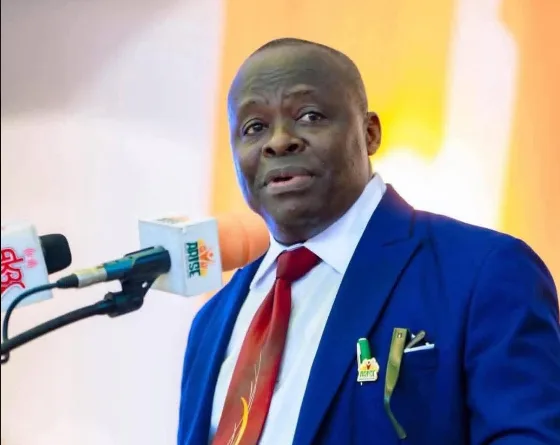
The University of Uyo (UNIUYO) is set to redefine collegiate athletics in Nigeria through a groundbreaking framework designed to transform sports into a viable commercial enterprise while safeguarding academic excellence. Speaking during a comprehensive press briefing in Uyo, the Vice-Chancellor of the institution, Professor Christopher Ekong, announced that the university is in the final stages of drafting a robust sports policy aimed at self-sustainability, revenue generation, and the holistic development of student-athletes.
The initiative marks a significant departure from traditional, ad-hoc approaches to university sports administration in Nigeria, where athletic programs are frequently viewed merely as extracurricular pastimes rather than strategic investments. By institutionalizing sports through a meticulously crafted policy framework, UNIUYO aims to bridge the historical gap that forces talented youths to choose between pursuing a professional sporting career and obtaining a tertiary education.
Moving Beyond Superficial Interventions
Professor Ekong emphasized that his administration’s approach to sports development would avoid superficial or tokenistic interventions. Reflecting on his personal background and historical pathways to athletic success—noting that he was part of the early set of appointments that travelled to the United States to play football—the Vice-Chancellor stressed the necessity of building an enduring economic model.
"I took the first set of appointment to go to the United States to play football. I don’t want to just intervene in sports. I want to make money from sports. I want to make sports as a policy in the university," Professor Ekong stated.
He explained that sponsoring individual athletes or football teams without an institutional framework is fiscally unsustainable and fails to protect the long-term interests of either the institution or the students. The core objective of the incoming policy is to establish an ecosystem where a student can actively compete at high levels, secure financial value from their talents, and simultaneously maintain rigorous academic standards without suffering educational neglect.
"If I support and sponsor two or three footballers or athletes to America without a policy, this university will not have money. So why do I want to just move into something that is not going to be sustainable? What is going to make this child to do sports and also go to school and be happy and balance the two?" he queried.
Addressing Academic Bias and Institutional Barriers
A critical component of the Vice-Chancellor’s address focused on the psychological and systemic hurdles faced by student-athletes within the Nigerian higher education system. Professor Ekong expressed deep concern over the prevailing attitude of some academic staff members who harbor misconceptions about sports, occasionally fostering an environment of academic laxity or penalizing students for their athletic pursuits.
He highlighted how negative reinforcement from educators can permanently derail a young person’s career trajectory. "We have teachers who may not even understand sports and you go to students and warn them, that you are playing football instead of your studies and some say, don’t worry you will not pass. Once that happens, that child is finished," he warned.
To counteract this, the forthcoming policy will incorporate safeguards to protect student-athletes from academic victimization. It seeks to foster a cultural shift across faculties, ensuring that lecturers recognize the symbiotic relationship between mental agility and physical discipline. By fostering institutional buy-in from all university stakeholders, the policy will cultivate an environment where academic advisors and sports coaches work in tandem to monitor, guide, and support students through their dual pursuits.
Infrastructure Development and Strategic Partnerships
Recognizing that modern sports commercialization relies heavily on world-class facilities, the UNIUYO administration has adopted an aggressive collaborative approach to infrastructure funding. Acknowledging that the university’s internally generated revenue and statutory subventions alone cannot cover the capital-intensive requirements of modern sports complexes, Professor Ekong disclosed that the institution is actively leveraging external partnerships with development agencies and regional commissions.
Detailing recent engagements, the Vice-Chancellor revealed that representatives from the South-South Development Commission visited the university campus to evaluate potential areas of intervention. Following their assessment, the commission submitted a structural template outlining how it intends to support the institution’s developmental goals.
"We are going to collaborate, look for people who are going to come and assist us to build those facilities. Maybe from NDDC, maybe the South-South Development Commission. I brought South-South Development Commission here and they were here two weeks ago and they sent a template on how they are going to support us," Ekong noted.
This strategic outreach aligns with broader national efforts to integrate regional developmental bodies into educational and infrastructural expansion across Nigeria’s Niger Delta region. By pooling resources with agencies such as the Niger Delta Development Commission (NDDC) and the South-South Development Commission, UNIUYO hopes to erect modern indoor sports arenas, standard pitches, gymnasiums, and sports science laboratories that will serve both as training grounds and revenue-generating assets.
Cultivating a Global and National Mindset
Beyond institutional revenue and campus recreation, the envisioned policy is designed to instill a high-performance psyche in student-athletes. Professor Ekong emphasized that the university’s sports program will not operate in isolation or treat campus leagues as the ultimate destination. Instead, the framework aims to prepare athletes for national and international competitions, transforming UNIUYO into a formidable talent pipeline for Nigeria’s national teams and international sports leagues.
"We want to have a policy that everybody buys into. They will have facilities that make the sports people to know that there are two things, education and sports. And then we also put in that psyche that you are not going to stop here. You are going to go higher to represent the country," he affirmed.
This global outlook mirrors successful collegiate sports models in North America and Europe, where universities serve as the primary incubators for elite athletic talent. By creating structured pathways that connect campus athletics with professional scouting networks, UNIUYO hopes to position its students for lucrative international scholarships, professional contracts, and representation at global sporting events such as the Olympic Games and continental championships.
Broader Economic and Societal Implications
The decision by the University of Uyo to commercialize and institutionalize sports arrives at a crucial juncture for the Nigerian tertiary education sector. With universities continually grappling with funding deficits and the imperative to diversify revenue streams, the transformation of collegiate sports into a commercial asset presents a viable economic model.
Globally, collegiate sports generate billions of dollars through broadcasting rights, merchandise sales, gate fees, corporate sponsorships, and athlete transfers. While the Nigerian sports market has historically been constrained by infrastructure deficits and weak governance structures, leading institutions like UNIUYO attempting to formalize the sector could catalyze a nationwide renaissance in university athletics.
Furthermore, a well-monetized sports policy has profound socio-economic implications. By providing alternative career paths for academically gifted yet athletically talented youths, universities can help mitigate youth unemployment and social vices. When structured transparently, collegiate sports can attract corporate partnerships from telecommunications giants, sportswear manufacturers, and financial institutions eager to tap into the vibrant youth demographic.
Anticipation and Next Steps
As the university leadership finalizes the legal and administrative drafts of the document, expectations remain high among students, alumni, and sports enthusiasts within the academic community. Professor Ekong has assured stakeholders that the final policy document will be comprehensive, transparent, and widely celebrated once officially unveiled.
"We are working on that document. We need to finish before we start doing anything more. When we unveil our sports policy, even you will be happy," the Vice-Chancellor concluded.
With the policy expected to be released in the near future, the University of Uyo stands on the brink of a transformative era. If successfully implemented, the initiative could serve as a blueprint for other Nigerian universities seeking to unlock the immense economic potential of sports while maintaining academic rigor and institutional integrity.