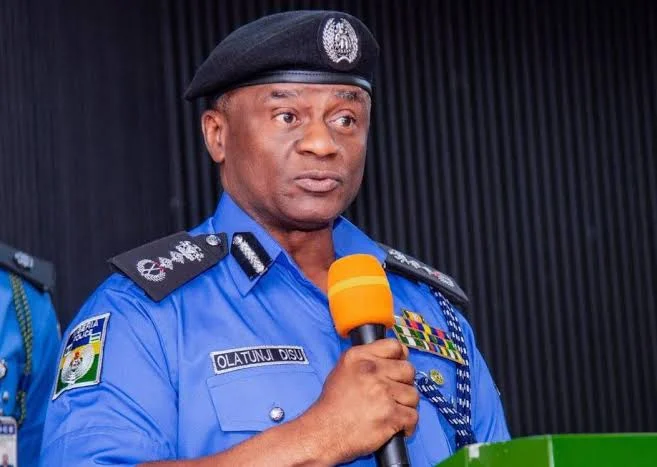
As Nigeria inches closer to its upcoming general elections, growing anxieties surrounding the safety of political actors, campaign rallies, and ordinary citizens have prompted urgent calls for institutional preparedness. Prominent Lagos-based legal practitioner Emmanuel Umohinyang has formally petitioned Inspector-General of Police Olatunji Disu, demanding proactive security interventions to forestall an escalation of political violence across the country. In a strongly worded letter dated November 16, 2026, dispatched from Lagos to the Force Headquarters in Abuja, the legal expert highlighted the disturbing trend of rising hostilities, intimidation, and destruction of property targeting political campaign convoys and supporters.
The intervention comes at a critical juncture for the Nigeria Police Force. With the general elections fast approaching, security analysts and civil society organizations have expressed growing apprehension over the reckless rhetoric and physical confrontations frequently characterizing political maneuvering in the country. Umohinyang’s correspondence serves as both an appeal and a warning: the credibility of the upcoming electoral cycle hinges heavily on the ability of the nation’s primary law enforcement agency to guarantee absolute security, maintain political neutrality, and decisively check the excesses of violent political actors.
Escalating Tensions and the Spectre of Electoral Violence
The political landscape in Nigeria has historically been volatile, often marred by localized skirmishes, vandalism of opposition billboards, and direct physical attacks on campaign train members. In recent weeks, intelligence reports from various geopolitical zones have indicated an upsurge in aggressive posturing among rival political factions. These tensions are frequently fueled by high-stakes competition for elective positions at both the federal and subnational levels.
Umohinyang pointed out in his petition that the growing tendency for partisan disagreements to degenerate into violent confrontations poses an existential threat to Nigeria’s fragile democracy. According to the lawyer, political actors and their supporters are increasingly testing the boundaries of the law, operating under the dangerous assumption that intimidation and brute force can substitute for democratic engagement.
The lawyer’s letter drew specific attention to incidents where campaign convoys have been ambushed, rallies disrupted, and party faithful harassed. Such developments, he warned, not only undermine public safety but also disenfranchise voters who may choose to stay away from the polls out of fear for their lives. By calling out these early warning signs, the legal practitioner has placed the burden squarely on the shoulders of the Inspector-General of Police to dismantle threat networks before they morph into widespread civil unrest.
A Defining Test for IGP Olatunji Disu
The upcoming general elections represent a seminal moment for the leadership of Inspector-General of Police Olatunji Disu. Having assumed the mantle of leadership at the Force Headquarters, this electoral cycle will serve as the ultimate litmus test for his administrative capacity, operational strategy, and commitment to institutional reform.
Umohinyang emphasized that the public perception of the police force under Disu’s stewardship will be largely defined by how the institution manages security before, during, and after the polls. The lawyer noted that citizens are watching closely to see whether the police can rise above historical criticisms of partisanship, complacency, and reactive policing.
By demanding proactive measures rather than a passive, wait-and-see attitude, the petition challenges the IGP to stamp his authority on the force. Disu is expected to demonstrate that the Nigeria Police Force can operate as an independent, professional body capable of securing the democratic space without bowing to external political pressures or financial inducements from powerful partisans.
The Mandate for Proactive and Intelligence-Led Policing
A cornerstone of Umohinyang’s appeal is the immediate departure from traditional, reactive security models. Historically, law enforcement agencies in Nigeria have often been accused of arriving at crime scenes after damage has already been done. To change this narrative, the lawyer has called for a comprehensive shift toward intelligence-driven policing.
Under this proposed framework, the police must systematically map out potential flashpoints across the 36 states of the federation and the Federal Capital Territory (FCT). Commissioner of police in various state commands cannot afford to remain complacent while local tensions simmer. Instead, they are urged to continuously assess credible security intelligence, monitor emerging threats, and deploy tactical units to volatile areas preemptively.
Furthermore, the legal practitioner stressed that police personnel must receive rigorous operational reorientation. Officers on the ground must understand that their primary allegiance is to the Nigerian Constitution and the protection of citizens’ fundamental human rights, rather than to the whims of political godfathers or incumbent officeholders. Institutional sanitisation within the ranks is deemed vital to ensure that rogue elements within the police force who might be tempted to compromise are weeded out or severely disciplined.
Ensuring Absolute Neutrality and Equal Protection
One of the most contentious issues during Nigerian elections is the perception of selective law enforcement, where security forces are allegedly utilized to shield members of the ruling party while clamping down on the opposition. Umohinyang’s letter explicitly addresses this vulnerability, demanding that the Inspector-General enforce a strict policy of political neutrality.
The lawyer insisted that police protection must be extended equally to all legitimate political actors, regardless of their party affiliation, ethnic background, religious leanings, or social status. Safety and security, he argued, are fundamental rights that should not be commodified or distributed based on proximity to political power.
To achieve this, clear directives must cascade from the Inspector-General down to the lowest rank-and-file officers in every division across the country. The message must be unequivocal: any police officer caught aiding, abetting, or looking the other way while political thugs intimidate citizens will face swift disciplinary action and legal prosecution.
Combating Impunity: Investigation, Prosecution, and Accountability
Impunity has long been identified as a major driver of recurring political violence in Nigeria. When perpetrators of electoral violence, along with their sponsors and financial backers, escape justice, a dangerous precedent is set, encouraging others to replicate such criminal behavior.
Umohinyang’s petition strongly advocates for a zero-tolerance policy toward the sponsors of political violence. The legal expert called upon the police leadership to ensure that every reported attack on political gatherings, offices, or individuals is thoroughly investigated. More importantly, findings from these investigations must translate into credible prosecutions in courts of law.
The lawyer noted that the administration of President Bola Tinubu has repeatedly voiced its commitment to stamping out political violence and upholding the rule of law. Umohinyang asserted that this executive stance must be visibly mirrored in the operational outcomes of the police force. Political influence or affluence must no longer serve as a shield for individuals who finance thugs or orchestrate mayhem to secure electoral victories. Accountability must be total, transparent, and unsparing.
Broader Implications for Nigeria’s Democratic Future
The demands raised by Emmanuel Umohinyang resonate far beyond the immediate context of police administration; they strike at the heart of Nigeria’s democratic consolidation. Elections are not merely about casting ballots on a single day; they encompass the entire ecosystem of free expression, public assembly, and peaceful campaigning.
When citizens are gripped by fear, unable to attend rallies or express their political preferences openly, the democratic process is fundamentally compromised. The looming threat of political violence disenfranchises vulnerable populations, particularly women, youth, and the elderly, who are often the primary victims of electoral thuggery.
As the political campaign season gathers momentum, the response of Inspector-General Olatunji Disu and the Nigeria Police Force to these security challenges will shape the national mood. A secure, peaceful, and orderly electoral process will restore public confidence not only in the police force but in the democratic experiment as a whole. Conversely, a failure to curb pre-election violence could plunge the nation into constitutional and civil crises with far-reaching regional consequences.
Ultimately, as the legal practitioner aptly concluded in his historic correspondence, the safety of Nigerian citizens remains non-negotiable. No political ambition, regardless of how desperate or powerful the contender, is worth the loss of a single innocent Nigerian life. The onus now rests on the police hierarchy to heed these warnings, fortify the nation’s security architecture, and deliver an election season defined by peace, safety, and unwavering respect for the rule of law.