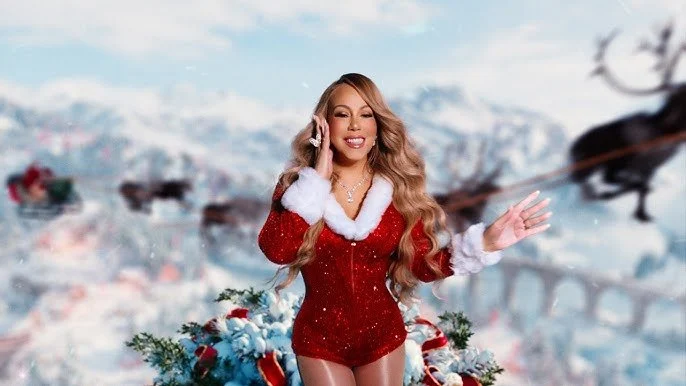
The global transition into the winter holiday period has been officially marked by the return of Mariah Carey, whose annual “IT’S TIME!!!” announcement serves as a cultural bellwether for the commencement of festive retail and entertainment cycles. This year, the singer’s entry into the holiday landscape is more expansive than in previous years, characterized by an ambitious international concert tour, a strategic partnership with the lifestyle brand Sol de Janeiro, and a high-profile integration into the virtual ecosystem of Epic Games’ Fortnite. These synchronized efforts underscore Carey’s status as a dominant intellectual property in the seasonal entertainment market, leveraging both physical performances and digital presence to maintain a dominant share of public attention as the year concludes.
A Chronology of the Cultural Phenomenon
The tradition of Mariah Carey signaling the start of the holiday season has evolved significantly since the release of her seminal 1994 album, Merry Christmas. While the song “All I Want for Christmas Is You” initially gained popularity as a radio staple, the rise of social media transformed Carey’s personal endorsement of the season into a ritualized media event.
In recent years, Carey has formalized this transition with high-production video content. These clips have become increasingly sophisticated, often playing on the trope of her being "thawed out" or emerging from a cryogenic state to reclaim her throne as the holiday season begins. By reclaiming this narrative, Carey successfully mitigates the "early Christmas" fatigue often expressed by the public, positioning her involvement as a festive necessity rather than a commercial intrusion.
This year’s announcement, delivered at the stroke of midnight, followed the established pattern of high-concept visual storytelling. However, the 2024 rollout is distinct due to its integration with the gaming industry. By aligning her seasonal return with the update of the Fortnite Item Shop, Carey has effectively bridged the gap between legacy music media and the digital-native gaming demographic, ensuring her presence is felt across multiple platforms simultaneously.
The Fortnite Integration: Digital Real Estate and Brand Synergy
The inclusion of a “Mariah Carey Bundle” in the Fortnite Item Shop represents a sophisticated marketing maneuver. Epic Games has historically used its Item Shop to rotate pop culture icons, but the duration of certain collaborations often dictates the sense of urgency surrounding them. Notably, the Carey bundle replaced cosmetics from the Five Nights at Freddy’s franchise, which had maintained a presence in the shop for over 300 days.
The new bundle is comprehensive, featuring two distinct character skins: a classic performance outfit and a holiday-themed Santa suit. To enhance user engagement, the bundle includes a microphone back bling and, most significantly, a proprietary emote set to “All I Want for Christmas Is You.” This allows players to broadcast the song within the game’s social spaces, turning the track into a functional asset within the virtual environment.
Industry analysts observe that this move is a continuation of Epic Games’ "Metaverse" strategy, where music artists are no longer just listeners or performers, but interactive characters. By allowing players to embody the persona of the Queen of Christmas, the collaboration deepens the emotional connection between the player and the brand, potentially increasing the lifetime value of the user base during the holiday quarter.
International Touring and Strategic Partnerships
Beyond the digital realm, Carey has announced a series of live performances spanning Brazil, the United Kingdom, and the Middle East. This global approach is designed to capitalize on the increasing commercialization of Christmas in regions where the holiday has seen a surge in retail interest over the last decade.
The tour is bolstered by a strategic partnership with Sol de Janeiro, a beauty and lifestyle brand that has seen rapid growth among younger demographics. This collaboration suggests a pivot in Carey’s brand strategy toward lifestyle integration, moving beyond traditional music-based merchandise. By associating her image with high-end seasonal beauty products, Carey aligns herself with a demographic that prioritizes wellness and self-care during the stressful holiday months.
From a business perspective, the tour serves as a physical manifestation of her digital influence. The logistics of coordinating a tour across three continents while maintaining a presence in the digital gaming sphere requires significant synchronization. According to industry reports, this rollout is part of a broader "omnichannel" strategy, ensuring that whether a consumer is shopping for beauty products, playing video games, or seeking live entertainment, the Mariah Carey brand remains a primary point of contact.
Fact-Based Analysis: The Economics of the Holiday Season
The economic impact of Mariah Carey’s seasonal dominance cannot be overstated. Since its release, “All I Want for Christmas Is You” has become one of the most profitable songs in history. Estimates suggest the track generates millions of dollars in royalties annually, with significant spikes in streaming data beginning as early as November 1.
The decision to pair this musical success with diversified revenue streams—such as gaming cosmetics and international touring—is a response to the fragmentation of the music industry. As traditional album sales decline, artists are increasingly relying on "ecosystem marketing." In this model, the song acts as the "anchor" or the hook, while the secondary platforms (Fortnite, beauty brands, live tours) act as the "conversion" points.
The longevity of the song is attributed to its "evergreen" status. Unlike many pop hits that experience a sharp decline in popularity after their initial release cycle, Carey’s anthem has achieved a level of cultural saturation that makes it essential to the holiday experience. The inclusion of the song in the Fortnite shop effectively introduces the track to a younger generation that may not have lived through the original 1994 release, ensuring the song’s relevance for the next decade.
Official Responses and Industry Outlook
While Epic Games and Carey’s management team have remained characteristically tight-lipped regarding the specific revenue targets for this campaign, representatives have hinted at the importance of the "seasonal crossover." In a statement, a spokesperson for the campaign noted that the collaboration aims to "create a seamless festive experience that transcends traditional media boundaries."
Market observers suggest that the success of this campaign will be measured by the "stickiness" of the Fortnite emotes and the sell-through rate of the concert tickets in the selected international markets. If the strategy proves successful, it is likely that other legacy artists will attempt to replicate the model in the coming years.
The broader implication of these developments is the acceleration of the holiday retail calendar. By initiating this campaign at the earliest possible juncture, Carey and her partners are attempting to "own" the holiday conversation before competitors can establish their own narratives. This "first-mover advantage" is critical in an attention-based economy, where consumer loyalty is increasingly difficult to secure.
The Future of Seasonal Entertainment
As the boundaries between digital entertainment, physical retail, and live performance continue to blur, the Mariah Carey holiday season serves as a primary case study for modern brand management. The integration of her persona into the Fortnite platform is particularly noteworthy, as it suggests that the "virtual concert" or "virtual presence" model is maturing. It is no longer enough to simply license music; brands now demand interactive, user-generated content that allows the consumer to participate in the performance.
Looking ahead, the success of this multi-pronged approach will likely influence how holiday campaigns are structured across the music industry. We can expect to see more "digital-first" announcements, where social media posts are paired with immediate in-game availability, creating an instant feedback loop of engagement and sales.
In conclusion, Mariah Carey’s return is more than just a pop culture moment; it is a meticulously coordinated global operation. By leveraging the power of her music, the reach of social media, the engagement of the gaming community, and the allure of international touring, Carey has secured her position at the center of the holiday season. As audiences continue to shift toward fragmented media consumption, the ability to maintain a unified, omnipresent brand identity will remain the gold standard for success in the entertainment industry. The "IT’S TIME!!!" announcement, once a simple video, has become the signal for a massive, multi-platform economic engine that shows no signs of slowing down.