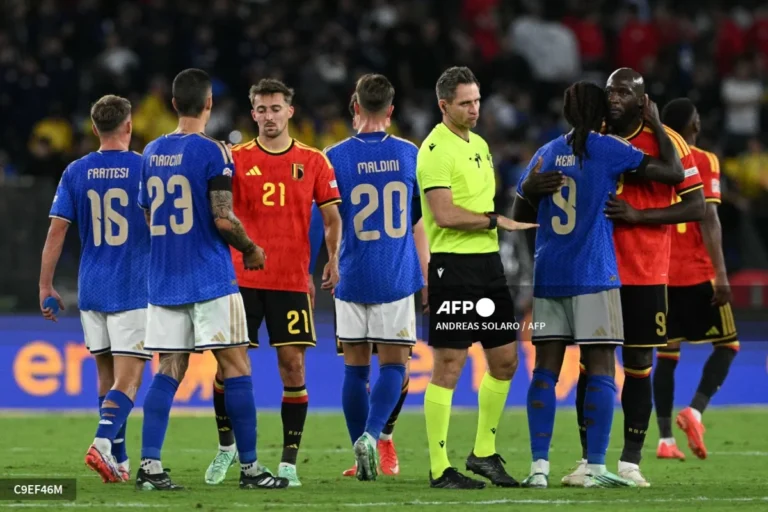
The Stadio Olimpico in Rome bore witness to a sobering reality check on Friday evening as Roberto Mancini’s much-anticipated second tenure as Italy head coach commenced with a 2-0 defeat against a clinical Belgium side in the UEFA Nations League. League A, Group 1 opened with a night of discontent for the Azzurri, whose performance was greeted by a barrage of jeers and boos from a sparsely populated stadium. Goals in either half from Mika Godts and Dodi Lukebakio handed new Belgium manager Mark van Bommel a triumphant start to his international coaching career, while leaving Italy to confront lingering structural deficiencies that continue to plague the four-time world champions.
The fixture carried profound symbolic weight for both nations. For Italy, the match represented the dawn of a new era under familiar stewardship, following the dramatic play-off elimination by Bosnia and Herzegovina that extended the country’s painful absence from consecutive World Cups. For Belgium, the encounter marked the opening chapter of the post-World Cup quarter-finals era under Van Bommel, who stepped into the role following Rudi Garcia’s departure. Yet, as the final whistle echoed across the echoing tiers of the Olimpico, the stark contrast in trajectory between the two European heavyweights was laid bare.
Tactical Setup and Team Selections
Roberto Mancini’s selection for his technical area comeback blended continuity with a nod toward regeneration. Retaining a core group of seasoned campaigners, the Italian manager also introduced fresh blood to a squad desperately seeking rejuvenation. Playmaker Alessandro Romano was handed his senior debut, having recently completed an international switch of allegiance from Switzerland, while Nicolo Cambiaghi earned his first full start. Defender Diego Coppola made only his second appearance for the senior national team, reflecting an ongoing defensive transition.
Conversely, Mark van Bommel’s inaugural lineup boasted a blend of glittering experience and explosive youth. Napoli talisman Kevin De Bruyne marshaled the midfield, collecting his milestone 125th international cap for the Red Devils. Alongside him, young winger Mika Godts seized a rare starting berth—his third senior cap—after missing out on World Cup selection earlier in the year.
The tactical battle unfolded under considerable scrutiny, with tens of thousands of empty seats at the Olimpico silently protesting the national team’s recent underperformances.
Chronology of the Match
The match began with early warning signs for the home side. Belgium’s Charles De Ketelaere tested Italian goalkeeper Gianluigi Donnarumma with a sharp effort, foreshadowing a busy night for the Paris Saint-Germain shot-stopper. Italy briefly thought they had found a breakthrough when Pio Esposito struck the upright, only for the assistant referee’s raised flag to cut short the celebrations for offside.
The deadlock was broken in the 20th minute, originating from a defensive lapse. A loose pass from the 20-year-old debutant Alessandro Romano exposed the Italian backline, allowing Belgium to counter-attack with devastating speed. Mika Godts picked up possession, slalomed past two Italian defenders with poise, and clinically tucked his shot past Donnarumma to mark his first competitive international goal in style.
Conceding the opening goal triggered a period of intense Belgian pressure. Donnarumma was forced into a sequence of world-class interventions to prevent the scoreline from blowing out before the interval. The Italian goalkeeper produced a brilliant double-save to deny De Ketelaere and Nicolas Raskin, before utilizing a desperate one-handed stop to palm away another fierce drive from Godts.
Despite being thoroughly outplayed for large stretches of the half, Italy fashioned a golden opportunity to equalize just before the break. Moise Kean met a precise cross from Cambiaghi, directing a prodded finish into the side netting. However, it proved to be a fleeting moment of optimism, as the half-time whistle was met by a chorus of vehement boos from the disillusioned home supporters.
Second-Half Resurgence and the Killer Blow
Italy emerged from the dressing room with renewed attacking intent, pressing high up the pitch in search of an equalizer. Senne Lammens, guarding the Belgian goal, was called into immediate action. The Belgian goalkeeper produced heroic saves, sticking out a vital boot to block a ferocious drive from Moise Kean before parrying a close-range effort from Esposito.
Despite sustained spells of Italian pressure, the defensive frailties that had undermined their first half resurfaced. Midpoint through the second half, Belgium capitalized on another transition. Substitute Dodi Lukebakio was afforded acres of space to surge forward, unleashing an unstoppable, curling effort from 25 yards out that nestled perfectly into the bottom corner, leaving Donnarumma rooted to the spot and effectively sealing the contest.
Italy’s evening of offensive frustration was encapsulated three minutes before full-time. Substitute Giorgio Scalvini found himself unmarked just two yards from the goal line, only to inexplicably scoop his shot high over the crossbar, drawing gasps of disbelief from the remaining spectators.
Supporting Data and Match Statistics
The tactical and statistical narrative of the match underscored Belgium’s efficiency and Italy’s lack of a cutting edge in the final third:
- Possession: Belgium 52% – 48% Italy
- Total Shots: Belgium 16 – 11 Italy
- Shots on Target: Belgium 8 – 4 Italy
- Saves: Donnarumma (Italy) 6 – Lammens (Belgium) 4
- Fouls Committed: Belgium 12 – 14 Italy
- Yellow Cards: Belgium 2 – 3 Italy
The data reflects a tightly contested midfield battle where Belgium ultimately converted their transition opportunities, while Italy squandered a higher volume of close-range chances.
Post-Match Reactions and Official Statements
Speaking to reporters in the post-match press conference, Roberto Mancini cut a pragmatic figure as he addressed the hostile reception from the crowd and the defensive errors that cost his side.
"We knew this was going to be a challenging transition period, but the manner of the goals we conceded is unacceptable at this level of international football," Mancini stated. "We gave the ball away too easily in crucial areas, and against a side as clinical as Belgium, you get punished immediately. However, we saw positive moments from the younger players. We must roll up our sleeves, analyze our mistakes, and build upon the second-half response."
On the opposing side, debutant manager Mark van Bommel expressed satisfaction with his team’s defensive discipline and execution, praising the collective maturity of his squad.
"Coming to Rome and securing a clean sheet while scoring two well-crafted goals is a fantastic start for this group," Van Bommel remarked. "The players executed the tactical blueprint precisely. Kevin [De Bruyne] set the standard in midfield, and youngsters like Mika Godts showed no fear on the big stage. We enjoy this victory tonight, but our focus immediately shifts to the next challenge against France."
Broader Impact and Implications for Group 1
The 2-0 defeat leaves Italy at the bottom of the UEFA Nations League League A, Group 1 standings, intensifying the pressure on Mancini and his coaching staff. The result extends a worrying trend of inconsistent performances in competitive fixtures outside of their European Championship heroics, highlighting an urgent need for tactical stability and defensive reliability.
For Belgium, the victory establishes early momentum at the summit of the group, validating the appointment of Mark van Bommel and affirming the seamless integration of emerging talent alongside established veterans like Kevin De Bruyne.
Looking ahead, the road does not get any easier for either nation. Italy must travel away to face Turkey, who are themselves licking their wounds following a narrow 1-0 defeat to France in their opening fixture. Meanwhile, Belgium will return home to host the formidable French side in what promises to be a crucial test of Van Bommel’s early tactical credentials. The upcoming fixtures will undoubtedly test the depth, resilience, and tactical adaptability of both squads as the UEFA Nations League group stage gathers pace.