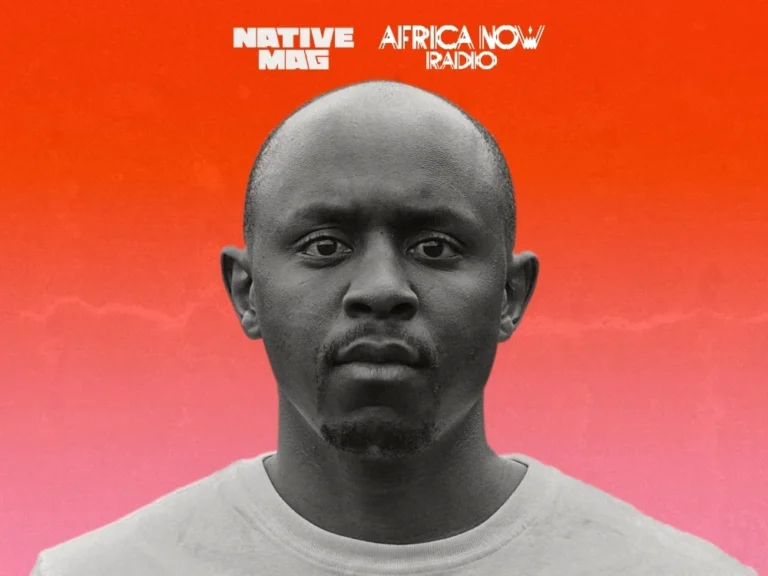
The release of Jabulile Majola’s second studio album, Ipasi, marks a significant thematic departure for the Pietermaritzburg-born artist. Moving away from the rigid certitude that once defined his tenure as a rapper, Majola has pivoted toward an introspective Afro-Folk soundscape. This transition is not merely a stylistic shift but a profound philosophical repositioning, as the artist attempts to reconcile the inevitability of grief, the fluidity of identity, and the human struggle to find meaning in an unpredictable world. Since the 2025 release of his debut, Isitifiketi, Majola has been engaged in an ongoing, recursive journey of self-discovery that prioritizes existential inquiry over the pursuit of definitive answers.
A Chronology of Artistic Evolution
Jabulile Majola’s path to musical prominence is deeply rooted in a complex personal history that predates his professional career. Born in Pietermaritzburg, his life began under difficult circumstances; he was separated from his mother within days of his birth. His upbringing in a children’s home, managed by the noted evangelist Angus Buchan, provided a formative, if unconventional, environment. Surrounded by 26 siblings, Majola discovered his affinity for music at age seven—a moment he describes as the defining realization of his professional trajectory.
His early career was characterized by the confidence typical of the hip-hop genre, where lyrical precision and a strong sense of self-assurance were paramount. However, the subsequent years necessitated a shift. The catalyst for this transformation was the death of his sister, an event that forced him to confront the limitations of language and the depth of his own vulnerability. This period of mourning served as the primary incubator for his transition into the Afro-Folk genre, culminating in the 11-song orchestral suite that constitutes Ipasi.
Language as a Vessel for Vulnerability
A critical component of Majola’s evolution is his intentional return to his mother tongue, isiZulu. For many artists, language is a tool for ornamentation; however, for Majola, the return to Zulu was a deliberate act of stripping away artistic artifice. He observed that in his native language, it is significantly more difficult to hide behind metaphorical layers or complex linguistic flourishes. By choosing to move away from “Joburgified” or colloquial Zulu in favor of deeper, more traditional expressions, Majola has sought to document his grief with clinical honesty.
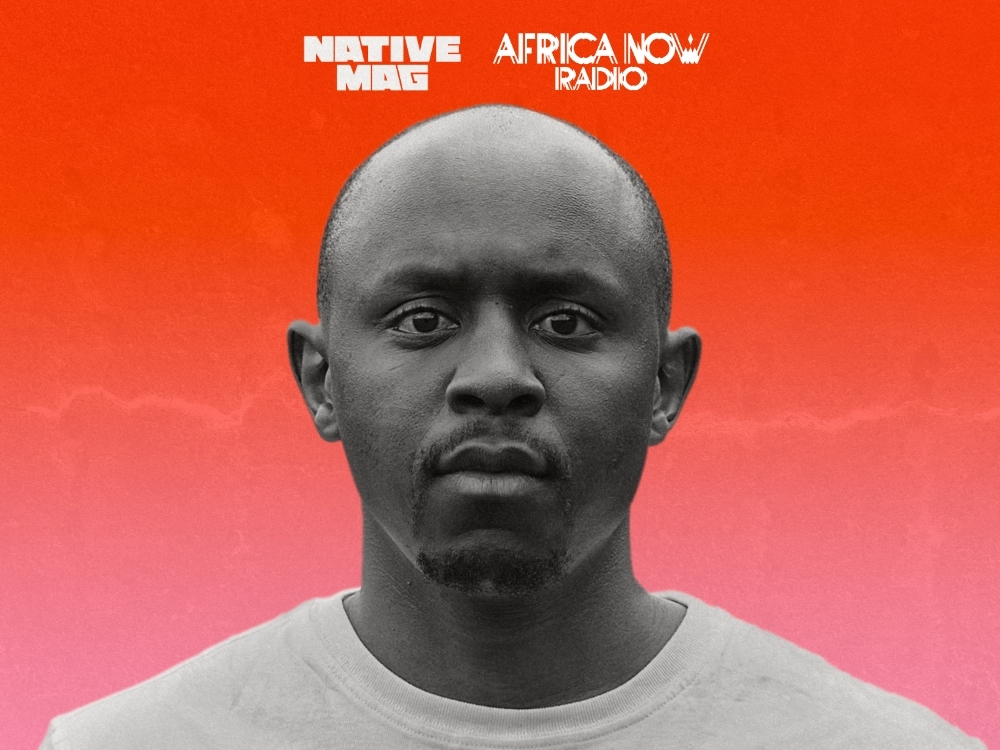
In his recent interview with Apple Music’s Africa Now Radio, Majola articulated that this shift was not about performance, but about acknowledgment. He noted that the language allows for a raw transmission of emotion, stating that the act of writing these songs was akin to “crying straight up.” This commitment to linguistic authenticity has effectively bridged the gap between his personal history and his current artistic output, grounding the music in a reality that is both specific to his background and universal in its emotional resonance.
Philosophical Underpinnings: Faith and the Inquiry of Self
The role of faith in Majola’s work is inextricably linked to the concept of questioning. Rather than viewing religious belief as a state of arrival or a repository of final truths, he frames it as an ongoing, iterative process. In his view, faith provides the framework within which one can ask difficult questions without the immediate pressure to resolve them. This perspective is reflected in the structure of Ipasi, which mirrors a narrative arc of seeking and finding.
The album opens with the track “Umuzo Okhanyayo (Libo),” which introduces a persona akin to a blind sailor—a figure seeking guidance and clarity. The track draws inspiration from biblical narratives, specifically the act of healing as a metaphor for the humility required to admit one’s own limitations. As the album progresses, the narrative moves toward “Ububele Bakho (Nala),” where the focus shifts from a search for direction to the discovery of kindness. This movement from the void of uncertainty to the abundance of found love underscores the artist’s belief that life is an ongoing maturation process, one that requires the acceptance of unresolved tensions.
Data and Industry Implications
The broader implications of Majola’s shift reflect a growing trend within the South African music industry, where artists are increasingly moving away from high-energy, commercial hip-hop toward more contemplative, genre-fluid compositions. Market data suggests that listeners are showing a heightened engagement with "authentic" or "vulnerable" narratives, as streaming patterns show an uptick in long-form, album-oriented listening for projects that prioritize thematic cohesion over individual singles.
Industry analysts note that for artists like Majola, the pivot to Afro-Folk carries both risk and reward. While the transition may alienate a portion of a legacy hip-hop audience, it simultaneously opens doors to a more global, sophisticated demographic that values songcraft and lyrical depth. Majola’s disciplined approach to this transition—characterized by a refusal to chase fleeting trends—positions him as a sustainable artist whose work is designed to endure beyond the immediate cycle of a single release.
The Cost of Ambition and the Myth of Hyper-Motivation
A central thesis of Ipasi is the rejection of the "hyper-motivation" culture that often permeates the music industry and social media. Majola is vocal about the psychological toll of believing that one is entirely in control of their destiny. By analyzing his own career, he acknowledges that the pursuit of dreams often requires a solitary existence, creating a “lone wolf” dynamic that can be isolating.
Majola posits that there is a "divine agency" or an allotment of fate that dictates how much of one’s dreams will be realized. This realization has been essential to his maturity. He argues that by accepting that one may never fully "arrive" at their ultimate goal, an artist can actually pursue their craft with greater humility and connection to the present moment. This philosophy is directly reflected in his recording process; he noted that he previously struggled with the anxiety of output, feeling that he had to write five songs a day to be successful. By letting go of that pressure, he was able to produce work that felt more honest and less performative.
Impact and Legacy
The ultimate objective for Ipasi, according to Majola, is not to offer listeners an escape from reality, but to meet them exactly where they are. He argues that there is a unique beauty in "staying within the tension" of a struggle. By refusing to provide neat, tidy resolutions to the questions posed in his songs, he encourages his audience to sit with their own uncertainties.
As he approaches his mid-thirties, Majola’s work serves as a testament to the idea that life is an ongoing state of becoming. Whether observing his own father—who, at nearly 80, continues to ask fundamental questions about existence—or reflecting on his own limitations, Majola advocates for a life lived with open-ended curiosity. The legacy of Ipasi will likely be measured not by chart success, but by its capacity to serve as a companion for those navigating their own periods of transition. In a media landscape defined by rapid consumption, Majola has produced a project that demands patience, reflection, and a willingness to embrace the beauty of the unknown.