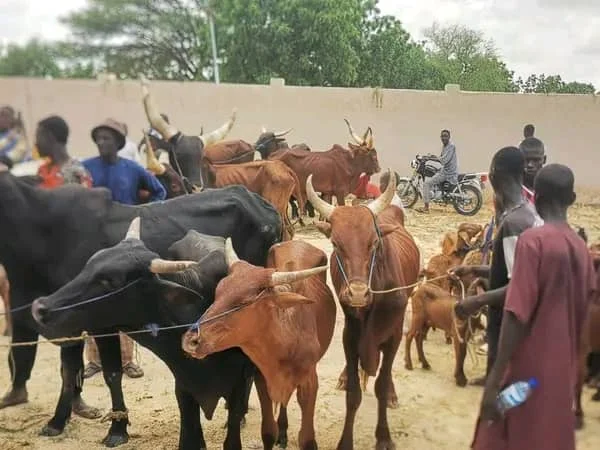
In a decisive move to safeguard the economic backbone of rural communities, the Kaugama Local Government Council in Jigawa State has initiated a comprehensive vaccination campaign targeting over 3,000 domestic animals. The swift public health intervention comes on the heels of a sudden outbreak of contagious pulmonary infections that threatened the survival of livestock in several vulnerable farming settlements across the region. Local agricultural authorities, pastoralist associations, and individual livestock owners have lauded the proactive response, emphasizing its critical role in preventing catastrophic economic losses for families whose livelihoods depend entirely on animal husbandry.
Scope of the Outbreak and Targeted Vaccination Campaign
The localized immunization drive, officially flagged off on Saturday, aims to administer vaccines to precisely 3,105 domestic animals. According to the Head of Department for Agriculture and Natural Resources in Kaugama Local Government Area, Nasir Ibrahim, the strategic campaign was formulated following alarming reports of respiratory distress among livestock in three primary agrarian communities: Cumbuleske, Ganuwa, and Rigar Kwagga.
Detailed breakdown figures released by the agricultural department indicate that the targeted animal population comprises 2,045 cattle and 1,060 smaller ruminants, specifically sheep and goats. The localized nature of the outbreak necessitated an immediate, targeted deployment of veterinary personnel and medical supplies directly to the affected pastoralist settlements, ensuring that remote herds could be reached before the pathogen could jump to neighboring districts.
Ibrahim emphasized that the local government council spared no effort in securing the necessary resources. "The local government council has procured vaccines and other necessary logistics to forestall future occurrences and spread of the disease," he stated during the flag-off ceremony. By establishing mobile veterinary clinics within the affected wards, the council minimized the logistical burden on herders, who otherwise would have had to travel long distances to access veterinary care.
Veterinary Insights: Understanding Livestock Pulmonary Infections
To provide context on the severity of the intervention, agricultural experts have shed light on the nature of the pulmonary pathogens affecting the livestock in Kaugama. According to veterinary assessments shared during the flag-off, the clinical symptoms observed in the field—predominantly severe coughing, nasal discharge, and acute respiratory distress—are frequently driven by bacterial pneumonia acting as a secondary complication to primary viral infections.
Infections of this nature spread rapidly through close contact in communal grazing areas and watering points, making swift isolation and mass vaccination the most effective containment strategies. Furthermore, veterinary officers noted that environmental stressors, including exposure to toxic weeds, agricultural herbicides, and parasitic infestations such as lungworms, can severely compromise the pulmonary architecture of ruminants. This leaves them acutely vulnerable to fatal respiratory failures during seasonal weather transitions.
By neutralizing the bacterial and viral agents through vaccination, the local administration is not only treating immediate symptoms but also conferring herd immunity across the vulnerable populations in Cumbuleske, Ganuwa, and Rigar Kwagga. Officials have affirmed that the veterinary surveillance team will maintain a continuous physical presence in the area to monitor recovery rates and administer booster shots if epidemiological data warrants an expansion of the program.
Chronology of Events and Rapid Local Response
The unfolding of the Kaugama livestock intervention highlights a successful model of grassroots responsiveness between pastoralist communities and local government authorities. The chronology of the event underscores how swift communication channels can avert regional agricultural crises:
- Initial Detection (Early September): Herders in Cumbuleske, Ganuwa, and Rigar Kwagga first noticed unusual respiratory distress, listlessness, and persistent coughing among their cattle and small ruminants.
- Community Escalation: Recognizing the potential for a widespread epizootic event, local leadership of the Kautal-Hore pastoralist association immediately alerted the Kaugama Local Government Council and requested emergency veterinary assistance.
- Assessment and Procurement (Mid-September): The Department of Agriculture and Natural Resources dispatched an inspection team to the affected settlements to confirm the clinical diagnosis of pulmonary disease. Upon verification, the council chairman authorized the emergency procurement of specialized vaccines and medical logistics.
- Official Flag-off (Saturday): Veterinary officers, local government officials, and community leaders formally launched the vaccination campaign, beginning the systematic immunization of the targeted 3,105 animals.
This rapid turnaround time—moving from grassroots reporting to comprehensive immunization within a matter of weeks—has been widely cited as a benchmark for municipal disaster response in Nigeria’s agricultural sector.
Stakeholder Reactions and Pastoralist Testimonies
The intervention has drawn profound expressions of gratitude from pastoralist leaders and individual farmers who bore the brunt of the initial outbreak. Speaking on behalf of local herders, Sha’aibu Adamu, the Chairman of the Kautal-Hore Association in Kaugama LGA, praised the council chairman for taking decisive administrative action upon receiving their petition.
"We appreciate the council chairman for his quick response to save our livestock, which is our only source of livelihood," Adamu remarked. He noted that in agrarian economies like Jigawa State, livestock represents not merely an economic asset, but a primary form of savings, social status, and food security. The loss of cattle equates to the immediate destabilization of household financial systems.
Individual beneficiaries echoed these sentiments, highlighting the palpable relief the vaccination drive brought to their daily routines. Umaru Bello, a local cattle herder whose animals showed severe clinical signs prior to the exercise, spoke candidly about the urgency of the intervention.
"Many of our cows were coughing and struggling to breathe; we thank the local government for bringing this vaccine to our community," Bello shared shortly after his herd was inoculated.
Another pastoralist, Maigari Alto, reflected on the tragic losses suffered before the arrival of the veterinary team, noting that the campaign serves as a critical protective shield for the remainder of their herds. "We have lost some animals before this exercise; this vaccination will help us protect the remaining ones," Alto stated, emphasizing that the proactive measure has restored confidence among local breeders.
Broader Implications for Food Security and Animal Health in Jigawa State
The successful execution of the Kaugama vaccination campaign carries profound implications for the broader agricultural landscape of Jigawa State and the wider northern region of Nigeria. Livestock production is a cornerstone of the national economy, contributing significantly to the agricultural Gross Domestic Product (GDP), employment generation, and domestic protein supply through meat and dairy products.
Outbreaks of contagious pulmonary diseases, if left unchecked, can decimate regional herds, triggering a chain reaction that destabilizes national meat markets, inflates food prices, and deepens rural poverty. By proactively financing and executing localized vaccination drives, municipal councils play a frontline defense role in national biosecurity.
Agricultural economists point out that preventive veterinary interventions are exponentially more cost-effective than post-crisis containment or restocking programs. When local governments invest in routine immunizations and rapid response mechanisms, they protect foundational agricultural assets, secure the supply chain for dairy and beef, and foster greater social stability in rural areas prone to farmer-herder tensions driven by economic desperation.
As the vaccination exercise in Cumbuleske, Ganuwa, and Rigar Kwagga draws to a close, the Kaugama Local Government Council has reiterated its commitment to maintaining active surveillance across all political wards. With animal health authorities remaining on high alert, the community stands better prepared to withstand future biological shocks, ensuring that the pastoralist heritage and economic vitality of Jigawa State remain resilient against emerging agricultural threats.