The race to lead the World Health Organization through its next critical chapter has officially entered a dynamic phase with Spain’s formal nomination of Dr María Neira for the position of Director-General. As the former director of the WHO’s Department of Environment, Climate Change, and Health, and a former Spanish vice minister of health, Neira steps into the global spotlight as an internationally recognized authority on primary prevention and planetary health. Backed by a vast coalition of civil society organizations, scientific networks, and environmental health advocates across both the Global North and Global South, Neira has formally unveiled her strategic manifesto, titled "Global Health Vision." Her platform challenges the traditional boundaries of global health governance, asserting that the WHO must pivot decisively from reactive emergency management to proactive environmental stewardship.
However, her path to the executive suite in Geneva is fraught with institutional and political hurdles. Neira must convince skeptical and budget-conscious member states—many grappling with domestic economic strains and shifting geopolitical priorities—that a candidate championed heavily by civil society can govern as a pragmatic realist. As the WHO faces structural overextension, severe funding contractions, and political pushback against global climate policies, Neira’s campaign offers a bold diagnostic framework for the future of multilateral health policy.
From Frontline Crisis Zones to Geneva’s Executive Core: A Chronology of Leadership

To understand Neira’s platform, one must examine a career that bridges frontline humanitarian crises and elite global health diplomacy. Born in Asturias, Spain, in 1962, Neira completed her medical degree at the University of Oviedo before pursuing specialized postgraduate studies in endocrinology in Paris. Her early professional trajectory was forged in active conflict zones and emergency settings. She served as a medical coordinator for Médecins Sans Frontières (MSF), delivering critical care in refugee camps across El Salvador and Honduras during periods of profound political instability.
Following her tenure with MSF, Neira deepened her commitment to international public health by serving as a public health adviser to the Ministry of Health in Mozambique for five years. She subsequently joined the United Nations Development Programme (UNDP) as a public health adviser in Rwanda, gaining granular insight into the systemic vulnerabilities of healthcare delivery in post-conflict environments.
Neira’s transition to the multilateral stage began in 1993 when she joined the WHO headquarters in Geneva as the coordinator of the Global Task Force on Cholera Control, eventually directing the Department of Control, Prevention, and Eradication. In 2002, she temporarily stepped away from international civil service to return to Spain, answering the call to serve as the vice minister for health and consumer affairs. During this domestic tenure, she also served as the founding president of the Spanish Food Safety Agency (AESA, now AESAN). In this role, she managed national health protection and nutrition policy grounded in the universal, publicly funded principles of Spain’s national health system.
Recruited back to Geneva in 2005, Neira spent the next two decades leading the WHO’s Department of Environment, Climate Change and Health. Over this twenty-year tenure, she became a central architect of global policies linking ecological degradation to human morbidity. She played a pivotal role in embedding public health commitments within the historic Paris Climate Agreement, establishing the Alliance for Transformative Action on Climate and Health, and spearheading the global One Health framework, which recognizes the interconnected health of humans, animals, and ecosystems.
Blueprint for Primary Prevention and the "Global Health Vision" Manifesto
At the core of Neira’s campaign is the central proposition that health must serve as the primary compass for navigating a rapidly changing world. Her official manifesto outlines five foundational commitments designed to refocus the WHO on accountability, efficiency, and foundational prevention:
- Elevating primary prevention as the ultimate defense against escalating global health emergencies, moving upstream to address root environmental causes before populations become clinical patients.
- Strengthening country-level capacities to ensure that normative guidelines translate into tangible, localized health security.
- Securing predictable, sustainable financing architectures that reduce the WHO’s dangerous reliance on earmarked voluntary contributions.
- Institutionalizing cross-sectoral collaboration under the One Health banner, aligning agricultural, environmental, and economic policies with public health outcomes.
- Modernizing the organization’s anticipatory intelligence to detect emerging, non-traditional health threats rapidly.
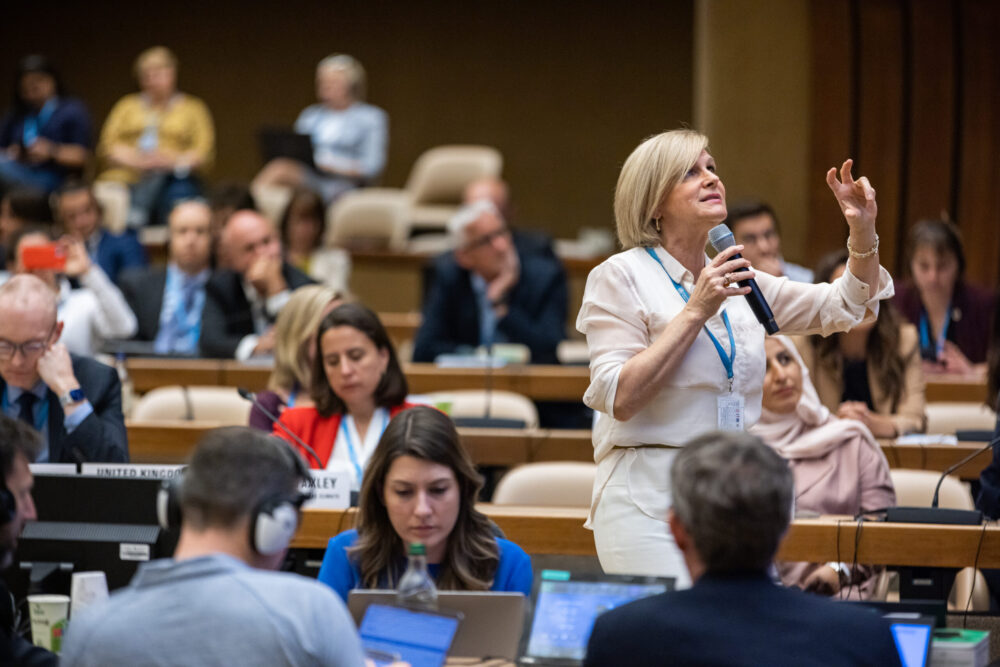
To translate these commitments into immediate administrative momentum, Neira pledged during her presentation at the World Health Summit in Berlin that, within her first 100 days in office, she will establish a specialized internal "antenna" within the WHO. This unit will be specifically tasked with detecting and evaluating non-traditional health risks that evade traditional epidemiological surveillance, including declining global fertility rates, endocrine-disrupting chemicals, microplastics, and the public health implications of artificial intelligence (AI).
By anchoring her agenda in normative leverage and primary prevention, Neira aims to maximize the WHO’s global reach even within the strict fiscal realities of modern multilateral austerity.

Domestic Campaign Dynamics and Political Hurdles in Madrid
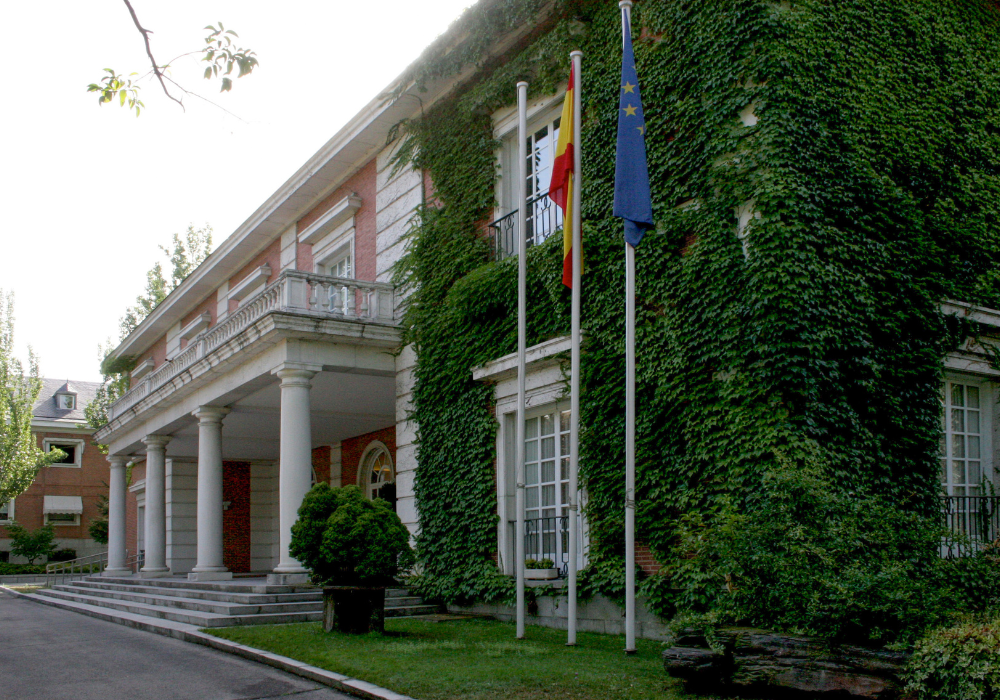
Despite her extensive technical credentials, Neira’s candidacy faces distinct political complexities on the domestic front. Spain presents a mixed financial backdrop regarding its engagement with the organization. According to WHO financial data, Madrid’s overall recorded budget envelope contracted from $42.81 million for the 2024–2025 biennium to $37.57 million for the 2026–2027 period, largely due to fluctuations in voluntary contributions. However, aligning with Neira’s emphasis on sustainable core financing, the Spanish government has demonstrated statutory reliability by steadily raising its mandated assessed contributions from $20.54 million to $26.11 million over the same timeframe.
Despite this solid financial foundation, domestic political deliberations in Madrid created notable delays in officially announcing Neira’s nomination. The Spanish government was simultaneously managing high-profile international campaigns for other United Nations leadership positions, including nominating labor minister Yolanda Díaz to lead the International Labour Organization (ILO) and agriculture minister Luis Planas to head the Food and Agriculture Organization (FAO). Diplomatic analysts note that running multiple parallel UN leadership campaigns risks diluting Spain’s political leverage across regional voting caucuses. Furthermore, these administrative deliberations unfolded amid ongoing domestic political headwinds faced by the Spanish government, testing its diplomatic bandwidth.
Multilateral Headwinds and the Civil Society Counterweight
On the broader multilateral stage, Neira’s candidacy encounters both structural resistance and strategic tailwinds. Institutional critics have scrutinized her two-decade tenure as a Geneva insider (2005–2025). Despite her status as an authority on planetary health, critics point out that health’s share of multilateral climate finance stagnated during much of her leadership, while her specific WHO department experienced administrative downsizing and structural restructuring.
Geopolitically, European member states historically do not vote as a monolithic bloc. With two prominent candidates emerging from the European region—Neira and Belgium’s Hans Kluge—the European vote is notably fragmented. Beyond regional vote-splitting, the next WHO Director-General must navigate fraught relationships with major donor nations. This includes managing re-engagement with the United States amid its fluctuating domestic stance on international climate conventions and multilateral funding, as well as addressing skepticism from various Global South and industrializing nations. Leaders in these developing economies have occasionally expressed concern that an aggressive environmental health agenda could inadvertently impose restrictive conditionalities on their national economic development.
Addressing these concerns directly, Neira frames planetary health not as an economic constraint, but as a pragmatic financial strategy. In responses to policy inquiries, she emphasizes that "health is increasingly engineered outside the health sector." She advocates leveraging the WHO’s normative authority to demonstrate the immediate financial dividends of primary prevention before populations require intensive clinical care. Investments in clean air, protection against extreme heat waves, universal access to safe water, and climate-resilient health infrastructure represent "no-regrets investments" that safeguard national fiscal budgets and labor productivity, irrespective of a government’s posture in global climate negotiations.
Balancing these multilateral hurdles are significant coalition strengths. Robust endorsements from civil society organizations, indigenous rights advocates, and global environmental health networks provide substantial grassroots momentum, although this strong civil society alignment requires careful management to avoid alienating more conservative member states. Additionally, women’s advocacy networks and gender equity groups are actively mobilizing around her historic bid. In the nearly eight-decade history of the World Health Organization, only two women—Gro Harlem Brundtland and Margaret Chan—have ever served as Director-General.
Broader Implications for Global Health Governance
The official registration of Neira’s candidacy provides a formal statutory vehicle for a campaign underpinned by a diverse global coalition of scientific societies, environmental experts, and public health practitioners. Yet, her identity as a long-standing Geneva headquarters veteran remains a focal point of debate among member states. For governments demanding aggressive operational decentralisation, strict fiscal austerity, and an end to top-down bureaucratic directives, an executive steeped in Geneva’s traditional corridors risks being perceived as detached from frontline, country-level realities.
Ultimately, Neira’s viability hinges on her ability to convince skeptical national capitals that a seasoned headquarters insider can look beyond the Geneva bubble to govern with clear-eyed pragmatism. By framing primary prevention and planetary health as essential fiscal buffers against systemic disease rather than ideological exercises, her platform offers member states a distinct strategic choice. As the election cycle advances toward 2027, the global health community must decide whether to elect a physician-environmentalist who insists that health should serve as the compass for a rapidly transforming world.