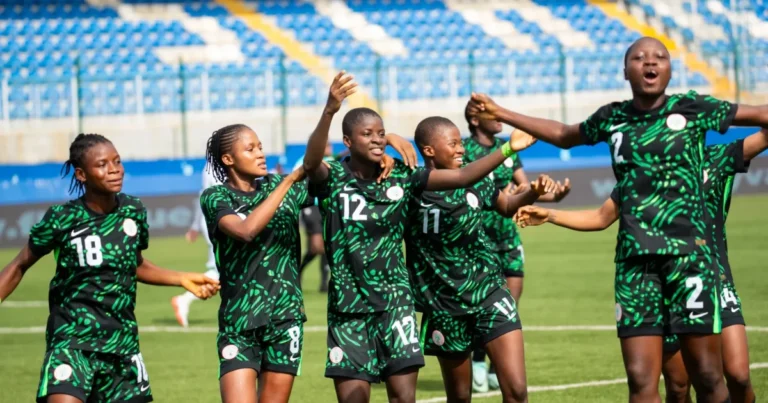
Nigeria’s U-17 women’s national team, affectionately known as the Flamingos, are bracing themselves for a defining fixture as they prepare to lock horns with Mexico in the Round of 16 of the 2026 FIFA U-17 Women’s World Cup. Scheduled for Thursday at the Women’s Football Complex in Salé, Morocco, this knockout encounter represents much more than a mere progression match; it is a battle of tactical discipline, historical pedigree, and unyielding ambition. Both sides enter this crucial phase of the tournament having navigated turbulent group stages, and they now stand just ninety minutes—or potentially more—away from securing a coveted spot in the quarter-finals of the global showpiece.
The tournament, hosted in the North African nation of Morocco, has already delivered a litany of surprises, dramatic comebacks, and stellar individual performances. For the Flamingos, the journey to the knockout rounds has been characterized by resilience. Having finished second in a fiercely contested Group B behind reigning world champions North Korea, the Nigerian girls have demonstrated that they possess the tactical capability and mental fortitude required to compete against the world’s elite. Meanwhile, their upcoming opponents, Mexico, secured their safe passage to the Round of 16 by finishing runners-up in Group F, capping off their group phase with a hard-fought, narrow victory that underscored their defensive solidity and ability to grind out results under intense pressure.
Group Stage Pathways and Tactical Trajectories
To fully comprehend the magnitude of Thursday’s clash, one must examine the contrasting yet equally demanding paths both Nigeria and Mexico traversed during the group stages. The Flamingos opened their 2026 campaign under a cloud of uncertainty following a narrow and disheartening 2-1 defeat to Poland. In that opening fixture, defensive lapses and missed opportunities in the final third threatened to derail the West Africans’ tournament aspirations before they could truly gain momentum. However, the response from the technical crew and the players alike was swift and decisive.
In their second group fixture, Nigeria bounced back with a composed 2-0 victory over Puerto Rico, reestablishing their passing rhythm and tightening their defensive lines. Yet, the defining moment of their group stage campaign—and perhaps the catalyst for their current high morale—occurred in their final group match against the formidable defending champions, North Korea. Displaying a rare blend of tactical discipline, fearless attacking transitions, and clinical finishing, the Flamingos stunned the global football community by handing the defending champions a 3-1 defeat. This statement win propelled Nigeria to six points, securing their second-place finish in Group B and injecting a massive dose of confidence into the squad as they transition into the single-elimination knockout phase.
On the other side of the Atlantic, Mexico’s journey to the Round of 16 was similarly defined by resilience and tactical pragmatism. The North American side confirmed their qualification in dramatic fashion on Sunday, securing a crucial 1-0 victory over Australia in their final Group F encounter. The decisive moment arrived courtesy of Citlalli Reyes, whose predatory instincts in the penalty box unlocked the stubborn Australian defense and secured the three points necessary to seal their progression. Mexico enters Thursday’s fixture not only with the momentum of that clean sheet against Australia but also with the psychological backing of their impressive heritage in this tournament, having claimed the bronze medal at the previous edition of the global competition in 2025.
Historical Context and Tournament Pedigree
The fixture between Nigeria and Mexico carries substantial historical weight within the ecosystem of youth women’s football. Over the past decade, both federations have invested heavily in the development of their female youth structures, yielding consistent appearances on the international stage and producing generations of technically gifted players who frequently transition to senior national team setups and professional club leagues across Europe and the Americas.
Nigeria’s Flamingos have historically been recognized for their blistering pace, physical exuberance, and exceptional individual flair in the attacking third. While they have historically experienced heartbreak at the quarter-final and semi-final thresholds of previous FIFA U-17 World Cup iterations, their sheer competitive presence makes them a side that no opponent can afford to take lightly. The technical crew, led by coach Akeem Busari, has continually emphasized the importance of neutralizing the tactical discipline typical of CONCACAF opposition while maximizing the natural athletic advantages inherent in the Nigerian style of play.
Mexico, conversely, brings a distinct tactical identity rooted in compactness, positional discipline, and rapid transition play. Their third-place finish at the 2025 FIFA U-17 Women’s World Cup serves as a testament to their steady ascent as a global powerhouse in youth football. El Tri Femenil U-17 rarely beats themselves; they rely on organized defensive blocks, disciplined midfield shielding, and opportunistic finishing. This tactical profile suggests that Thursday’s match will be an intriguing chess match between Nigeria’s dynamic, high-tempo offensive approach and Mexico’s structurally sound defensive apparatus.
Technical Analysis and Key Matchups
As tactical analysts dissect the impending showdown, attention inevitably turns to the specific areas of the pitch where the match will be won or lost. For Nigeria, the primary objective will be to replicate the attacking fluidity and clinical efficiency they displayed against North Korea. Strikers and supporting midfielders will need to be decisive in the final third, as chances against a well-drilled Mexican defense are likely to be at a premium.
Coach Akeem Busari and his technical staff have spent the days following the group stage focusing extensively on situational awareness and finishing drills. In knockout football, the margin for error is razor-thin, and the Flamingos cannot afford the profligacy that plagued them during their opening defeat to Poland. Maintaining possession under pressure, utilizing the flanks to stretch the Mexican defensive block, and delivering accurate crosses into the danger zone will be paramount for the West African side.
Conversely, Mexico will look to stifle Nigeria’s central midfield progression, cutting off the supply lines to the Flamingos’ primary attacking outlets. Citlalli Reyes, fresh off her match-winning heroics against Australia, will once again be expected to shoulder the creative and goalscoring burdens for El Tri. Mexico’s defensive line, anchored by disciplined central defenders who excel in aerial duels and 1-v-1 situations, will face a severe examination against Nigeria’s pacey forwards. Furthermore, the Mexican tactical approach is likely to incorporate disciplined tactical fouls in transitional areas to disrupt the Flamingos’ momentum before they can build up full-pitch speed.
Set-pieces could also emerge as a decisive battleground. Both Nigeria and Mexico have demonstrated vulnerabilities when defending crosses and dead-ball situations during the group stage. Specialized coaching staffs on both sides will undoubtedly have formulated intricate set-piece routines designed to exploit these perceived weaknesses.
Official Reactions and Preparations
In the wake of Sunday’s group-stage conclusions, official camps from both federations have adopted a tone of focused determination. Speaking to media representatives in Salé, members of the Nigerian technical crew acknowledged the caliber of the challenge that lies ahead while expressing unwavering belief in the squad’s capabilities.
"We have studied Mexico extensively," a representative of the Flamingos’ technical team noted during a closed training session evaluation. "They are a very organized side with a strong winning mentality, especially given their performance in the previous tournament. However, our victory against North Korea proved what this team can achieve when we adhere strictly to our tactical instructions and play with complete confidence. The girls understand that the group stage is history; the real competition begins now, and our focus is entirely on securing that quarter-final ticket."
From the Mexican camp, head coach and technical directors have similarly emphasized respect for the Nigerian side’s athletic prowess and attacking dynamism. Sources close to El Tri indicate that preparations have centered on neutralizing Nigeria’s transition speed and maintaining defensive compactness throughout the grueling ninety minutes. The psychological boost of their 2025 bronze-medal finish has fostered a culture of expectation within the Mexican squad, with players publicly affirming their desire to surpass last year’s achievement and hoist the ultimate trophy in Morocco.
Broader Implications for Youth Football Development
Beyond the immediate drama of the knockout phase, the fixture between Nigeria and Mexico holds broader implications for the global development of women’s football. Tournaments of this magnitude serve as the definitive crucible for future world-class talents. Scouts from elite European clubs, university athletic programs, and domestic leagues closely monitor every touch, tackle, and tactical decision made on the pitch in Morocco.
For Nigeria, a deep run in the 2026 FIFA U-17 Women’s World Cup is vital for maintaining the momentum of domestic youth league investments and securing continued institutional backing from sports authorities. Success on the global stage not only elevates the profile of the players involved but also inspires millions of young girls across the West African sub-region to take up the sport, fundamentally shifting cultural perceptions around female participation in athletics.
Similarly, Mexico’s sustained competitiveness at the youth level validates the multi-year structural reforms implemented by their national federation. By consistently reaching the latter stages of FIFA youth tournaments, Mexican football demonstrates that a systematic approach to talent identification, sports science integration, and international exposure yields tangible dividends on the world stage.
Match Details and Logistics
As the countdown to Thursday’s fixture reaches its final hours, logistical preparations in Salé are operating at maximum capacity. The Women’s Football Complex is expected to host a vibrant crowd of passionate supporters, local football enthusiasts, and traveling delegations eager to witness the next chapter of this unfolding tournament.
Kick-off is officially scheduled for 3:00 p.m. local time on Thursday. Weather conditions in Salé are projected to be optimal for high-intensity athletic competition, with moderate temperatures and clear skies anticipated. Officiating assignments will be announced by FIFA’s Referees Committee in the hours preceding the match, ensuring the highest standards of neutrality and enforcement of international playing rules.
As the Flamingos step onto the turf on Thursday afternoon, they carry the hopes and expectations of a football-obsessed nation. Whether they can overcome the tactical discipline of a resilient Mexican side and secure their passage to the final eight remains one of the most compelling narratives of the 2026 FIFA U-17 Women’s World Cup. One thing is certain: when the referee’s whistle blows to signal the start of proceedings in Morocco, two of youth football’s most ambitious nations will leave everything on the pitch in pursuit of glory.