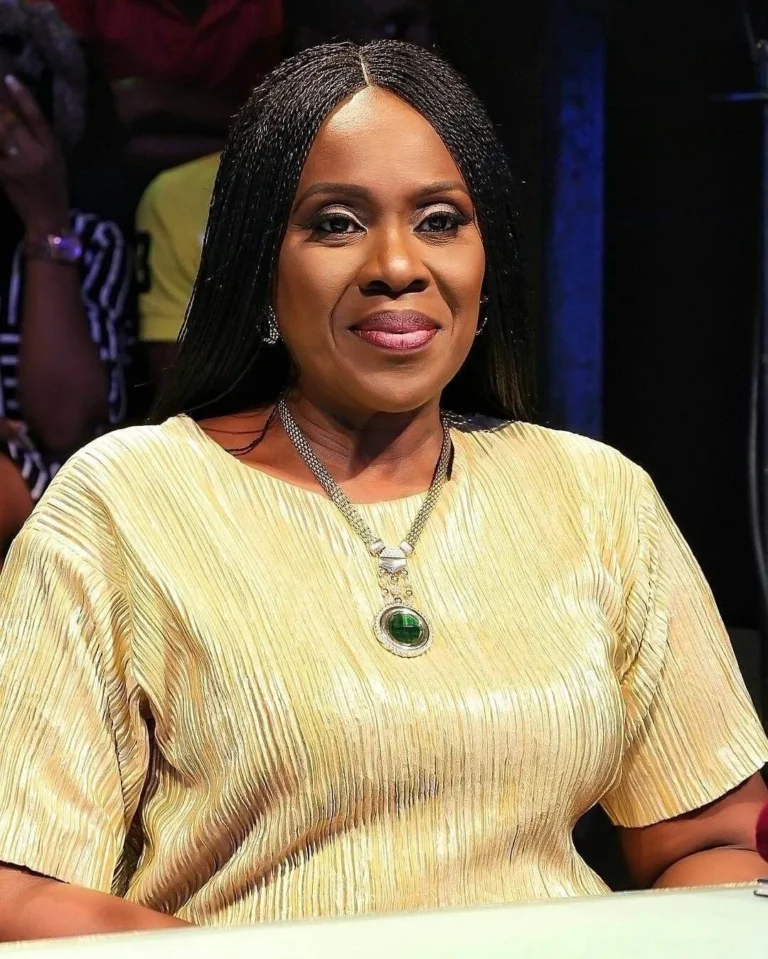
The Nigerian entertainment industry pauses today, September 29, to commemorate the 65th birthday of Joke Silva, a titan of the arts whose career has served as a foundational pillar for Nollywood and the broader performing arts sector. Born in 1961, Silva’s professional trajectory has mirrored the evolution of the Nigerian creative economy, transitioning from the golden age of stage theatre to the digital-first era of global streaming platforms. Her milestone birthday is not merely a personal occasion but a moment of institutional reflection on a career that has spanned four decades, encompassing film, television, stagecraft, and the academic mentorship of emerging talent.
A Chronology of Artistic Mastery
Joke Silva’s journey into the arts began long before her mainstream recognition. Following her secondary education, she pursued formal training in the United Kingdom, studying at the Webber Douglas Academy of Dramatic Art in London. This classical training became the hallmark of her performances, characterized by a meticulous attention to diction, emotional authenticity, and character psychological depth.
In the 1980s and early 1990s, Silva established her reputation as a force in stage theatre, a medium that remains her creative anchor. She was a constant presence in the works of legendary playwrights, often touring with productions that defined the intellectual and cultural discourse of the time. As the Nigerian film industry—later dubbed Nollywood—began to professionalize in the early 1990s, Silva made a seamless transition to the screen. Her breakout roles in films such as "Violated" and "The Amazing Grace" showcased an ability to transcend genres, moving effortlessly between the dramatic intensity of domestic conflict and the historical weight of period pieces.
Throughout the 2000s, Silva’s portfolio expanded to include significant television work, including her role in the hit series "Tinsel," which is widely credited with elevating the production standards of Nigerian soap operas. By the 2010s, she had become a senior stateswoman of the industry, balancing her acting roles with administrative responsibilities, including her involvement with the Bolanle Austen-Peters-led Terra Kulture and various government-backed creative initiatives.
Supporting Data and Industry Impact
The impact of Joke Silva on the Nigerian creative sector can be measured through both her individual awards and her systemic contributions. She has been a consistent recipient of the Africa Movie Academy Awards (AMAA), securing the Best Actress in a Leading Role award in 2006 for her performance in "Women’s Cot." Her shelf of accolades includes multiple Africa Magic Viewers’ Choice Awards (AMVCA) and national honors, including the Member of the Order of the Federal Republic (MFR), bestowed upon her for her services to the arts.
Beyond the hardware, her influence is evidenced by the sheer volume of her professional output. Silva has appeared in over 150 feature films and has been a fixture in theatrical productions that have grossed millions of Naira, contributing to the growth of the Nigerian creative economy—a sector that, according to the National Bureau of Statistics (NBS), has become a critical contributor to the nation’s GDP, often outpacing traditional sectors in terms of growth rate. Her commitment to education, particularly through the Lufodo Group, which she co-founded with her husband, veteran actor Olu Jacobs, has provided a structured pipeline for talent development in a sector previously dominated by informal apprenticeship models.
Official Reactions and Peer Recognition
In anticipation of her 65th birthday, colleagues and industry stakeholders have utilized social media and public forums to express the significance of her legacy. Industry analysts have noted that Silva occupies a unique space as a bridge between the "old guard" of Nigerian theatre and the "new wave" of cinema.
"Joke Silva is the gold standard of professional ethics in our industry," remarked a representative from the Actors Guild of Nigeria (AGN). "Her birthday is a reminder that excellence is a marathon, not a sprint. She has consistently demonstrated that the longevity of an actor is tied to their ability to adapt without losing the core of their craft."
While Silva has historically maintained a private demeanor regarding her personal life, her professional peers frequently cite her as a primary influence. Younger performers, including those currently dominating the streaming platforms like Netflix and Amazon Prime, often identify Silva’s body of work as the curriculum they studied to understand the nuances of character development. Her willingness to take on smaller roles in projects led by young, first-time directors has also been noted as a vital gesture of support for the next generation.
The Evolution of the Creative Landscape
The timing of Silva’s 65th birthday coincides with a pivotal moment for Nigerian storytelling. The industry is currently witnessing a transition toward higher-budget international collaborations and a global appetite for African narratives. Silva’s career serves as a case study for this transition. Having operated in an era of limited resources, where the focus was entirely on the strength of the script and the power of the performance, she has provided a template for how Nigerian artists can maintain relevance in an age defined by high-tech cinematography and digital distribution.
Her work has often challenged societal norms. By choosing roles that explore the complexities of womanhood, political power, and domestic life, she has helped shape the cultural narrative of Nigeria. Whether playing a traditional matriarch or a corporate executive, Silva brings a sense of authority to the screen that commands viewer attention, effectively elevating the perception of Nigerian acting on the global stage.
Broader Implications and Legacy
As Silva enters this new chapter, the implications of her career for the future of the Nigerian arts are profound. She has helped demystify the path for female actors, proving that longevity is achievable through professional discipline, continuous learning, and a commitment to quality over quantity.
Her legacy is also tied to her role as an advocate for the industry. Silva has been a vocal participant in discussions regarding intellectual property rights, the need for better infrastructure for performance venues, and the importance of professionalization within the guilds. Her advocacy has often moved the needle in policy discussions, pushing for a more sustainable environment for performers.
Furthermore, her partnership with Olu Jacobs remains a subject of public admiration. Their joint commitment to the craft has created a narrative of stability in an industry often characterized by volatility. Together, they have modeled a brand of "creative royalty" that prioritizes the health of the industry above individual celebrity.
Conclusion: A Living Institution
As the industry celebrates Joke Silva at 65, the consensus remains that she is not merely a veteran; she is a living institution. Her journey from the stages of London to the screens of a global audience reflects the maturation of Nigerian cinema itself. For the younger generation of performers, she represents the possibility of a career that is both impactful and respected.
As we look toward the future of Nigerian storytelling, the blueprint left by Silva—a combination of rigorous training, artistic integrity, and a dedication to the communal growth of the industry—will likely serve as the foundation for the next several decades of development. Today, the accolades are not just for the roles she has played, but for the standards she has set, the mentors she has nurtured, and the indelible mark she has left on the collective consciousness of the Nigerian audience.
The 65th birthday of Joke Silva is more than a milestone; it is an affirmation of the power of the arts to shape culture. As she continues to contribute to the industry, the Nigerian creative landscape remains enriched by her presence, her wisdom, and her unwavering pursuit of excellence. From the stage to the screen, and from the classroom to the boardroom, Joke Silva’s influence continues to resonate, proving that true artistry is, in fact, timeless.