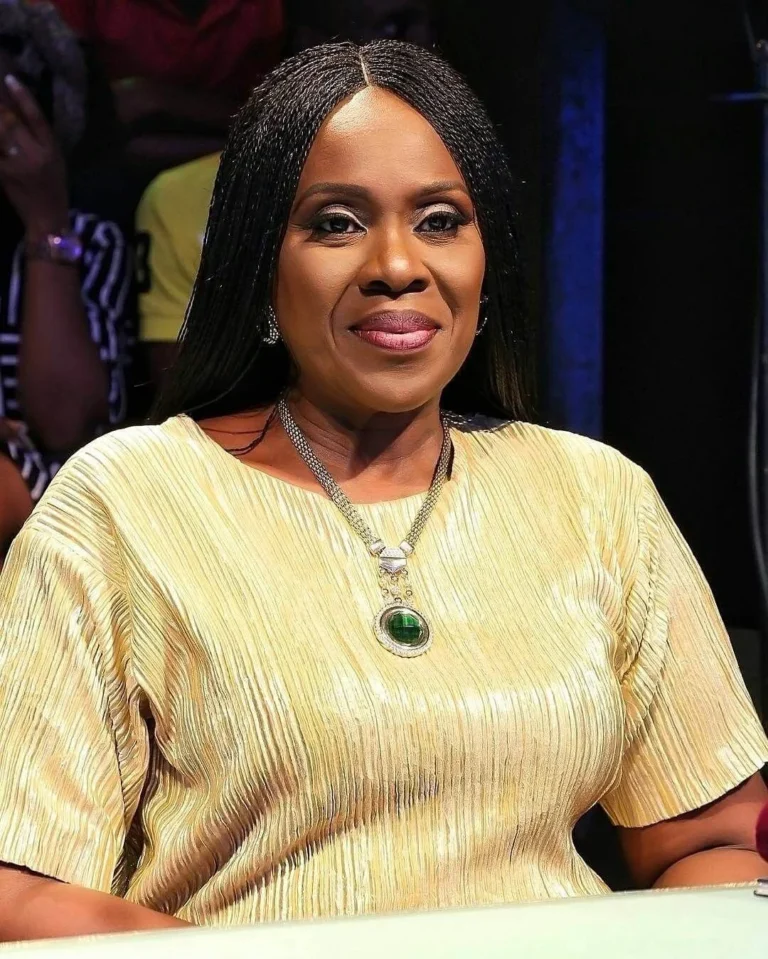
Today, September 29, 2024, marks a significant milestone in the history of the Nigerian creative industry as veteran actress, producer, and mentor Joke Silva celebrates her 65th birthday. Born in 1961, Silva’s professional trajectory has mirrored the evolution of Nollywood and the Nigerian theatrical stage, moving from the nascent days of television drama to the current era of global digital streaming dominance. Her career is not merely a record of performances, but a testament to the institutionalization of acting as a rigorous, respected profession in West Africa. As fans, colleagues, and cultural historians reflect on her contributions, the occasion serves as a moment to analyze the profound impact she has had on storytelling, professional standards, and the cultivation of future generations of Nigerian talent.
The Foundation of a Distinguished Career: A Chronology
The story of Joke Silva is intrinsically linked to the development of the Nigerian arts scene. Trained at the Webber Douglas Academy of Dramatic Art in London, Silva brought a refined level of technique and academic discipline to the Nigerian screen. Her early years were defined by a commitment to the craft that transcended the commercial pressures often associated with the burgeoning film industry.
In the 1980s and 1990s, when Nigerian television was dominated by landmark productions like "Mind Bending" and "The King Must Dance Naked," Silva emerged as a formidable presence. Her ability to navigate both high-brow stage productions and popular television drama solidified her status as a versatile performer. By the early 2000s, as the home video phenomenon—now popularly known as Nollywood—began to reshape the landscape, Silva was among the first generation of established professionals to bridge the gap between traditional theatre and the new, fast-paced film industry.
Key milestones in her career include:
- 1980s: Formal training in the United Kingdom, followed by appearances in classic Nigerian television dramas that set the standard for acting quality.
- 1990s: Establishing her footprint in theatrical excellence, participating in plays that highlighted the sociopolitical nuances of a changing Nigeria.
- 2000s: Transitioning into the mainstream Nollywood circuit, where she received accolades for roles in films such as "Last Wedding" and "Women’s Cot."
- 2010s to Present: Assuming the role of a matriarch and mentor, while simultaneously venturing into film production and creative management through the Lufodo Group, a company she co-founded with her husband, veteran actor Olu Jacobs.
Institutional Impact and Mentorship
Beyond her individual performances, Joke Silva’s legacy is defined by her efforts to professionalize the industry. Unlike many of her contemporaries who focused solely on screen time, Silva invested heavily in the infrastructure of the arts. Through the Lufodo Academy of Performing Arts, she has played a pivotal role in formalizing acting education in Nigeria.
Her approach to the industry has always been grounded in the belief that acting is a craft requiring continuous study and professional ethics. This commitment to "the work" has made her a sought-after voice for policy discussions regarding the creative economy in Nigeria. She has consistently advocated for better copyright laws, improved distribution channels, and, most importantly, the recognition of acting as a legitimate, pensionable, and protected career path.
Supporting Data and Industry Context
The significance of Silva’s 65th birthday must be contextualized within the growth of the Nigerian creative sector. According to data from the Nigerian Bureau of Statistics and international trade reports, the creative industry contributes significantly to Nigeria’s GDP, with the film industry—Nollywood—producing thousands of hours of content annually. However, the early growth of this sector was characterized by a lack of formal training facilities.
Silva’s career serves as a bridge between these two eras. By maintaining a high standard of performance over four decades, she provided a benchmark for younger actors. Statistics from industry awards bodies, including the Africa Movie Academy Awards (AMAA) and the Africa Magic Viewers’ Choice Awards (AMVCA), show that performances by actors of Silva’s caliber consistently correlate with higher critical reception and, subsequently, higher export value for Nigerian films. Her ability to remain relevant in an industry that frequently favors youth demonstrates that there is a sustainable, long-term career model for actors in Africa if they possess the versatility she has displayed.
Professional Reactions and Commemorations
On the occasion of her 65th birthday, the outpouring of tributes from the Nigerian entertainment fraternity has been significant. Industry peers have highlighted her role as a bridge-builder. Colleagues often describe her as a "stickler for excellence" who refuses to compromise on the quality of scripts or production values.
While official statements from the government and cultural bodies are expected to follow, the grassroots sentiment is clear: Silva is viewed as a national treasure. Younger performers, including stars who have shared the screen with her in recent hits, have taken to social media to credit her with teaching them the importance of presence, timing, and emotional vulnerability. Her influence is not confined to the screen; it is felt in the boardrooms of production houses and in the classrooms of drama schools, where her methodologies remain a subject of study.
Broader Implications: The "Silva Effect" on Nigerian Storytelling
The "Silva Effect," as some cultural critics have termed it, refers to the deliberate infusion of depth and gravitas into the portrayal of Nigerian women on screen. Throughout her career, Silva has avoided the stereotypical "damsel in distress" or "wicked matriarch" tropes that plagued early Nollywood scripts. Instead, she has championed roles that depict women as complex, intellectually capable, and morally ambiguous characters.
This shift has had a ripple effect. By choosing roles that require emotional range and psychological complexity, Silva has forced writers and directors to elevate their craft. Her presence in a project often signals a higher level of narrative sophistication, encouraging producers to invest in better lighting, sound design, and script editing. In this sense, her 65th birthday is a celebration of a pioneer who effectively "upgraded" the industry’s output through the sheer weight of her talent and her refusal to settle for mediocrity.
Analyzing Longevity in a Competitive Landscape
The Nigerian entertainment industry is notoriously difficult to navigate. High rates of turnover, the lack of a traditional studio system, and the rapid pace of technological change often force older actors into obscurity. Joke Silva’s ability to remain at the top of her game at 65 is an anomaly that warrants analysis.
Her success can be attributed to three factors:
- Adaptability: Silva has moved seamlessly from VHS tapes to VCDs, to DVD distribution, and finally to global streaming platforms like Netflix and Amazon Prime Video. She understood early that the medium is secondary to the quality of the character.
- Brand Integrity: She has cultivated a reputation for professionalism that is rare in a freelance-heavy industry. Producers know that hiring Silva comes with a guarantee of reliability, preparation, and an elevated production value.
- Diversification: By moving into production and training, she ensured that her relevance was not tied solely to her physical appearance or her ability to secure lead roles, but rather to her intellectual contribution to the sector.
A Legacy for the Future
As Joke Silva celebrates her 65th year, the Nigerian entertainment industry is in the midst of a massive transition. The "New Nollywood" era, characterized by high-budget international collaborations and global distribution, relies heavily on the groundwork laid by veterans like Silva. Her life’s work provides a blueprint for the next generation of filmmakers: that art, when pursued with discipline, creates an enduring legacy that transcends borders.
The celebration of her birthday is, therefore, more than just a nod to a long career. It is an acknowledgment of a woman who helped turn a fledgling, informal film market into a globally recognized cultural powerhouse. As the industry continues to evolve, the principles that Joke Silva has championed—integrity, continuous learning, and an unwavering commitment to the craft—will remain the pillars upon which future Nigerian storytelling is built.
In a world where digital fame is often fleeting, Joke Silva’s career serves as a reminder that true influence is built over time, through the consistent, quiet, and rigorous pursuit of artistic excellence. As she enters this new chapter, her legacy remains not in the past, but in the vibrant, thriving, and professionalized industry she helped create and continues to nurture.