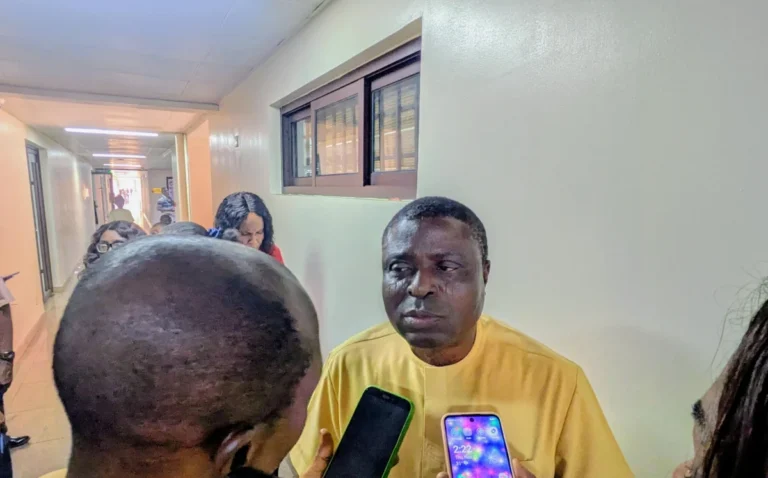
The Delta State Government has announced that the ongoing revival of the long-dormant Delta Glass industry in Ughelli is projected to generate at least 5,000 direct and indirect jobs upon its full operational deployment. This ambitious economic milestone forms a central pillar of the state’s industrialization agenda, aimed at curbing youth unemployment, expanding the local manufacturing base, and transforming Delta into a premier investment hub within the South-South geopolitical zone.
The disclosure was made by the Delta State Commissioner for Trade and Investment, Hon. Samuel Oritsejolomisan Oligida, during a comprehensive briefing with journalists in Asaba. The interactive session followed the presentation of the Ministry of Trade and Investment’s N5 billion budget proposal for the 2027 fiscal year. The presentation took place during
a strategic budget multilateral discussion organized by the Delta State Ministry of Economic Planning, bringing together various ministries, departments, and agencies (MDAs) to harmonize fiscal priorities.
According to Commissioner Oligida, the deliberate effort to breathe new life into moribund industrial assets reflects the administration’s pragmatic approach to economic diversification. By shifting focus from heavy reliance on federal allocations to sustainable, internally generated economic growth, the state is actively courting private sector partnerships to reactivate dormant industrial infrastructure.
Ughelli Glass Factory: A Catalyst for Industrial Revival
The revitalization of the Delta Glass facility in Ughelli marks a turning point for industrial development in the region. Once a thriving symbol of manufacturing prowess, the factory suffered years of abandonment due to economic headwinds, shifts in industrial policy, and capital flight. However, concerted efforts by the current state administration have successfully attracted private investors who have already commenced preliminary development and rehabilitation work on the site.
Industry analysts note that the return of large-scale glass manufacturing to Ughelli will have a multiplier effect on the regional economy. Beyond the immediate creation of 5,000 jobs—which officials state will significantly pull vulnerable youths off the streets—the revival is expected to stimulate auxiliary sectors. These include raw material sourcing, transportation logistics, packaging supply chains, and hospitality services within Ughelli and surrounding communities.
The Commissioner emphasized that the state government views the revival not merely as a commercial enterprise, but as a critical social intervention. Unemployment remains a pressing socioeconomic challenge across Nigeria, and localized industrial absorption of the labor force provides a sustainable antidote to youth restiveness and associated security concerns.
Expanding Market Infrastructure Across Delta State
In tandem with heavy industrial revival, the Delta State Ministry of Trade and Investment is aggressively expanding commercial infrastructure to support Micro, Small, and Medium Enterprises (MSMEs). Commerce forms the lifeblood of many urban and semi-urban centers in the state, necessitating the construction of modern, accessible, and secure market environments.
Highlighting the administration’s infrastructure strides, Commissioner Oligida pointed to the Udu Harbour Market as a flagship commercial project. Housing over 700 modern shops, the facility has alleviated congestion in traditional open-air markets and provided traders with a structured, conducive environment to conduct business.
Building on the success of the Udu project, the state government has advanced plans for the construction of a major new market in Osubi. Projected to rank among the largest commercial hubs in the state, the Osubi market is designed to capture the growing economic dynamism of the Effurun-Warri-Ughelli industrial corridor. By deploying these modern market structures, the government aims to formalize informal trade, enhance revenue generation for local councils, and provide a seamless trading experience for both wholesalers and retail consumers.
Infrastructure as the Cornerstone of Investor Confidence
During the budget defense session, Commissioner Oligida articulated the foundational philosophy guiding Delta State’s investment drive: infrastructural readiness precedes capital inflow. He stressed that private investors are inherently risk-averse and will bypass jurisdictions lacking basic infrastructural prerequisites, such as reliable power, accessible road networks, secure environments, and robust digital connectivity.
To mitigate these concerns, the Delta State Government has sustained an aggressive capital expenditure profile focused on urban renewal, road construction, and security architecture. This strategic alignment has reportedly triggered a surge in investor inquiries and actual capital commitments across diverse sectors, including agriculture, agro-processing, healthcare manufacturing, and real estate.
Financial Inclusion and MSME Support Facilities
Recognizing that small businesses form the bedrock of sustainable economic development, the state government has maintained various business support and financial intervention schemes. However, the implementation of these programs has presented distinct administrative lessons, particularly regarding beneficiaries’ perceptions of public sector financial interventions.
Addressing journalists, Oligida candidly addressed challenges faced regarding the administration’s business support facility. He revealed that some initial beneficiaries misunderstood the intervention fund as a non-repayable national or state grant rather than a revolving financial loan designed to scale existing business operations.
To ensure the long-term viability of the fund, the ministry has intensified sensitization campaigns, encouraging current beneficiaries to meet their repayment obligations. Compliance and prompt revolving of these funds are vital to ensure that a broader pool of aspiring entrepreneurs and existing business owners can access the capital necessary to expand their enterprises.
Agricultural Renaissance: The Jesse Rice Factory
Beyond manufacturing and commerce, Delta State is making notable inroads into agricultural value-chain optimization. Oligida highlighted the state government’s strategic intervention in the revival of a major rice processing factory located in Jesse, a community in Idjerhe Kingdom, Ethiope West Local Government Area.
Described as one of the largest agro-industrial facilities of its kind across the South-South and South-East regions, the Jesse rice mill had previously faced operational bottlenecks. Through targeted financial backing and administrative facilitation by the state government, the facility has been positioned to resume full-scale operations.
The revival of the rice factory aligns with national food security objectives and regional import-substitution strategies. By providing a ready off-taker market for local rice farmers, the facility is expected to incentivize increased agricultural production across the state, retain capital within the local economy, and generate substantial rural employment.
Targeted Investments in Healthcare Infrastructure
In a multi-sectoral approach to human capital development, the Ministry of Trade and Investment has also facilitated critical interventions outside traditional commerce. Oligida disclosed that the state government recently supported the acquisition of specialized medical diagnostic equipment for a strategic clinic situated along the Petroleum Training Institute (PTI) Road in Effurun.
Access to advanced diagnostic services remains a critical bottleneck in Nigeria’s healthcare delivery system. By equipping the Effurun facility with modern diagnostic tools, the government aims to improve early detection and management of critical diseases, reducing the financial and psychological burden on residents who would otherwise have traveled out of the state or country for specialized medical investigations.
Streamlining Land Administration and Certificates of Occupancy
Real estate development and property monetization often face administrative friction in Nigeria, primarily due to bureaucratic delays in obtaining land titles. To unlock dormant capital tied up in real estate, the Delta State Government has overhauled the processing pipeline for Certificates of Occupancy (C of O).
Commissioner Oligida noted that the ministry has aggressively collected property information from landowners across the state, assisting numerous residents in regularizing their land documents. While the state government has substantially reduced processing times and administrative costs to make the exercise citizen-friendly, applicants are reminded of minimal statutory charges required by law.
The ministry has therefore issued a call to action, urging all property owners who have yet to secure their titles to visit the relevant department within the ministry, submit their documentation, and take advantage of the streamlined processing window. Securing a recognized title deed not only safeguards property ownership but also provides citizens with bankable collateral capable of unlocking credit facilities from financial institutions.
Fiscal Framework and the N5bn 2027 Budget Proposal
The comprehensive suite of projects, interventions, and administrative reforms spearheaded by the ministry is underpinned by a disciplined fiscal strategy. For the 2027 fiscal year, the Ministry of Trade and Investment has submitted a budget proposal of N5 billion, strictly pegged to the expenditure ceiling allocated by the Ministry of Economic Planning.
This financial roadmap is structured to prioritize high-impact capital projects over recurrent expenditure, ensuring that every naira expended directly impacts job creation, industrial expansion, and infrastructural consolidation. As Delta State navigates the economic realities of the coming fiscal year, the successful execution of the Ughelli glass factory revival, alongside ongoing market developments and agricultural investments, will serve as a definitive litmus test for the administration’s industrialization blueprint.