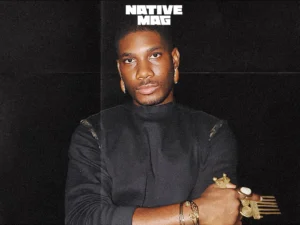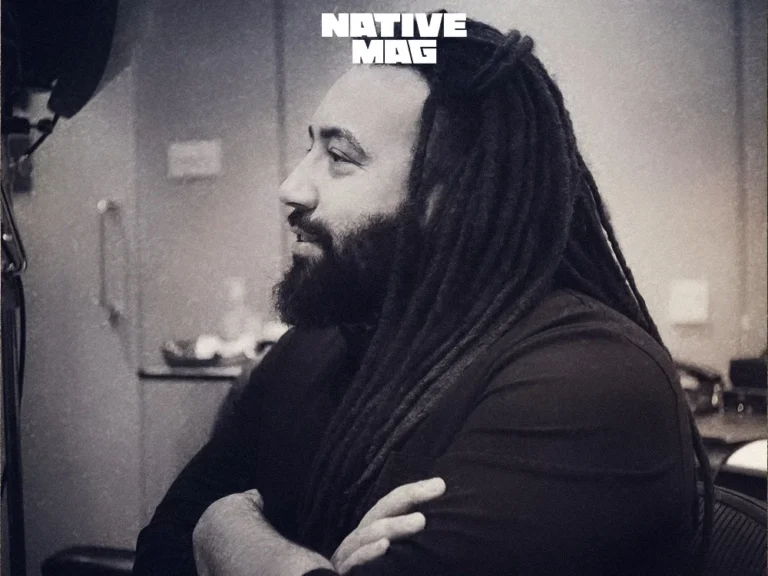
The contemporary music industry is increasingly defined by borderless collaborations and the blurring of lines between technical production and individual artistry. Few individuals exemplify this shift more effectively than Adey, a multifaceted Nigerian creative whose career trajectory spans from the foundational days of the West African Afrobeats explosion to the high-pressure, elite studio environments of global hip-hop royalty. While his name has long been etched into the liner notes of some of the most pivotal tracks in modern Nigerian music, Adey’s recent evolution—marked by his contributions to Kanye West’s Vultures 1—highlights a strategic transition from a behind-the-scenes engineer to a globally recognized architect of sound.
The Foundation of a Producer
Born into an environment rich with musical exposure, Adey’s formal entry into the craft began at the age of four with piano lessons. This early grounding in classical theory served as the bedrock for his eventual transition into digital production. However, the true catalyst for his career occurred during a junior secondary school Christmas concert. It was here that he discovered the looping functionality on a Yamaha keyboard, an epiphany that transformed music from a passive interest into a technical puzzle he was determined to solve.
By the time he reached his A-levels, the rapid advancement of Digital Audio Workstations (DAWs) allowed him to formalize his hobby into a professional skill set. This period of self-teaching—characterized by his own admission of being "neck-deep" in the mechanics of sound—positioned him to become one of the most sought-after producers in the Nigerian music scene, eventually leading to his breakthrough with the 2017 smash hit "Juice" by YCee.
The "Juice" Phenomenon and the Administrative Reality
"Juice" represents a defining chapter in Adey’s career. The track, which masterfully blended Ghanaian bounce rhythms with contemporary R&B textures, became an inescapable fixture of the Nigerian and international radio circuits. Despite its commercial success, the record serves as a cautionary tale regarding the structural challenges within the Nigerian music industry.
Adey notes that the success of "Juice" was, in many ways, a bittersweet milestone. The song’s viral growth outpaced the administrative infrastructure surrounding it. For two years, the producer remained unaware of his potential to claim streaming royalties, and his lack of legal guidance allowed third-party deals to proceed without his participation. This experience underscored a broader, systemic issue: the disparity between artistic creation and intellectual property management in the Nigerian industry. Adey’s candor on this subject serves as a vital critique for emerging producers who often find their creative output exploited due to a lack of administrative awareness.
Global Integration: The Kanye West Connection
The most significant leap in Adey’s professional journey occurred when he secured a role within the inner circle of Kanye West. His path to this opportunity was not facilitated by aggressive self-promotion, but rather through the professional network of his sister, Mowalola, a long-term collaborator of West.
Adey’s integration into West’s production team in Florence and later in Mallorca was a lesson in humility and strategic patience. Eschewing the common tendency to assert one’s presence through volume, Adey adopted a "runner" mentality, focusing on utility and observation. His transition from an engineer—tasked with logistical duties and minor technical support—to a credited producer on tracks such as "Mission Control" from Vultures 1 provides a rare look into the working dynamics of one of the world’s most enigmatic artists.
The turning point occurred in a Mallorca studio, where West, hearing Adey working in the basement, instinctively identified his potential. This interaction led to an immediate promotion within the team, demonstrating the high-stakes, meritocratic environment that defines West’s creative process. Adey’s ability to "skate the line" between his own creative instincts and West’s specific stylistic requirements has earned him a place in an elite echelon of global producers.
The Dual Identity: Producer and Artist
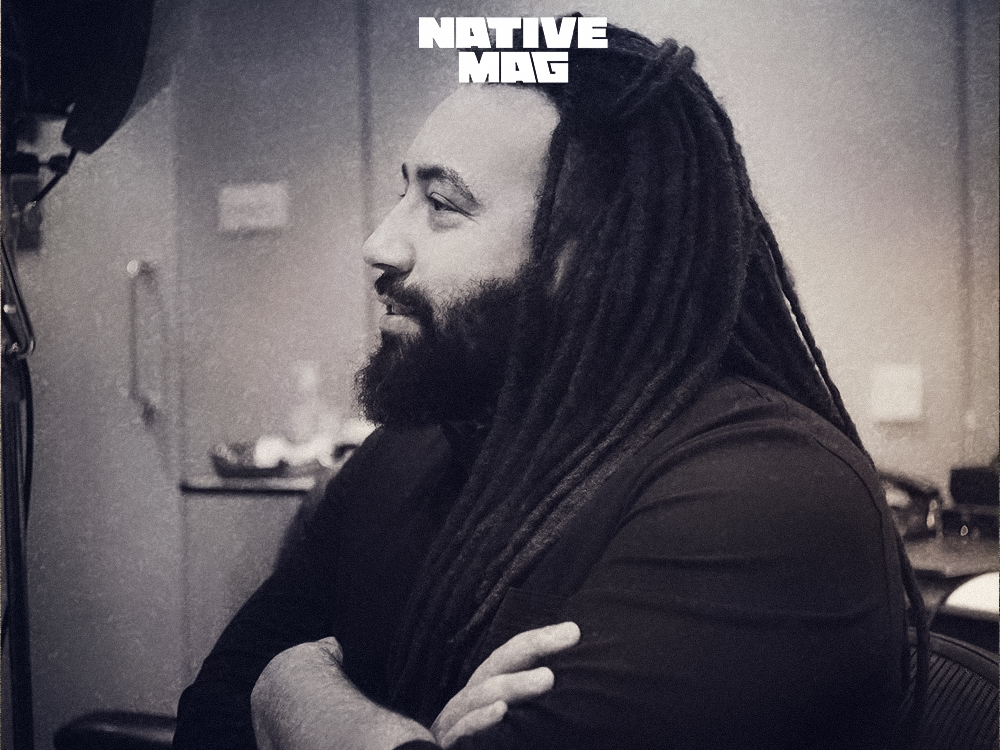
While his production credits are extensive, Adey maintains a distinct, almost reclusive identity as an artist in his own right. His single "Cigarettes" has garnered nearly a million streams on Spotify, yet he intentionally limits his promotional efforts. This decision stems from a philosophical commitment to the music as a personal artifact rather than a commercial product designed for mass consumption or live performance.
This "shadowy figure" approach to his artistry allows Adey to maintain creative autonomy. By decoupling his personal work from the pressures of the industry, he preserves the integrity of his sound. His recent activity, which includes paying club DJs to test his unreleased demos on high-fidelity systems, highlights a devotion to the auditory experience over the performative aspects of modern fame.
Industry Analysis: The Impending Reset
Adey’s perspective on the current state of music production, particularly within Nigeria, is marked by a call for technical rigor. He identifies a concerning trend: the democratization of music production tools—such as loop-based software and sample packs—has removed the barrier to entry, which he views as a double-edged sword. While it allows for greater accessibility, it has simultaneously led to a dilution of the craft.
"Knowledge is pressure, and that pressure produces craft," Adey asserts. He expresses concern that a segment of the industry is overestimating its capabilities by bypassing the foundational years of theory and technical training. He anticipates an inevitable "reset" in the Nigerian music landscape, where the current low threshold for audience satisfaction will give way to a renewed demand for high-level songwriting, complex arrangement, and sophisticated production.
Professional Philosophy and Future Outlook
At the core of Adey’s methodology is a relentless commitment to continuous learning. Whether it is researching engineering mechanics unrelated to music or refining his synthesis techniques, his philosophy is predicated on the idea that every day without learning is a wasted opportunity. This intellectual curiosity is perhaps his greatest asset in an industry that prizes novelty.
His refusal to collaborate with artists who are unwilling to engage in a reciprocal exchange of ideas—a "push-pull" dynamic—highlights the standards he sets for his creative partnerships. He has frequently opted to decline work, including returning deposits, when he feels that the collaborative spirit is stifled by ego or a lack of willingness to listen.
As he looks toward the future, Adey remains focused on maintaining his relevance in both the local and international markets. His trajectory from a young student discovering the looping function on a keyboard to a key contributor on international albums illustrates a career built on technical mastery, administrative vigilance, and an uncompromising dedication to the craft. His story is not merely one of success, but a blueprint for how modern creators can navigate the complex, often predatory structures of the music business while remaining true to their artistic vision.
The industry continues to evolve, and as the "reset" Adey predicts begins to take shape, his influence as both a technical mentor and a creative force is likely to become more pronounced. By prioritizing long-term skill development over short-term gains, he has positioned himself as a vanguard of the next generation of Nigerian music producers, setting a standard that demands as much from the artist as it does from the technician.