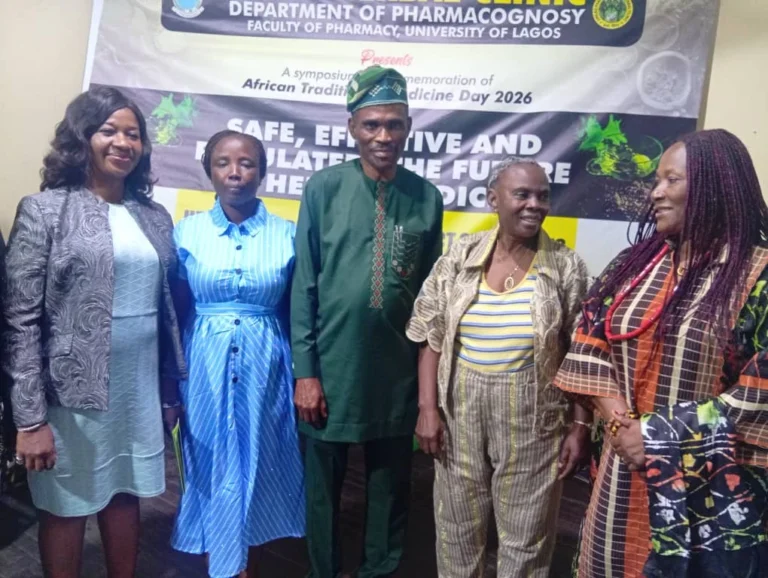
The growing popularity of herbal medicine in Nigeria must be matched with stronger scientific research, clinical validation, standardisation, and effective regulation if herbal medicine is to earn greater public confidence and play a meaningful role in modern healthcare, experts have said. This clarion call emerged as the primary focus of the 2026 African Traditional Medicine Day symposium, hosted by the Model Herbal Clinic of the Department of Pharmacognosy at the University of Lagos (UNILAG). The event, themed "Safe, Effective and Regulated: The Future of Herbal Medicine," served as a critical platform for stakeholders to dissect the trajectory of indigenous medicine and its potential integration into the national healthcare framework.
The Myth of Natural Safety
A central theme addressed by Pharm. (Mrs) Ijeoma P. Ezeaka, Deputy Director of the Herbal and Nutraceutical Division at the National Agency for Food and Drug Administration and Control (NAFDAC), was the dangerous misconception that "natural" is synonymous with "harmless." According to Ezeaka, the botanical origin of a product does not exempt it from the rigorous pharmacological scrutiny required of synthetic pharmaceuticals.
Ezeaka highlighted that poorly developed herbal products often harbor significant risks, including chemical contamination, heavy metal toxicity, inconsistent dosage, and potential adverse interactions with conventional medications. She emphasized that the regulatory mandate of NAFDAC extends across the entire lifecycle of a product: from the initial documentation and facility inspection to laboratory-based quality control, marketing authorization, and, crucially, post-market surveillance.
For small-scale producers operating outside of industrial facilities, Ezeaka advised against informal production. Instead, she urged entrepreneurs to utilize contract manufacturing with NAFDAC-compliant facilities. This strategy ensures that even smaller entities can meet the necessary hygiene and safety benchmarks required to bring a product to the mass market.
Integrating Indigenous Knowledge with Clinical Evidence
The symposium underscored a persistent gap between traditional claims of efficacy and modern clinical proof. Chief Dr (Mrs) Stella Olagbende-Dada, a lead speaker at the event, noted that while traditional medicine remains the primary source of healthcare for a significant portion of the African population, anecdotal evidence cannot sustain a modern, evidence-based health system.

"Some of our medicinal plants are traditionally used. Because we have used them and feel well, we believe that they are effective, but they are not actually proven to be effective," Dr. Olagbende-Dada remarked. She argued that the path forward requires an aggressive pivot toward randomized controlled trials (RCTs) and systematic scientific documentation. By shifting from tradition-based usage to evidence-based practice, the sector could potentially lower the cost of healthcare in rural regions where conventional medical infrastructure is either inaccessible or prohibitively expensive.
Historical Context: The Evolution of the Model Herbal Clinic
The 2026 symposium was not an isolated event but rather the latest milestone in a decade-long effort to professionalize herbal medicine in Nigeria. Established in 2011 by Prof. Olukemi Odukoya, the Model Herbal Clinic at UNILAG was designed to bridge the gap between "bench to market"—the process of taking raw botanical discoveries and turning them into stable, quality-assured pharmaceutical products.
The clinic’s annual commemorative events reflect a clear progression in the sector’s maturity:
- 2017: "African Traditional Herbs for Health: Application and Development." This foundational event, featuring Prof. Maurice Iwu, sought to establish a dialogue on the basic application of indigenous flora.
- 2018: "Effective and Safe Use of Herbs." This marked a pivot toward quality control and safety protocols.
- 2019: The symposium explored international best practices for transitioning from the laboratory to commercial markets.
- 2020: In response to the COVID-19 pandemic, the focus shifted to the role of antiviral herbal remedies and the scientific evaluation of immunity boosters.
- 2021: An international collaborative effort involving experts from the U.S. and Switzerland to discuss standardized immunity-boosting protocols.
- 2023: The focus expanded to environmental sustainability and the economic impact of medicinal plant cultivation.
- 2025: "Herbal Medicines Development: New Frontiers, New Directions." This session examined emerging technologies in extraction and formulation.
- 2026: The current theme, "Safe, Effective and Regulated," highlights the industry’s shift toward full regulatory compliance and standardized manufacturing.
Academic and Professional Perspectives
Prof. Sunday Adesegun, Dean of the Faculty of Pharmacy at UNILAG, emphasized that the university is committed to aligning its research with World Health Organization (WHO) mandates for traditional medicine. He urged the next generation of pharmacists and researchers to prioritize "quality assurance" as the primary pillar of their work.
Dr. Ifeoma C. Orabueze, the Acting Head of the Department of Pharmacognosy, added that the preservation of indigenous knowledge must be balanced with intellectual property protection and ethical collaboration with traditional healers. "We are building a bridge between traditional wisdom and modern science," she stated. "Our goal is to ensure that these valuable resources are not only preserved but transformed into globally competitive healthcare products."
Broader Economic and Healthcare Implications
The movement to formalize herbal medicine has significant implications for the Nigerian economy and public health. Currently, the reliance on imported synthetic drugs places a heavy burden on the nation’s foreign exchange reserves. By developing standardized, locally produced herbal medicines, Nigeria could potentially reduce its import dependency while simultaneously creating a new industry centered on the cultivation and processing of indigenous plants.

However, analysts note that several barriers remain. These include:
- Standardization Challenges: Medicinal plants are biological organisms whose chemical composition can vary based on soil quality, climate, and harvesting times. Standardizing these extracts requires sophisticated laboratory infrastructure that is often lacking in smaller manufacturing units.
- Regulatory Burden: The cost of NAFDAC registration and facility certification remains high for grassroots practitioners, potentially excluding the very people who hold the most traditional knowledge.
- Intellectual Property: There is an ongoing need for a framework that protects the rights of indigenous communities while encouraging the private sector to invest in the costly process of clinical validation.
Looking Toward the Future
Dr. Aminat Oyawaluja, Chairperson of the Local Organising Committee, expressed satisfaction with the progress made to date. She noted that the success of the Model Herbal Clinic lies in its ability to foster a "triple-helix" model of cooperation: academia provides the research, industry provides the manufacturing capacity, and the regulator (NAFDAC) ensures the public remains protected.
The consensus from the 2026 symposium is clear: the future of herbal medicine in Nigeria does not lie in abandoning tradition, but in subjecting that tradition to the rigors of modern science. As the sector moves toward a more regulated landscape, the focus will increasingly shift from proving that a plant works to understanding how it works, at what dose it remains safe, and how it interacts with the broader physiological systems of the human body.
For stakeholders, the road ahead is one of intensive data collection and institutional strengthening. By moving from anecdotal reports to peer-reviewed clinical data, the Nigerian herbal medicine sector stands at the precipice of a significant transformation—one that could ultimately secure its place as a legitimate and essential component of the national healthcare system. The 2026 symposium serves as a reminder that while the journey toward full integration is long, the momentum is undeniably building toward a more evidence-based and regulated future.