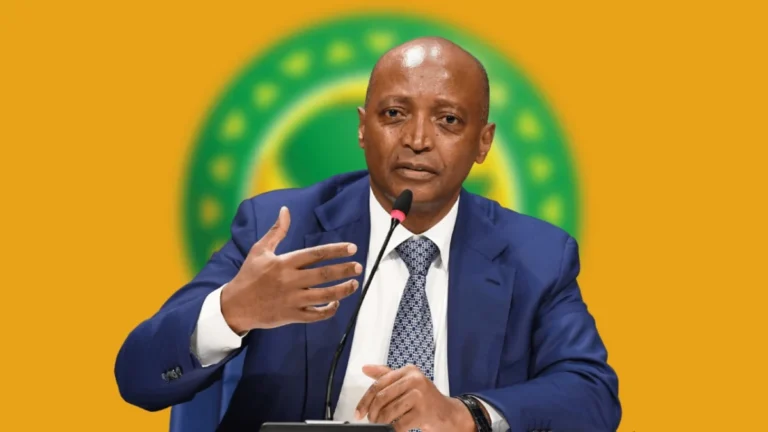
The Confederation of African Football (CAF) has officially announced a remarkable financial turnaround, reporting a robust $31.2 million net surplus for the 2025-26 financial year. This historic milestone was unveiled at the 48th Ordinary General Assembly, signaling the culmination of a rigorous multi-year recovery plan championed by CAF President Patrice Motsepe. Total revenues for the period climbed to an impressive $284 million, heavily propelled by lucrative commercial agreements, broadcast rights, and unprecedented sponsorship deals secured during the 2025 Africa Cup of Nations (AFCON) hosted in Morocco.
The extraordinary monetary performance marks a dramatic departure from the debilitating financial crises that crippled African football governance earlier in the decade. By steering the organization back into profitability and substantially growing its balance sheets, CAF has established a renewed foundation for sustainable development across its member associations. Beyond merely balancing the books, the continental governing body has leveraged this commercial success to scale up financial disbursements to national federations, promising a sweeping transformation for grassroots and professional football infrastructure across the African continent.
A Remarkable Reversal from Near Bankruptcy
To fully appreciate the significance of the $31.2 million net surplus, one must examine the perilous financial landscape CAF navigated just a few years prior. In 2021, the organization was mired in staggering debt, grappling with liabilities exceeding $100 million. Mismanagement, legacy contractual disputes, and the crippling economic fallout of the global pandemic had driven the continent’s premier football administration to the brink of insolvency.
The appointment of South African billionaire businessman Patrice Motsepe as CAF President in March 2021 heralded an aggressive era of fiscal discipline, corporate restructuring, and aggressive commercial repositioning. Motsepe, alongside the executive committee, prioritized restoring institutional credibility, renegotiating unfavorable broadcast agreements, and courting blue-chip corporate partners.
The fruits of these administrative reforms materialized progressively, culminating in the stellar financial metrics presented at the 48th Ordinary General Assembly. CAF’s overall reserves witnessed a staggering recovery, moving away from a devastating deficit of $16.8 million to register a positive balance of $14.4 million. Furthermore, the organization’s liquid cash balance soared to $118.8 million by the end of June 2026, providing a secure financial cushion capable of weathering future economic uncertainties and funding long-term continental tournament cycles.
The Morocco 2025 Catalyst
At the epicenter of this financial renaissance was the 2025 Africa Cup of Nations hosted in Morocco. Widely lauded as one of the most commercially successful editions in the history of the tournament, AFCON 2025 redefined the standard for African sporting spectacles.
According to official figures released by CAF, the tournament attracted a record-breaking 23 commercial partners. These strategic brand alliances generated in excess of $100 million in direct commercial revenue. Morocco’s world-class sporting infrastructure, state-of-the-art stadiums, efficient logistics, and vibrant tourism market provided an ideal backdrop for global brands seeking to engage with Africa’s massive football demographic.
The success of the Morocco tournament underscored a broader economic trend: African sporting properties, when managed with transparency and professional execution, possess immense commercial viability. Brands ranging from telecommunications giants and financial institutions to global beverage and automotive conglomerates competed fiercely for visibility during the month-long competition. The resulting bidding wars for sponsorship tiers directly contributed to the soaring revenue streams that ultimately allowed CAF to post its historic net surplus.
Empowering Member Associations Through Increased Funding
Buoyed by its newfound financial health, CAF has operationalized a core pillar of its mandate: redistributing wealth to empower the 54 national football associations that form the bedrock of the confederation.
During the Ordinary General Assembly, CAF announced a significant increase in annual financial support for each of its member associations, raising the stipend from $525,000 to $700,000. This latest adjustment, which took effect in July 2026, represents a staggering 250% cumulative increase since 2021, when member associations received a mere $200,000 annually.
This capital injection is designed to alleviate the financial pressures faced by local football federations, many of which struggle with domestic league development, refereeing standards, youth football structures, and national team logistics. By ensuring a predictable and substantially higher stream of operational revenue, CAF aims to narrow the competitive gap between African nations and their global counterparts, ultimately elevating the standard of play across the continent.
Global Synergy: FIFA Forward 4.0 and Leadership Alignment
The high-profile assembly also served as a platform for broader geopolitical alignment within world football. FIFA President Gianni Infantino attended the gathering, using the forum to outline ambitious global development strategies, notably the proposed FIFA Forward 4.0 programme.
Infantino announced plans to radically increase development grants allocated to member associations worldwide, proposing a jump from $8 million to $25 million over a four-year cycle. This monumental funding proposal, slated for formal review and ratification by the FIFA Council the following month, promises to inject unprecedented resources into football facilities, technical training, and administrative capacity building globally, with a profound impact expected across Africa.
In a reciprocal display of political solidarity, CAF President Patrice Motsepe used the assembly to officially reaffirm the confederation’s unwavering support for Gianni Infantino’s upcoming re-election bid for the FIFA presidency. Amid emerging challengers and shifting political dynamics within global sports administration, CAF’s unified endorsement provides Infantino with a formidable voting bloc, cementing a strategic alliance between African football leadership and world governing authorities.
Broader Economic Implications for African Sports
The financial turnaround of the Confederation of African Football carries implications that extend far beyond stadium turnstiles and balance sheets. Sport is increasingly recognized as a vital macroeconomic driver on the continent, capable of stimulating tourism, creating direct and indirect employment, and fostering international trade and diplomatic relations.
When host nations like Morocco invest heavily in infrastructure—ranging from transit networks and hospitality to telecommunications—the long-term socio-economic dividends ripple across multiple sectors. The financial viability of CAF ensures that future bidding processes for AFCON and other continental competitions will be fiercely contested, incentivizing African governments to view sports administration not as a financial liability, but as a strategic asset for national development.
Furthermore, the professionalization of CAF’s financial management signals to international investors and global media conglomerates that African football is open for serious business. Increased transparency, rigorous auditing standards, and consistent regulatory oversight are beginning to dispel historical perceptions of administrative volatility, opening the door for long-term television rights deals, digital streaming innovations, and sustained corporate sponsorship.
Challenges Ahead and the Path Forward
Despite the celebratory atmosphere surrounding the $31.2 million surplus, sports economists and CAF leadership remain acutely aware of the challenges that lie ahead. Sustaining profitability requires continuous innovation in tournament formatting, aggressive protection against piracy of broadcast rights, and relentless accountability within local federations to ensure that development grants are utilized transparently and effectively.
Moreover, disparities in infrastructure between North African powerhouses and sub-Saharan federations remain a pressing concern. While increased financial support of $700,000 per association goes a long way, bridging the developmental divide requires targeted infrastructure projects, specialized coaching education, and robust anti-corruption measures at the domestic level.
Conclusion
The 2025-26 financial year will undoubtedly be remembered as a watershed moment in the institutional history of the Confederation of African Football. By overcoming a debilitating nine-figure debt burden, capitalizing on the commercial triumphs of the Morocco AFCON tournament, and drastically scaling up investments in its member associations, CAF has demonstrated financial resilience and strategic vision.
As President Patrice Motsepe and his administration look toward the future, the challenge will be to convert these monetary gains into enduring on-field success and institutional stability. With strong backing from global partners like FIFA and a revitalized commercial framework, African football stands on the cusp of a golden era, poised to claim its rightful place at the pinnacle of the global game.