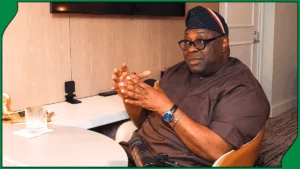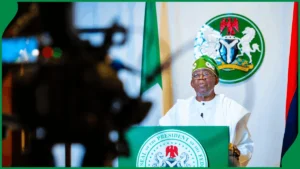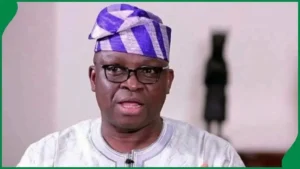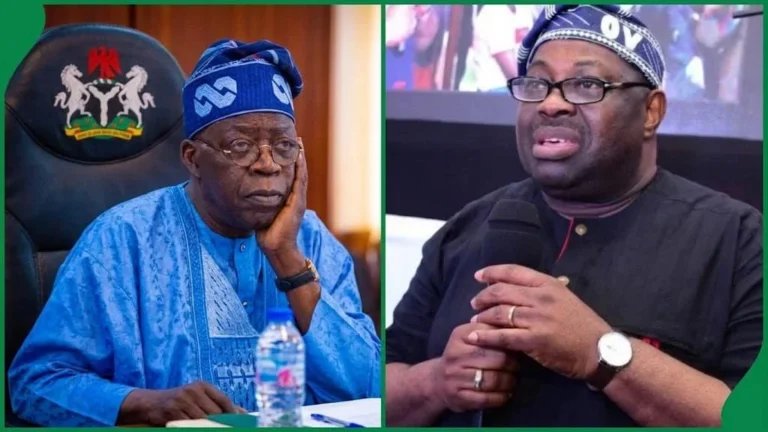
A prominent chieftain of the African Democratic Congress (ADC), Dele Momodu, has ignited fresh discourse regarding the 2027 presidential landscape by asserting that President Bola Ahmed Tinubu is privately cognizant of the leadership capabilities of former Vice President Atiku Abubakar. Speaking during a recent appearance on Channels Television’s "Politics Today," Momodu argued that the political history shared between the two men—specifically their past collaboration—serves as a tacit acknowledgment of Atiku’s suitability for the highest office in the land.
This assertion comes at a time when the Nigerian political atmosphere is increasingly charged, with debates intensifying over the necessity of a rotational presidency and the perceived "entitlement" of long-term political aspirants. Momodu, a veteran media mogul and political strategist, utilized his platform to pivot the conversation away from the number of attempts a candidate has made and toward the substance of their experience.
Contextualizing the Political Rivalry
The narrative surrounding Atiku Abubakar’s repeated attempts at the presidency has become a central talking point for his political opponents. Critics frequently argue that his consistent presence on the ballot since 1993 indicates a lack of fresh alternatives within the political class. However, Momodu challenged this perspective by drawing a parallel to the political journey of former President Muhammadu Buhari.
Buhari, who served as Nigeria’s president from 2015 to 2023, faced significant electoral setbacks in 2003, 2007, and 2011 before finally securing a victory against the incumbent Goodluck Jonathan in 2015. By invoking this historical precedent, Momodu suggests that persistent electoral participation is a hallmark of democratic endurance rather than a liability. According to Momodu, Atiku’s decades-long pursuit of the presidency demonstrates a deliberate, focused, and systematic commitment to his vision for Nigeria—a quality he contends should be evaluated on its own merit rather than through the lens of electoral frequency.
The Dynamics of Experience and Capacity
In his analysis of the 2027 political configuration, Momodu categorized the core strengths of the three most prominent figures in Nigeria’s modern political discourse: President Bola Tinubu, former Vice President Atiku Abubakar, and former Governor Peter Obi.
Momodu framed the credentials of these figures as follows:
- Bola Ahmed Tinubu: His primary political capital stems from his tenure as the Governor of Lagos State (1999–2007), where he is credited with laying the groundwork for the state’s modern economic and infrastructural growth.
- Peter Obi: His profile is anchored in his governance of Anambra State, where he garnered national attention for his approach to fiscal discipline and public service reform.
- Atiku Abubakar: His credentials, according to Momodu, are unique due to his experience at the federal level, having served as the Vice President of Nigeria from 1999 to 2007.
Momodu’s argument posits that while regional gubernatorial experience is vital, the complexities of the federal executive require a depth of experience that he believes is best exemplified by Atiku’s past roles in the presidency. He noted, "When I say he is the best, it is a statement of fact and even President Bola Tinubu himself knows that. That is why at a time, he invited him and they joined hands for Atiku to run in the past."
Historical Alliance and Political Shifts
The reference to a past collaboration between Tinubu and Atiku points to the complex shifting alliances that have defined the Fourth Republic. In the lead-up to the 2007 general elections, the political opposition sought to coalesce around a single candidate to challenge the ruling People’s Democratic Party (PDP). At that juncture, various political blocs, including the Action Congress (AC) led by Tinubu, aligned with Atiku Abubakar, who had fallen out with then-President Olusegun Obasanjo.
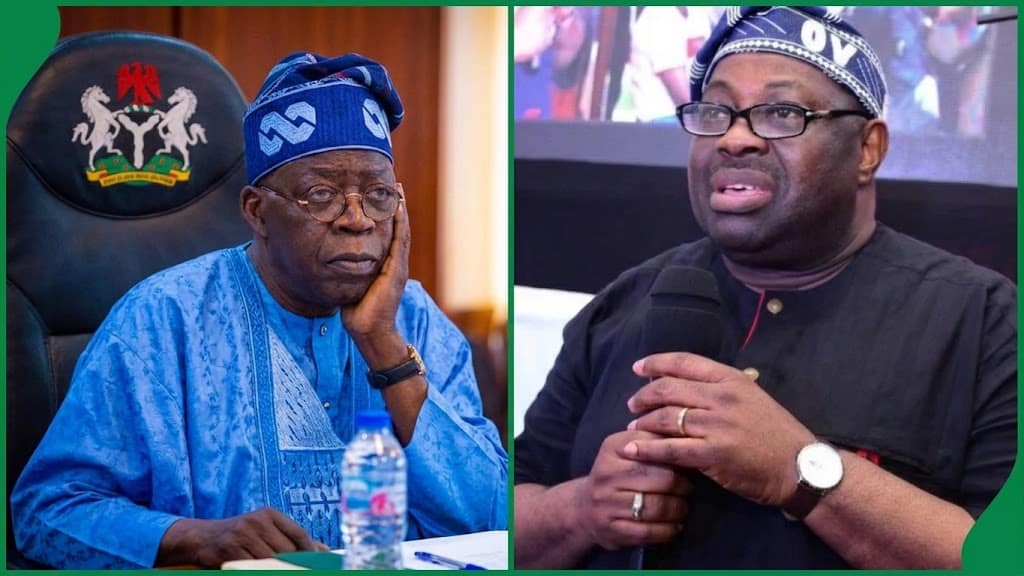
This historical footnote is significant because it highlights a time when the current President recognized the strategic value of Atiku’s leadership. By bringing this to the forefront, Momodu is effectively questioning the consistency of the current political opposition against Atiku, suggesting that the critique of his "repeated" attempts is a tactical maneuver rather than a principled stance.
The Debate on Rotational Presidency
The discourse on whether the presidency should rotate between the various geopolitical zones of Nigeria remains a contentious issue. Proponents of rotation argue that it is essential for national cohesion, particularly in a diverse nation like Nigeria, to prevent the monopolization of power by any single region. Conversely, critics—often echoing sentiments similar to those expressed by Momodu—argue that the focus should be on competence, capacity, and the ability to solve the country’s myriad economic challenges, regardless of the candidate’s ethnic or regional background.
By focusing on "experience, vision, and capacity," Momodu is positioning himself as an advocate for a meritocratic electoral system. He argues that the preoccupation with the number of times a candidate has contested distracts the electorate from the urgent need to evaluate policy frameworks and administrative track records.
Implications for the 2027 Election
The political climate leading into the 2027 election cycle is characterized by economic volatility, inflation, and infrastructure deficits. As the nation grapples with these issues, the rhetoric from political influencers like Momodu is expected to intensify. The ADC chieftain’s remarks serve as a litmus test for how the public might view the concept of "political longevity."
If the electorate shifts its focus toward administrative experience, the candidates will likely be forced to move away from personality-driven attacks and toward substantive policy debates. However, if the current trend of questioning the "legitimacy" of long-serving politicians continues, the 2027 campaign could become even more polarizing.
Fact-Based Analysis of the Political Landscape
Analyzing the current landscape, it is clear that the Nigerian electorate is more connected and vocal than in previous cycles. The rise of social media and digital platforms has enabled a more robust, if sometimes volatile, engagement with political figures.
Data from previous election cycles indicates that voter turnout and interest are heavily influenced by the perception of "change" versus "continuity." The challenge for any veteran politician—whether it be Atiku, Tinubu, or other emerging leaders—is to convince a youthful demographic that their past actions are relevant to the country’s future. For Atiku, the challenge remains overcoming the narrative that he represents the "old guard," despite his supporters’ insistence that his experience is his greatest asset.
Conclusion
Dele Momodu’s recent intervention in the public discourse serves as a reminder that the history of Nigeria’s political class is deeply intertwined. By highlighting the past cooperation between the current President and the former Vice President, Momodu has successfully shifted the conversation toward the nature of political experience. As Nigeria looks toward 2027, the debate will likely continue to oscillate between the desire for generational change and the recognition of seasoned administrative capacity. Ultimately, the electorate will have to decide whether the experience gained through repeated attempts at the presidency is a burden to be discarded or an asset to be utilized in the governance of the nation.