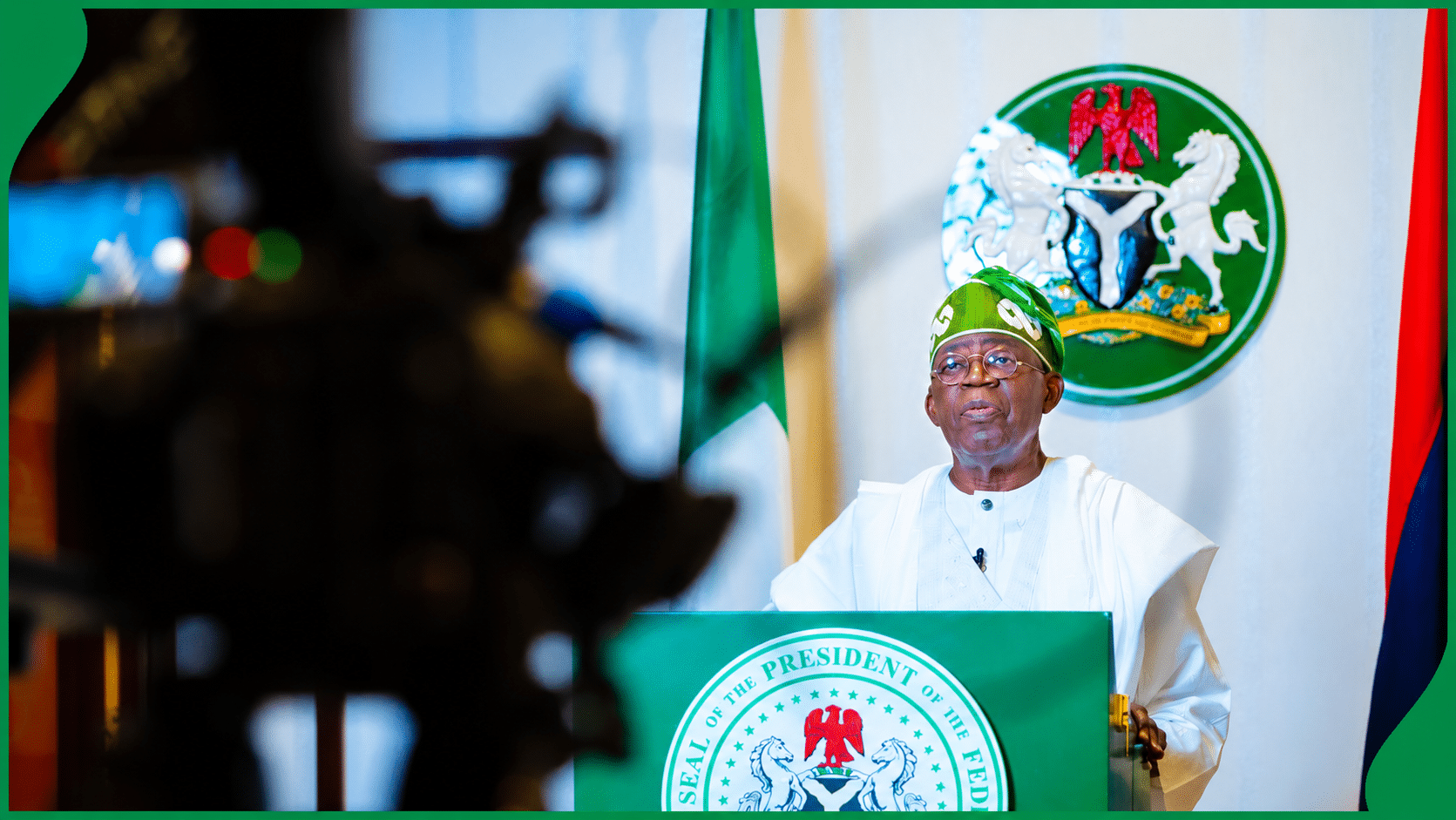
In a strategic pivot that signals a heightened intensity in the All Progressives Congress (APC) campaign apparatus, President Bola Ahmed Tinubu has formally expanded his direct campaign itinerary for the 2027 presidential election. The President, who had initially proposed a limited schedule of 12 state visits to balance the exigencies of governance with political mobilization, has now committed to a rigorous schedule encompassing 19 states and the Federal Capital Territory (FCT). This recalibration of the campaign calendar reflects an evolving approach to voter engagement as the ruling party seeks to solidify its national standing against mounting opposition scrutiny.
According to the revised timetable, President Tinubu is slated to participate in 20 major campaign rallies between October 24, 2026, and January 13, 2027. This expanded commitment marks a departure from the earlier strategy, which would have delegated a significant portion of the grassroots mobilization to senior party stalwarts and surrogates. The inclusion of key states such as Katsina, Taraba, Zamfara, Imo, and Kwara, alongside the prior additions of Akwa Ibom, Jigawa, and Kebbi, underscores an aggressive push to secure support across diverse geopolitical zones.
A Chronology of the Campaign Trail
The President’s recent movements demonstrate a proactive effort to bridge the gap between his executive responsibilities and his role as the APC’s standard-bearer. On November 6, President Tinubu visited Uyo, the capital of Akwa Ibom State, where he not only addressed a large crowd of supporters but also inaugurated critical infrastructure projects initiated by Governor Umo Eno. This dual-purpose visit served to highlight the administration’s focus on project delivery as a cornerstone of the campaign narrative.
Following the success of the Akwa Ibom rally, the President maintained his momentum with high-profile visits to Port Harcourt, Rivers State, on November 7; Dutse, Jigawa State, on November 10; and Birnin Kebbi, Kebbi State, on November 17. These events have served as vital opportunities for the APC to demonstrate its organizational cohesion in regions that are traditionally contested by opposition parties.
Looking ahead, the campaign schedule is densely packed with significant engagements across the country:
- December 2: Katsina State
- December 17: Kano State
- December 19: Jalingo, Taraba State
- December 21: Abuja (FCT)
- December 28: Gusau, Zamfara State
- December 30: Owerri, Imo State
- January 4: Yola, Adamawa State
- January 5: Sokoto State
- January 8: Ilorin, Kwara State
- January 11: Asaba, Delta State
- January 13: Lagos State (Campaign Finale)
The rescheduling of several key dates—most notably the shift of the Sokoto rally from December 5 to January 5 and the postponement of the Lagos finale from January 9 to January 13—suggests a logistical refinement intended to maximize attendance and impact as the election date approaches.
Regional Distribution and Strategic Focus
The APC’s mobilization strategy is heavily concentrated in the North-West, a critical voting bloc in Nigerian presidential politics. Of the 37 total rallies planned by the party across the 36 states and the FCT, the President has personally prioritized seven states within the North-West: Kaduna, Jigawa, Kebbi, Katsina, Kano, Zamfara, and Sokoto. This emphasis is statistically sound, as the North-West consistently provides the highest volume of votes in national elections.
The remainder of the President’s personal itinerary covers the North-East and South-South with three states each, while the North-Central, South-West, and South-East regions are slated for two visits each. While party leaders will handle the rallies where the President is not present, the deliberate selection of states suggests an attempt to fortify the APC’s core support while simultaneously making inroads into regions where the party faces strong competition.
Governance vs. Politics: The Catalyst for Change
The decision to expand the campaign schedule comes against a backdrop of significant public and political pressure. When the APC Presidential Campaign Council was inaugurated on October 14, 2026, President Tinubu had initially signaled a more restrained approach. At the time, he cited the heavy burden of governance, the necessity of meeting Nigeria’s international financial obligations, and the imperative of fostering an environment conducive to foreign direct investment.
"You will excuse me from going everywhere with you; we have bills to pay. The American creditors cannot wait," the President had remarked, setting a tone that emphasized fiscal responsibility over traditional campaign pageantry. However, this stance drew sharp criticism from across the political spectrum. Opposition figures, including representatives from the Social Democratic Party (SDP) and the Peter Obi Media Reach, argued that the President’s absence from the campaign trail was a sign of detachment from the realities faced by the populace.
Critics argued that surrogates could not adequately address the nuances of the administration’s policies or respond to the economic hardships currently affecting households. The Makinde/Daura Presidential Campaign Organisation notably challenged the President to either undertake a nationwide tour or withdraw from the contest, framing his initial decision as an attempt to evade public accountability.
Analysis of Implications
The revision of the campaign schedule represents a pragmatic shift for the APC. By increasing the frequency of his appearances, President Tinubu is effectively neutralizing the "absentee candidate" narrative that opposition groups have sought to cultivate.
From an analytical standpoint, the expansion of the itinerary serves three primary purposes:
- Direct Voter Engagement: Face-to-face interaction remains the most effective tool in Nigerian politics for swaying undecided voters and boosting turnout. The President’s presence adds a layer of authority and urgency that pre-recorded messages or speeches by proxies cannot replicate.
- Demonstration of Health and Vitality: In the context of intense national political discourse, the physical presence of a candidate on the campaign trail is often scrutinized as a proxy for their fitness to govern. An expanded schedule of 20 rallies sends a clear message about the President’s stamina and commitment to the campaign.
- Projecting Strength: The move projects a sense of confidence. By visiting states where the opposition holds significant influence, the APC is signaling that it is not conceding any ground, thereby boosting the morale of local party chapters and supporters.
Addressing the Credibility Gap
The APC leadership maintains that the President’s revised schedule is not a reaction to political pressure but a reflection of a dynamic campaign strategy. Party spokespersons have consistently reiterated that there is no constitutional requirement for a candidate to visit every state, emphasizing that the APC’s decentralized campaign model is designed to reach every ward and polling unit through a combination of leadership visits and grassroots outreach.
However, the reality of modern electoral politics in Nigeria dictates that a candidate’s visibility is inextricably linked to their perceived strength. By balancing the "demands of governance"—such as his recent project inaugurations in Akwa Ibom—with the "demands of the ballot box," President Tinubu is attempting to frame his campaign as one defined by action rather than mere rhetoric.
As the campaign enters its final, high-intensity phase in the coming weeks, the success of this strategy will be measured by the turnout at these rallies and, ultimately, by the effectiveness of the APC’s message in countering the narratives of economic instability. With the finale set for Lagos on January 13, the President has ensured that the campaign will conclude in his political heartland, setting the stage for what is expected to be a highly contested and pivotal electoral outcome.
The APC’s ability to execute this ambitious 20-stop tour while maintaining the administrative functionality of the federal government will remain a point of interest for political analysts, international observers, and the electorate at large as the nation counts down to the 2027 polls.