The political landscape in Nigeria remains charged following a controversial incident at a recent Nigeria Democratic Congress (NDC) town hall meeting in Lagos, where the choice of national anthem sparked a firestorm of criticism from prominent political figures. Funso Doherty, the NDC governorship candidate for Lagos State, has stepped forward to clarify the events of that evening, asserting that the party remains committed to national symbols while attributing the disruption to the spontaneous emotional response of the gathered supporters.
The incident occurred on Thursday, November 12, 2026, during a high-profile gathering attended by the party’s presidential candidate, Peter Obi, and other senior stakeholders. As the event commenced, an invitation to recite the current national anthem—the re-adopted "Nigeria, We Hail Thee"—was met with visible resistance from the audience. When the attendees failed to rise or participate in the anthem, the event organizers pivoted to the former anthem, "Arise, O Compatriots," which the crowd subsequently sang with fervor.
Chronology of the Incident
The sequence of events at the Lagos town hall has been reconstructed through attendee accounts and subsequent media interviews. As the program began, the master of ceremonies signaled for the national anthem. When the current anthem failed to garner participation from the floor, the atmosphere became visibly tense. Observers noted that the audience’s refusal to engage with the current anthem appeared to be a deliberate act of political expression, signaling disapproval of the transition from the previous anthem, which had served the nation since 1978.
Sensing the mood of the crowd, the organizers transitioned to "Arise, O Compatriots." This shift reportedly energized the attendees, who sang the older lyrics in unison. Following this, and amid the swirling public discourse, Funso Doherty appeared on Nigeria Info 99.3FM on Friday to provide context. Doherty maintained that the event did not abandon the official national symbol, stating that the current anthem was, in fact, performed later in the program to ensure protocol was observed.
The Debate Over National Symbols
The controversy surrounding the national anthem is not merely a matter of musical preference but touches upon the broader legislative changes implemented in recent years. In May 2024, the Nigerian government officially transitioned back to the colonial-era anthem, "Nigeria, We Hail Thee," replacing "Arise, O Compatriots." The decision was intended to evoke a sense of historical continuity and national unity; however, the change faced significant pushback from various segments of the populace who felt the transition was rushed and lacked sufficient public consultation.
Critics of the current administration argue that the anthem change was a superficial policy shift that ignored more pressing economic and security challenges. For supporters of political movements like the NDC, the refusal to sing the new anthem has become a form of quiet protest against what they perceive as the current government’s misalignment with the aspirations of the citizenry.
Reactions from the Political Elite
The incident has drawn swift and sharp condemnation from influential figures within the ruling political class. Nyesom Wike, the Minister of the Federal Capital Territory, was among the first to criticize the NDC, characterizing the refusal to stand for the national anthem as an act of disrespect toward the sovereignty of the Nigerian state. Wike, known for his firm stance on national discipline, suggested that such actions undermine the democratic processes that political parties are expected to uphold.
Similarly, Reno Omokri, the Nigerian Ambassador to Mexico and a vocal political commentator, criticized the event, arguing that regardless of personal political grievances, national symbols must remain above partisan fray. For many in the political establishment, the incident is being interpreted as a litmus test for the loyalty and constitutional compliance of opposition parties as the nation looks toward future electoral cycles.
Funso Doherty’s Defense and Party Stance
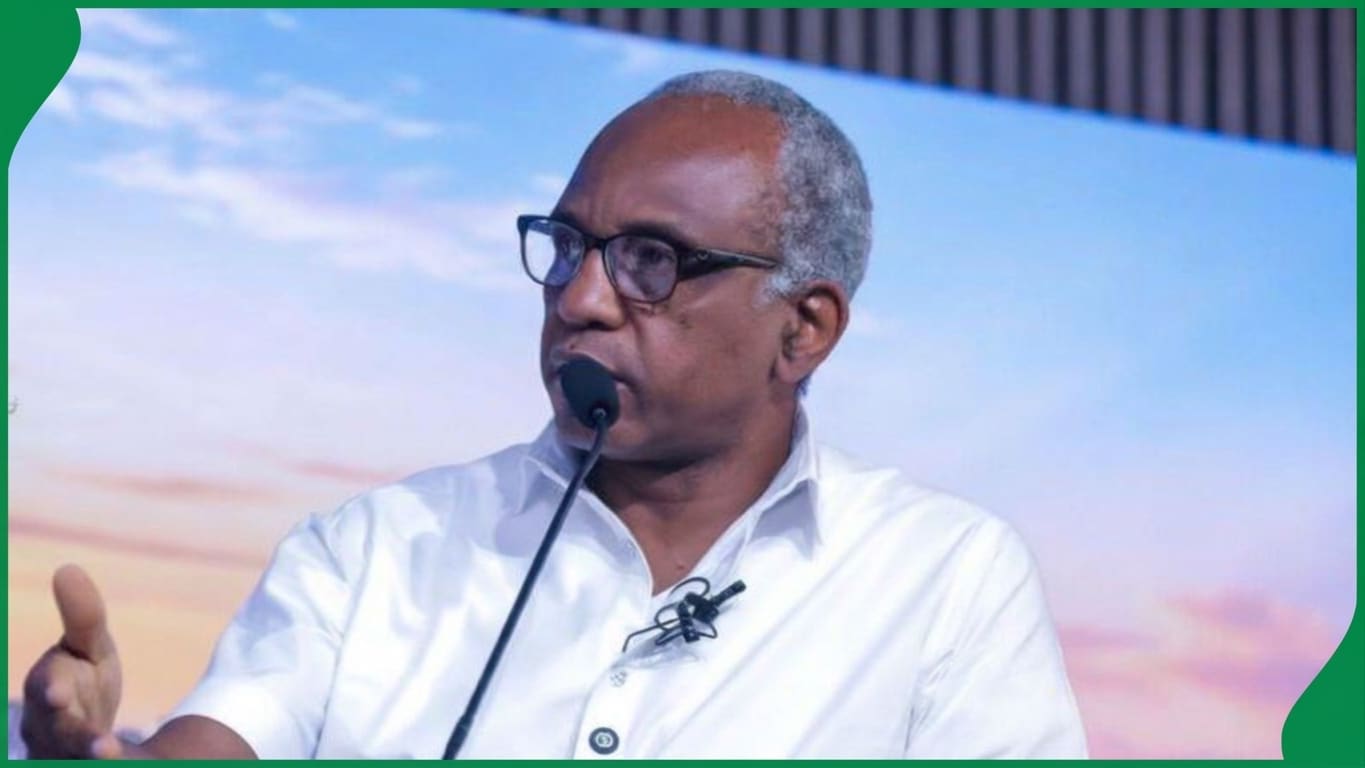
In his broadcast interview, Funso Doherty emphasized that the organizers of the town hall were not in a position to suppress the organic sentiments of the crowd. He framed the event as an "emotional atmosphere" where supporters felt compelled to express their identity.
"The point to be made is that if you watched that show, you will see that the new national anthem was actually sung after that initial singing of the old national anthem," Doherty stated. He reiterated that the NDC respects the constitutional framework of the country, noting, "Obviously, the national anthem is the national anthem. We only have one national anthem, and ultimately that was what we sang."
By clarifying that the official anthem was indeed performed, Doherty aims to distance his campaign from accusations of treason or deliberate subversion. His comments reflect a delicate balancing act: acknowledging the passionate, sometimes rebellious, energy of his base while simultaneously reassuring the broader public and state institutions of his respect for national decorum.
Analysis of Implications
The incident at the NDC town hall highlights a growing trend in Nigerian politics where national symbols are becoming increasingly politicized. When national anthems—intended to be unifying pillars of statehood—become sources of partisan friction, it suggests a deepening chasm between the governed and the governing.
Political analysts note that this event serves as a bellwether for the 2027 electoral season. As opposition parties look to mobilize voters, they are increasingly tapping into the frustrations of citizens who feel alienated by the current administration’s policies. When these frustrations manifest in symbolic ways—such as the rejection of a national anthem—it provides a visual and auditory record of that alienation that is difficult for political opponents to ignore.
However, there is a risk for the NDC in this strategy. By allowing such displays, the party risks being labeled as "anti-establishment" to a degree that might alienate moderate voters who value traditional institutions. The political challenge for Doherty and his peers will be to channel this grassroots energy into constructive policy debates rather than allowing it to be defined by symbolic protests that can be easily weaponized by their opponents.
Looking Ahead
As the dust settles on the Lagos town hall meeting, the episode serves as a reminder of the fragility of the current national consensus. The Nigerian government, currently navigating a complex economic landscape characterized by high inflation and currency volatility, faces the additional challenge of maintaining social cohesion.
Whether the incident at the NDC meeting will have long-term electoral consequences remains to be seen. For now, it has provided a focal point for a national debate on the sanctity of symbols versus the rights of political expression. As the political calendar advances, both the government and the opposition will likely be under increased scrutiny regarding their adherence to protocol and their ability to manage the heightened emotions of their supporters in a polarized climate.
The NDC’s leadership has yet to issue a formal written statement on the matter, but the defense offered by Funso Doherty suggests that the party intends to move past the controversy by focusing on its policy platform, while simultaneously acknowledging the reality of its supporters’ sentiments. In the coming weeks, political observers will be watching to see if this incident is treated as an isolated case of spontaneous protest or if it marks the beginning of a broader trend of symbolic defiance in Nigerian political discourse.