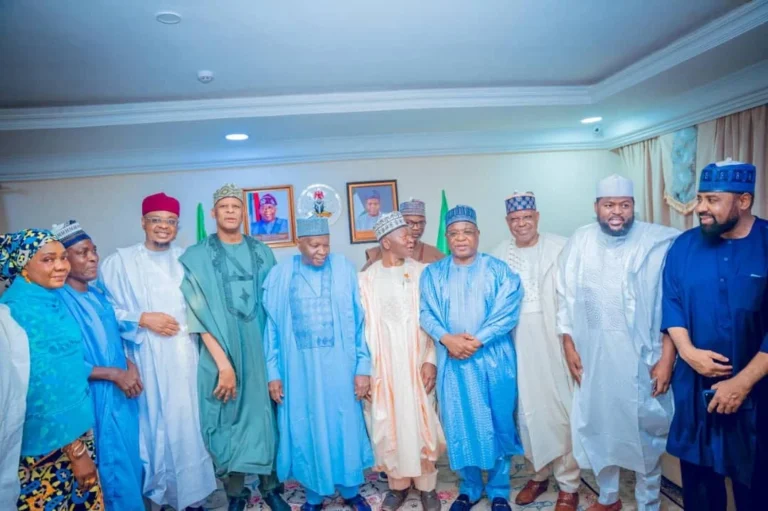
Gombe State Governor, Muhammadu Inuwa Yahaya, recently convened a pivotal strategic meeting with All Progressives Congress (APC) governorship and National Assembly aspirants, signaling an intensified focus on internal party cohesion and strategic alignment in preparation for the 2027 general elections. The high-stakes gathering, held at the Government House in Gombe, brought together a comprehensive array of political hopefuls, underscoring the governor’s proactive approach to fostering unity and ensuring a streamlined build-up to the party primaries. This engagement is a critical step in mitigating potential intra-party conflicts and consolidating the APC’s position in Gombe State and the broader North-East region.
Setting the Stage for 2027: A Proactive Approach to Party Cohesion
The political landscape of Nigeria is characterized by intense competition and dynamic shifts, making internal party unity an indispensable asset for electoral success. With the 2027 general elections on the horizon, political parties across the nation are already engaging in strategic maneuvers to position themselves favorably. Governor Inuwa Yahaya’s initiative in Gombe is particularly noteworthy as it preempts the often-contentious primary election season, aiming to nip potential discord in the bud. Stakeholders within the party have lauded the move as a demonstration of astute political leadership, designed to prevent the fragmentation and internal strife that have historically plagued political parties during election cycles. By bringing all aspirants to the table early, the governor aims to cultivate an atmosphere of mutual respect and shared objectives, crucial for presenting a united front against opposition parties.
The meeting’s agenda was comprehensive, focusing on several key pillars essential for robust party health and electoral victory: party discipline, inclusiveness, mutual understanding, and strategic alignment. Governor Yahaya, a seasoned political figure, emphatically stressed the imperative for all party members to approach the forthcoming political process as a cohesive and indivisible entity. His message resonated with the attendees, many of whom have significant political aspirations and understand the inherent challenges of navigating the intricate terrain of Nigerian politics. The emphasis on discipline speaks to the need for aspirants to adhere to party guidelines and mechanisms for conflict resolution, rather than resorting to divisive tactics. Inclusiveness ensures that all voices and interests within the party are considered, fostering a sense of belonging and reducing the likelihood of defections or sabotage. Mutual understanding promotes empathy and cooperation, while strategic alignment ensures that individual aspirations are harmonized with the broader party goals.
The Endorsement of Consensus Candidacy and Micro-Zoning
A significant outcome of the strategic session was the collective endorsement of consensus candidacy as the preferred method for selecting party flagbearers for the 2027 elections. This decision, emerging from extensive deliberations, marks a deliberate pivot towards a less confrontational and potentially more unifying selection process. Aspirants present at the meeting collectively articulated their belief that adopting consensus would significantly promote harmony within the party ranks and guarantee broad-based support for the eventual candidates.
Consensus candidacy, while often debated in democratic circles for its perceived limitations on direct democratic participation, is a common feature in Nigerian political parties, particularly when strong leadership seeks to avoid divisive primaries. The rationale behind its adoption often includes the desire to save resources, minimize internal rancor, and present a formidable, undivided force to the electorate. In a political environment where primary elections can be fiercely contested and often leave lingering resentments, a consensus approach can be a strategic tool to maintain peace and ensure that the party machinery remains intact and focused on the general elections. However, its success hinges on genuine buy-in from all stakeholders and a transparent process that earns the trust of those who might otherwise have sought nomination through a direct contest. Political analysts often point out that while consensus can prevent immediate rifts, it must be managed carefully to avoid disenfranchising ambitious members who feel overlooked, potentially leading to future disloyalty or apathy.
Complementing the consensus model, participants also proposed the ingenious use of micro-zoning as a framework to balance interests across various constituencies and enhance fairness in the selection process. Micro-zoning involves narrowing down the geographical area from which a candidate can emerge, often subdividing larger electoral zones into smaller, more specific units. For instance, within a senatorial district, micro-zoning might dictate that a particular local government area (LGA) or even a specific ward produces the candidate for a particular office. This method aims to address concerns about marginalization of certain communities and ensures that representation is distributed equitably, fostering a sense of belonging and ownership among diverse groups within the party. It is a nuanced approach to power-sharing that seeks to reflect the intricate socio-political tapestry of Gombe State, where various ethnic and communal interests often compete for political visibility and influence. By applying micro-zoning, the APC in Gombe aims to prevent a scenario where one dominant area consistently produces candidates, thereby alienating others.
Broadening the Consultation Base and Affirmative Action for Women
Beyond the immediate aspirants, the meeting also recommended extending consultations to local government stakeholders. This crucial recommendation underscores the party’s commitment to grassroots participation and ensuring widespread ownership of the electoral process. In Nigeria’s federal system, local governments are the closest tier of governance to the people, and their active involvement is paramount for successful political mobilization. Engaging local government chairmen, councillors, traditional rulers, and community leaders ensures that the decisions made at the state level resonate with and are supported by the populace at the grassroots. This approach also serves as a feedback mechanism, allowing the party leadership to gauge public sentiment and address local concerns proactively, thereby strengthening the party’s electoral machinery from the ground up. Such broad consultations are vital for solidifying the APC’s support base and building a robust campaign structure capable of delivering victory in 2027.
A significant and forward-looking call emerged from the deliberations regarding increased inclusion of women in the party’s political structure. Stakeholders at the meeting advocated for a stronger affirmative agenda to boost female participation at all levels of governance and party leadership. This call is particularly pertinent given the historically low representation of women in Nigerian politics. Despite constituting roughly half of the electorate, women’s political participation in Nigeria remains significantly below global averages. For example, in the 2023 general elections, women secured only about 3.6% of elective positions at federal and state levels, a figure that highlights the urgent need for deliberate interventions. The APC in Gombe, by embracing an affirmative agenda, aims to not only rectify this imbalance but also to harness the vast potential of women in leadership and governance. This could involve allocating specific slots for women in party executive committees, encouraging female aspirants through mentorship programs, or even providing financial support to ease the burdens often associated with political campaigns for women. Such an initiative aligns with global calls for gender equality and could significantly enhance the party’s image as progressive and inclusive.

Addressing Misinformation and Leadership Commendation
The pervasive challenge of misinformation in the digital age was also a key point of concern during the meeting. Participants raised anxieties over the spread of unverified claims and rumors regarding candidate selection processes, urging party members to exercise caution and disregard such falsehoods. The Nigerian political landscape, particularly during election cycles, is often inundated with fake news, propaganda, and malicious disinformation campaigns designed to sow discord, mislead voters, and undermine opponents. This digital warfare can severely damage party unity, erode public trust, and even incite violence. By proactively addressing this issue, Governor Yahaya and the APC aspirants are demonstrating a commitment to responsible information dissemination and a desire to maintain a factual and transparent political discourse. This stance encourages party members to rely on official communication channels and verified sources, thereby protecting the integrity of the party’s internal processes and its public image.
In a resounding show of solidarity and appreciation, the aspirants unanimously commended Governor Inuwa Yahaya for his exemplary leadership style. They described the meeting as both timely and reflective of his unwavering commitment to transparency and internal democracy. This commendation is not merely a courtesy but an acknowledgement of the governor’s efforts to foster an open and consultative environment within the party, a stark contrast to the often autocratic tendencies observed in some political circles. His leadership, characterized by dialogue and engagement, is seen as crucial for navigating the complex political terrain leading up to 2027. Furthermore, the aspirants collectively pledged their unreserved loyalty to the party and vowed to support all decisions taken in the interest of unity and collective progress. This pledge is a critical outcome, signifying a commitment to abide by party resolutions, even if individual aspirations are not immediately met, thereby preventing post-primary defections or anti-party activities that could jeopardize electoral success. The meeting concluded with a resounding vote of confidence in Governor Inuwa Yahaya, unanimously adopted by all aspirants present, solidifying his position as the undisputed leader of the APC in Gombe State and reinforcing the party’s internal stability.
Broader Impact and Implications for Gombe and the APC
This strategic engagement forms an integral part of Governor Yahaya’s ongoing consultations with party leaders and stakeholders across various levels as preparations intensify for the 2027 elections. The meeting’s success in fostering unity and agreeing on key electoral strategies carries significant implications for the political future of Gombe State and the All Progressives Congress.
Political Stability and Governance: A unified APC in Gombe is crucial for continued political stability and effective governance. Internal party squabbles often distract leaders, consume valuable resources, and derail development agendas. By proactively addressing potential divisions, Governor Yahaya is creating an environment conducive to focused governance and uninterrupted public service delivery for the remaining tenure of his administration. A stable political climate also attracts investment and fosters economic growth, benefiting the entire state.
Strengthening the APC’s Electoral Fortunes: The consensus on candidate selection methods and the emphasis on grassroots engagement are designed to significantly bolster the APC’s chances in the 2027 elections. A united front, with candidates enjoying broad internal support, is far more potent than a fragmented party scarred by divisive primaries. The adoption of micro-zoning can help ensure that candidates are chosen not just for their popularity but also for their ability to represent diverse interests, making the party more appealing to a wider electorate.
Deepening Internal Democracy: While consensus candidacy can sometimes be viewed skeptically, its collective endorsement by aspirants, coupled with calls for extended consultations and women’s inclusion, points towards an evolving internal democratic process within the Gombe APC. The focus on transparency and mutual understanding, as highlighted by the aspirants’ commendation of the governor, suggests a move towards more participatory and accountable party mechanisms. This could serve as a model for other states and parties in Nigeria grappling with similar challenges.
Setting a Precedent for Other States: Gombe State’s proactive approach to party unity, under Governor Yahaya’s leadership, could potentially set a precedent for other states within the APC and even other political parties. In a country where pre-election internal crises are commonplace, the Gombe model offers a template for conflict resolution and consensus-building that prioritizes collective party interests over individual ambitions.
Challenges and Future Outlook: Despite the positive outcomes, challenges remain. The true test of the consensus model and micro-zoning will come closer to the elections when specific candidates are to be chosen. Managing the aspirations of those who may not emerge as flagbearers, even through consensus, will require continued deft leadership. Furthermore, ensuring that the commitment to women’s inclusion translates into tangible results will be a key metric of the party’s sincerity. The ongoing fight against misinformation will also demand continuous vigilance and a robust communication strategy.
In conclusion, Governor Inuwa Yahaya’s strategic meeting with APC aspirants in Gombe represents a significant and timely intervention in the pre-2027 electoral cycle. By prioritizing unity, consensus, inclusiveness, and disciplined engagement, the Gombe APC is laying a solid foundation for a cohesive and formidable electoral campaign. This proactive stance not only reinforces the party’s internal strength but also contributes to the broader stability and democratic health of Gombe State. As the 2027 general elections draw nearer, the success of these initiatives will be closely watched as a potential blueprint for navigating the complexities of Nigerian political contests.