
The Joint Admissions and Matriculation Board (JAMB) has officially released the schedule for the 2026/2027 Computer-Based Unified Tertiary Matriculation Examination (UTME), marking a crucial milestone for hundreds of thousands of candidates seeking admission into tertiary institutions across Nigeria. According to the examination board, the nationwide assessment is scheduled to commence on Friday, April 19th, and will run through Monday, April 29th, 2026. This announcement sets into motion the final phase of preparation for prospective undergraduates eyeing placements in universities, polytechnics, monotechnics, innovation enterprise institutions, and colleges of education for the upcoming academic session.
As the examination window approaches, the board has outlined critical administrative directives to ensure a seamless process. Candidates registered for the 2026 UTME are instructed to begin reprinting their official examination slips a few days prior to the commencement date. The examination slip remains an indispensable document, as it contains vital personalized information, including the exact date of the candidate’s test, approved venue, and the specific time schedule allocated for their Computer-Based Test (CBT). Education stakeholders strongly advise candidates to print multiple copies of this slip to guard against unforeseen logistical challenges on examination days.
Understanding the Examination Structure and Logistics
The distribution of candidates will span across various accredited CBT centers located strictly within a candidate’s chosen examination town during the registration phase. To mitigate logistical bottlenecks and reduce examination malpractices, JAMB has repeatedly emphasized that candidates must report to their assigned venues at least thirty minutes before the scheduled time indicated on their examination slips. Timely arrival allows for necessary biometric verifications, security screenings, and proper seating arrangements, minimizing disruptions in the testing halls.
Weighing in on the strictness of the timeline, the JAMB spokesperson, Dr. Fabian Benjamin, issued a stern warning regarding punctuality and schedule adherence. "The public should note that the Board would not reschedule examination for any candidate," Dr. Benjamin stated, emphasizing the zero-tolerance policy of the board regarding missed exams, lateness, or absenteeism. Given the massive scale of the UTME—which accommodates well over a million candidates annually—logistical adjustments for individual cases are practically impossible within the tight national timetable. Consequently, candidates are urged to map out their routes to their designated CBT centers well in advance, accounting for potential traffic or transit delays.
Background Context and Evolution of the UTME
The Unified Tertiary Matriculation Examination serves as the foundational gateway for higher education in Nigeria. Managed by JAMB—a statutory body established by the Federal Government of Nigeria—the examination evaluates the academic preparedness of secondary school graduates and equivalent holders seeking foundational degrees, national diplomas, national innovation diplomas, and the Nigeria certificate in education.
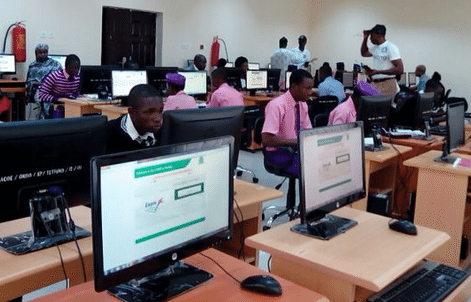
Over the past decade, the administration of the UTME has undergone a profound technological transformation. Transitioning entirely from the traditional Paper-Based Test (PBT) to a comprehensive Computer-Based Test (CBT) platform was a strategic initiative aimed at curbing examination malpractices, such as question paper leakage, impersonation, and widespread cheating. Despite initial infrastructural hurdles and periodic technical glitches, the CBT model has significantly improved the credibility, transparency, and speed of result processing. The 2026/2027 exercise builds on years of infrastructural refinement, with JAMB continuously auditing and expanding its network of accredited centers nationwide to guarantee optimal performance of hardware and software systems during the testing window.
General Entry Requirements and Academic Pathways
Securing admission into any tertiary institution in Nigeria requires meeting both institutional-specific criteria and the baseline standards set by JAMB. The general entry requirements for admission into First Degree, National Diploma (ND), National Innovation Diploma (NID), and Nigeria Certificate in Education (NCE) programmes require candidates to possess a minimum of five (5) O’Level Credit passes. These compulsory credits must include Mathematics and English Language, obtained at not more than two sittings in recognized examinations such as the West African Senior School Certificate Examination (WASSCE), the National Examinations Council (NECO), or the National Business and Technical Examinations Board (NABTEB).
Comprehensive details regarding specific institutional requirements, course prerequisites, and subject combinations are compiled annually in the official JAMB eBrochure. This vital compendium is systematically provided to each registered candidate upon completion of registration at accredited CBT centers and is also accessible through JAMB state offices and official digital portals. Educational counselors strongly recommend that candidates thoroughly review the eBrochure to ensure their chosen course combinations align precisely with their O’Level results and institutional preferences, thereby preventing disqualification during the post-UTME screening exercises.
Implications and Broader Impact on the Nigerian Educational Sector
The release of the 2026 UTME timetable carries profound implications for the broader Nigerian educational landscape. For secondary schools, the announcement signals the final stretch of intensive academic preparations, prompting educators to intensify revision classes and mock CBT simulations to familiarize students with computer interfaces. For parents and guardians, the timeline initiates a period of financial and emotional preparation, as families mobilize resources to support candidates through the logistics of traveling to designated examination towns.
From an institutional perspective, the efficiency of JAMB’s testing schedule directly impacts the academic calendar of Nigerian tertiary institutions. Historically, delays or disruptions in the UTME cascade into subsequent stages of the admission process, including post-UTME screenings, departmental admissions processing, and the eventual matriculation of fresh students. By locking in the April 2026 window, JAMB aims to maintain a predictable calendar, steering the education sector closer to global standards of academic session alignment.
As the countdown to April 19th, 2026, continues, candidates are advised to rely exclusively on official communication channels managed by the board for updates. Avoiding unverified rumors circulating on social media regarding rescheduling or question leaks is paramount. With meticulous preparation, strict adherence to instructions, and timely verification of examination credentials, prospective undergraduates can approach the upcoming UTME with confidence and poise.