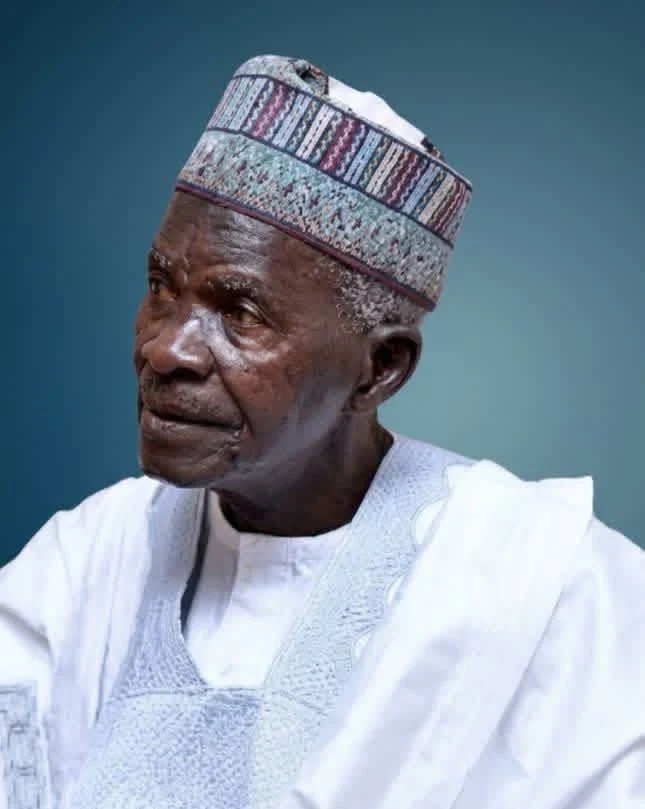
The political landscape of Kaduna State was struck by grief on Monday following the announcement of the passing of Alhaji Abubakar Mohammed, a revered public servant, veteran education administrator, and father to the Kaduna State Deputy Governor, Dr. Hadiza Sabuwa Balarabe. News of his death reverberated across the state, drawing prompt condolences from the highest echelons of government, political associates, civil servants, and community leaders who remembered the patriarch for his decades of disciplined public service and foundational contributions to educational development in Northern Nigeria.
Governor Uba Sani, leading the state in mourning, formally announced the transition through a heartfelt condolence message released to the public. Speaking on behalf of the government and the good people of Kaduna State, Governor Sani expressed profound sorrow over the loss, emphasizing the deep personal and professional bond shared within the state’s executive leadership. The governor’s tribute underscored the irreplaceable vacuum left by a man whose life spanned critical eras of Nigeria’s administrative evolution, from the twilight of the colonial educational apparatus through the post-independence expansion of public service, and into the modern democratic dispensation.
A Life Defined by Public Service and Education
Alhaji Abubakar Mohammed’s journey through Nigeria’s public sector is a testament to an era when civil service was synonymous with foundational nation-building, moral integrity, and rigorous institutional development. Born into a changing Nigeria, Mohammed committed his early professional life to the classroom, commencing his career as a classroom teacher in 1960—the historic year of Nigeria’s independence.
His dedication to shaping young minds did not go unnoticed. Over the subsequent decades, Mohammed steadily rose through the ranks of the educational sector. His intellectual rigor and administrative aptitude transitioned him from teaching into formal educational planning and oversight. He served with distinction as an education officer within the Jama’a Local Authority, where he was instrumental in expanding primary and secondary school access, improving curriculum delivery, and mentoring a generation of educators.
As local government administration underwent structural reforms in Nigeria, Mohammed’s administrative competence was further tapped to steer grassroots governance. He served as the administrator of Sanga Local Government Area, navigating the complex sociopolitical dynamics of the region with a steady hand, focusing on infrastructural development, community cohesion, and efficient service delivery.

Perhaps one of the most high-stakes assignments of his extensive career occurred at the national level during the military administration of General Sani Abacha. Mohammed was appointed as the Resident Electoral Commissioner (REC) in Oyo State. Serving as an electoral umpire during a military-to-civilian transition period required immense tact, neutrality, and administrative fortitude. Colleagues and political historians have often recalled his tenure in Oyo State as a period marked by strict adherence to electoral guidelines and an unyielding commitment to institutional integrity.
Family Pride and Political Loyalty
Beyond his public achievements, Alhaji Mohammed’s personal life and familial relationships captured public admiration, particularly his unwavering support for his daughter’s political trajectory. Dr. Hadiza Sabuwa Balarabe carved out a formidable path of her own in public health, governance, and politics, eventually shattering glass ceilings to become the deputy governor of Kaduna State.
In a rare and deeply reflective interview with a national newspaper in 2020, the late patriarch spoke with immense pride about his daughter’s ascension to power. He revealed that watching Dr. Balarabe emerge as the deputy governor was unequivocally one of the happiest and proudest moments of his life.
Demonstrating a profound sense of paternal loyalty that superseded rigid partisan affiliations, Mohammed publicly recounted how he made the difficult decision to leave the Peoples Democratic Party (PDP) to support his daughter after she was chosen as the running mate to then-Governor Nasir El-Rufai ahead of the 2019 gubernatorial elections. When asked about his political switch, Mohammed maintained that he could not fathom standing in political opposition to his own daughter, choosing instead to endorse her mandate and champion the collective progress of Kaduna State.
Dr. Balarabe’s political journey began in May 2019, when she was sworn in as deputy governor alongside former Governor Nasir El-Rufai. Her competence, quiet efficiency, and dedication to good governance earned her the trust of the political establishment and the electorate alike. When Governor Uba Sani secured the ticket for the 2023 gubernatorial election under the platform of the All Progressives Congress (APC), he retained Dr. Balarabe as his running mate—a testament to her administrative value and political reliability. Together, Sani and Balarabe secured victory at the polls, continuing a seamless transition of leadership that Dr. Balarabe’s father lived to witness and support.
Official Condolences and Outpouring of Grief
The announcement of Alhaji Abubakar Mohammed’s passing has prompted a wave of sympathy from political leaders, traditional rulers, and civil society organizations across Nigeria. Governor Uba Sani’s condolence message captured the collective grief of the state executive council.

“On behalf of the Government and people of Kaduna State, I extend heartfelt condolences to Her Excellency, her family, and all who mourn his passing,” Governor Sani stated. “We share their sorrow and hold them in our thoughts and prayers at this difficult time.”
Reflecting on the psychological and emotional toll of losing a parent, the governor noted that the death of a patriarch leaves an unquantifiable void in the family structure. He encouraged the bereaved family to draw strength from the rich legacy left behind by the deceased.
“The death of a parent leaves a void that words can scarcely describe. As Her Excellency and her family navigate this painful loss, may they find solace in the love they shared, the memories they cherish, and the enduring value of his guidance,” the governor added. He further offered Islamic prayers for the deceased, supplicating that Almighty Allah would forgive his earthly shortcomings, accept his extensive good deeds, and grant him Aljannatul Firdaus (the highest paradise).
As funeral rites and condolence visits are expected to commence in accordance with Islamic traditions, dignitaries from across the country are anticipated to converge on Kaduna State to pay their final respects to the elder statesman.
Broader Implications and Legacy
The passing of Alhaji Abubakar Mohammed marks the quiet end of an era for a specific generation of Nigerian civil servants—individuals who laid the groundwork for regional administration, educational expansion, and public sector accountability before the advent of the current democratic dispensation. His life bridges the gap between grassroots education administration and high-stakes national electoral duties, reflecting a standard of public service rooted in discipline, nationalism, and institutional memory.
For the Kaduna State Government, the moment is one of somber reflection. While governance continues, the loss of a key family pillar to the second-in-command highlights the human elements behind political offices. As the state rallies around Dr. Hadiza Sabuwa Balarabe and her family during this period of mourning, the enduring legacy of Alhaji Abubakar Mohammed—defined by his dedication as a teacher, local administrator, electoral commissioner, and a fiercely supportive father—remains firmly etched in the historical annals of Kaduna State and the wider Nigerian federation.