The Democratic Republic of Congo (DRC) is increasing diplomatic and economic pressure on the United States to ensure that their bilateral critical minerals partnership translates into tangible, physical infrastructure rather than remaining a framework of unfulfilled agreements. Speaking following high-level discussions in Paris, Congolese Economy Minister Daniel Mukoko Samba articulated a firm stance for the African nation: the success of the strategic pact must be measured strictly by completed projects, operational processing plants, and local employment generation rather than the volume of signatures on diplomatic documents.
The remarks were delivered following the second meeting of the partnership’s joint steering committee, an assemblage of senior officials tasked with reviewing massive transnational initiatives. Among these are the revitalization of the Lobito Corridor, the protracted development of the Grand Inga hydropower complex, and the alignment of Congolese mineral supply chains with Western industrial needs. As global demand for the raw materials powering the green energy transition accelerates, Kinshasa is recalibrating its foreign partnerships to guarantee that its citizens reap long-term developmental rewards from the extraction of their natural wealth.
Shifting from Diplomacy to Delivery on the Ground
The cornerstone of the current friction lies in the disparity between diplomatic commitments and real-world execution. The strategic partnership between Washington and Kinshasa, officially inked on December 4, 2025, covers a broad spectrum of cooperation, including critical minerals extraction, infrastructure development, energy access, and foreign direct investment.
Under the terms of the agreement, American corporations are granted preferential opportunities to compete for assets designated within Congo’s Strategic Asset Reserve, alongside other government-selected projects. However, these mechanisms do not translate to automatic ownership. Instead, U.S. firms receive a "right of first offer," allowing up to nine months of exclusive negotiation before the Congolese government opens the bidding process to alternative, aligned global investors. Similar preferential rights apply to the negotiation phases for targeted mineral exports.
Despite these structured pathways, Minister Mukoko Samba’s intervention in Paris underscores a growing impatience within the central African state. Congolese officials are actively demanding robust technology and skills transfers, rigorous compliance with domestic mining legislation, and a deeper, more committed physical footprint from American investors. Kinshasa’s administration insists that the pursuit of critical minerals by Western superpowers must yield structural socio-economic transformations, avoiding the historical trap of extractive models that siphon raw resources abroad while leaving producing nations underdeveloped.
Geopolitical Stakes: Breaking the Chinese Monopoly on Processing
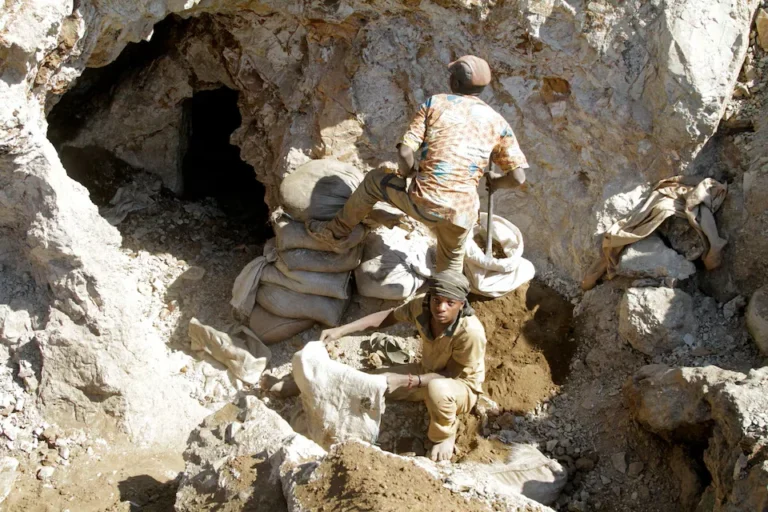
The urgency behind Washington’s outreach to Kinshasa is rooted in global supply chain vulnerabilities. The Democratic Republic of Congo occupies an indispensable position in the architecture of modern technology and the global energy transition. It stands as the world’s preeminent producer of cobalt and the second-largest producer of copper globally—two foundational commodities essential for the manufacturing of electric vehicle (EV) batteries, advanced electronics, and national power grids.
For decades, the People’s Republic of China has maintained a commanding grip over these critical supply chains, controlling the vast majority of the extraction, refining, and processing infrastructure both within the DRC and globally. Washington’s strategic partnership with Kinshasa represents a concerted effort by the United States to secure alternative, reliable sources of these critical minerals for American manufacturers, thereby mitigating strategic vulnerabilities and reducing dependence on Chinese-dominated processing nodes.
Yet, this geopolitical maneuvering creates a delicate balancing act for the Congolese government. While Kinshasa welcomes Western capital and the diversification of its economic partners, its primary political and economic imperative remains domestic advancement. The central question for the DRC is whether Western interest will successfully fund local factories, establish reliable national power grids, and generate sustainable high-paying jobs, or if it will merely redirect the flow of raw mineral exports from one foreign power to another.
The Lobito Corridor and the $1.26 Billion Railway Concession
A central focus of the Paris steering committee meetings was the ongoing development of the Lobito Corridor, a vital trade route designed to connect landlocked mineral-rich regions directly to international maritime markets.
The logistical backbone of this corridor involves sweeping updates to regional transport infrastructure. In August, the Congolese government awarded a 30-year concession to Portuguese construction firm Mota-Engil Africa. This agreement tasks the company with the rehabilitation, modernization, operation, and maintenance of the 1,004-kilometer Dilolo-Sakania railway line.
The Congolese presidency has estimated the total required investment for this undertaking at approximately $1.258 billion. The railway acts as a critical artery, linking the nation’s primary copper-producing heartlands—specifically Kolwezi, Tenke, and Lubumbashi—to the neighboring Angolan railway network, which ultimately leads outward to the Atlantic Ocean port of Lobito.
Financially, the structure of the concession is designed to protect Congolese sovereign interests. The DRC will retain a minimum 10% equity stake in the project company while securing a royalty equivalent to 7.5% of the annual gross revenue generated. Crucially, the concessionaire is charged with independently financing the project and absorbing its traffic and operational risks, shielding the Congolese state from assuming additional sovereign debt guarantees.
While this railway initiative is frequently discussed in tandem with Western-backed regional integration, officials in Kinshasa have emphasized a crucial distinction: the $1.258 billion is an indicative cost tied to the domestic railway concession rather than a newly disbursed financial allocation from the U.S. government. In a parallel initiative highlighting international backing for the broader corridor, the U.S. International Development Finance Corporation (DFC) previously extended a $553 million loan to support the Lobito Atlantic Railway within Angolan territory.
Grand Inga Hydropower Program Faces Long Horizons
Energy security and industrial processing capabilities formed the second major pillar of the Paris discussions, specifically centering on the long-stalled Grand Inga hydropower initiative.
Despite hosting some of the most formidable hydroelectric potential on the planet, the Democratic Republic of Congo struggles with acute energy poverty. According to World Bank data, only about 21% of the Congolese population has access to reliable electricity, a deficit that severely constrains both domestic livelihoods and local mineral-processing industries. Kinshasa views the realization of the Grand Inga program as indispensable to generating the massive power inputs required to refine copper and cobalt domestically rather than exporting them in raw form.
Progress on the ambitious hydroelectric scheme has been characteristically slow due to immense financial and logistical hurdles. In 2025, the World Bank approved an initial $250 million credit, serving as the foundational phase of a planned $1 billion Inga 3 development program. This multilateral funding is explicitly earmarked for feasibility studies, project preparation, local infrastructural support, workforce skills development, and community engagement surrounding the Inga site.
When fully realized, the Inga 3 installation alone could generate between two and 11 gigawatts of power. However, World Bank assessments have repeatedly cautioned that due to the extreme engineering complexity and capital requirements of the project, preparation and eventual construction will span approximately a decade. While the Paris meetings successfully fostered closer coordination between U.S. and Congolese officials regarding the framework of Grand Inga, neither Washington nor its development finance agencies announced fresh direct financial commitments following the steering committee session.
Early Milestones: The Chemaf Acquisition
Despite the frustrations surrounding the speed of major infrastructure projects, the U.S.-Congolese partnership has already yielded at least one major, physical transaction within the country’s mining sector.
A joint venture comprising U.S.-based Virtus Minerals and Indian steel manufacturing giant Lloyds Metals and Energy successfully acquired Chemaf, a prominent Congolese copper and cobalt producer. The transaction involved an upfront cash payment of $30 million disbursed to Chemaf’s shareholders, alongside the assumption of approximately $900 million in corporate debt. The new ownership group has outlined aggressive timelines to restart full production across the acquired assets by 2027.
This acquisition provides the United States with an immediate, physical foothold in the DRC’s vital mining industry. Nevertheless, Minister Mukoko Samba’s recent declarations serve as a stark reminder to international stakeholders: a single corporate acquisition cannot carry the weight of the entire bilateral relationship.
Broader Implications for Resource Nationalism
The firm stance articulated by Kinshasa in Paris reflects a broader, continent-wide shift toward resource nationalism across Africa. Governments endowed with critical transition minerals are increasingly rejecting traditional, purely extractive economic models in favor of frameworks that mandate localized value addition.
By demanding that the United States move beyond signed memorandums and diplomatic communiqués toward concrete capital deployment, the DRC is setting a high benchmark for all foreign powers seeking access to its soil. For Washington, the challenge will be to mobilize private sector investment quickly enough to satisfy its strategic imperatives while meeting Kinshasa’s non-negotiable demands for industrialization, power generation, and sustainable local employment. Failure to bridge this gap risks alienating a vital partner, leaving the field open to competing geopolitical actors willing to match financial rhetoric with immediate, physical development on the ground.