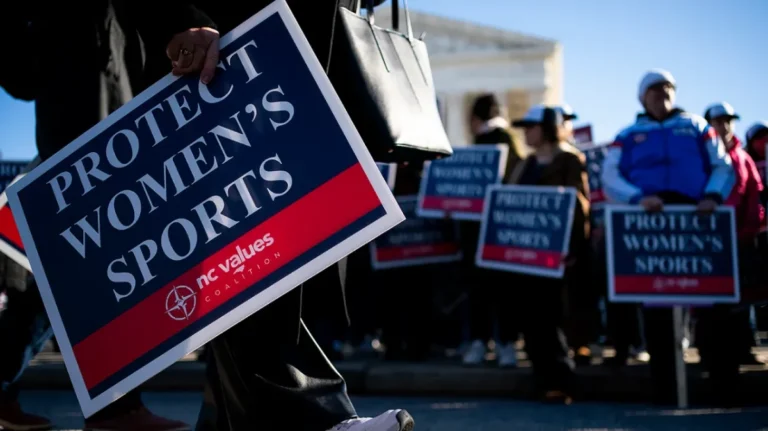
In a surprising electoral outcome that has sent shockwaves through civil rights organizations and political circles alike, voters in Washington state have decisively approved a ballot measure barring transgender athletes from competing on female sports teams. With approximately 80 percent of the ballots processed and counted by Friday following the midterm elections, roughly 57 percent of the electorate voted in favor of the restrictive initiative, while 43 percent opposed it. Following the statistical certainty of the outcome, opponents of the measure formally conceded defeat, marking a significant setback for LGBTQ advocacy groups in a traditionally progressive, Democratic-leaning state.
The newly approved initiative mandates the strict prohibition of transgender girls from participating in athletic events designated for female students, setting a high-stakes precedent for the northwestern state. The passing of this conservative measure in a blue stronghold stands in stark contrast to the broader national landscape of the November midterm elections, where Republicans experienced a series of disappointing results in multiple other contests. However, the victory for proponents of the ban in Washington mirrors a growing national legislative and electoral trend regarding gender identity and scholastic athletics.
The Washington measure is widely considered by legal experts and political analysts to be among the most stringent of four similar state initiatives that appeared on ballots during this election cycle. Alongside Washington, voters in Arizona, Nebraska, and Colorado also considered ballot questions restricting transgender participation in women’s sports. The success of these measures underscores a deeply polarized electorate and solidifies a trend that has accelerated rapidly across the United States over the past several years.
Legislative Context and National Trends
The debate over transgender participation in scholastic sports has intensified dramatically over the last half-decade. More than half of all U.S. states have enacted legislative statutes or administrative rules restricting the participation of transgender students in sports aligning with their gender identity. These legislative efforts gained renewed momentum earlier this year when the United States Supreme Court issued a landmark ruling upholding state-level bans on transgender athletes in scholastic competitions.
Proponents of these restrictions argue that biological differences, particularly those resulting from male puberty, confer an unfair physical advantage in strength, speed, and endurance, thereby undermining the foundational fairness of women’s sports and threatening Title IX protections. Conversely, civil rights and LGBTQ advocacy organizations contend that these policies constitute a coordinated campaign of discrimination that unfairly targets a vulnerable demographic of children. Critics note that the vast majority of affected individuals are minors who already experience elevated levels of societal marginalization, bullying, and mental health challenges.
Data compiled by the American Academy of Pediatrics highlights the severity of these challenges, indicating that over half of transgender youth experience suicidal ideation during their lifetimes, with approximately 31 percent having made at least one suicide attempt. In Washington state, the local governing body for school-linked youth athletics, the Washington Interscholastic Activities Association (WIAA), reported earlier this year that it was aware of only 10 transgender middle and high school students actively participating in school sports out of an estimated 200,000 student-athletes statewide.
Controversy Over Implementation and Medical Guidelines
Beyond the ideological and civil rights debates, the Washington initiative has drawn intense scrutiny from medical professionals and healthcare associations regarding its practical enforcement. Under the newly approved guidelines, female students wishing to participate in school-sponsored sports may be subjected to invasive verification requirements, including physical examinations of reproductive organs, or comprehensive genetic and hormone testing.
A coalition of pediatricians, physicians, and medical experts vocally opposed the initiative prior to the election, arguing that the requirements lack a foundation in clinical guidelines and would inflict unwarranted psychological stress and physical harm on young girls. These medical professionals cautioned that mandating biological verification processes for youth sports could lead to widespread policing of girls’ bodies, routine humiliation, and the exclusion of cisgender female athletes who do not conform to traditional physical stereotypes.
Despite these warnings, campaign proponents successfully framed the initiative as a matter of protecting competitive integrity and preserving safe spaces for biological females. The ballot measure capitalized on voter anxieties regarding the changing landscape of gender inclusion in public institutions, resonating deeply even within a populace that generally supports progressive social policies.
Reactions and Official Responses from Advocacy Groups
The defeat has prompted immediate mobilization and vocal condemnation from civil rights leaders, who vow to continue the legal and political struggle for transgender youth inclusion. Libby Watson, campaign manager for No Hate WA State—the primary political action committee that organized opposition against the Washington measure—harshly criticized the initiative. Watson characterized the ballot measure as a deceptive political maneuver orchestrated by aligned conservative and populist forces aiming to exploit transgender children for electoral gain.
"The results are a profound disappointment, but the fight is not over," Watson stated in a formal post-election address. "To all trans girls participating in school sports in Washington, we want you to know that you belong: on the field, on the court, on the team. We stand with you and will continue to fight for a day when you can play sports without controversy."
In contrast, architects of the ballot initiative and conservative advocacy groups celebrated the outcome as a monumental victory for the preservation of women’s sports. Representatives from organizations supporting the ban argued that the voters’ decision reflects common-sense values and reinforces the necessity of maintaining sex-segregated athletic divisions to ensure fair competition and equal opportunities for biological females.
Broader Impact and Future Implications
The passage of the Washington state measure, alongside similar outcomes in Arizona, Nebraska, and Colorado, signals that transgender sports policy is no longer confined to conservative southern and midwestern states. By successfully utilizing the ballot initiative process in western and swing states, proponents of restrictions have demonstrated that the issue possesses significant electoral pull across diverse geographic demographics.
Legal scholars anticipate an immediate wave of litigation challenging the implementation of these state laws and ballot measures. Civil rights organizations are expected to file lawsuits arguing that the bans violate federal equal protection clauses, Title IX mandates, and state-level constitutional guarantees against sex-based discrimination.
As school districts across Washington prepare to implement the new verification and eligibility requirements, administrators face complex administrative challenges regarding privacy, student health data, and compliance with federal education laws. The unfolding legal battles and their ultimate resolution in higher federal courts will likely shape the future of scholastic athletics and civil rights jurisprudence in the United States for years to come.