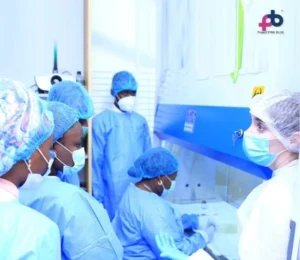
The Director-General of Mozambique’s National Institute of Health (INS), Eduardo Samo Gudo, has issued a forceful call to action for African governments to drastically increase their domestic investments in science and health technologies. Speaking at a high-level symposium in Maputo, Samo Gudo emphasized that the continent’s continued reliance on the Global North for life-saving medical interventions is an unsustainable model that leaves millions of Africans vulnerable during public health emergencies. The Director-General’s remarks were delivered during the fifth symposium marking the 30th anniversary of the Manhiça Health Research Center (CISM), a landmark institution in the region’s scientific landscape. He argued that the time has come for Africa to assert its scientific sovereignty, noting that the continent cannot afford to remain in a perpetual state of anticipation, waiting for Western nations and other wealthy economies to develop the diagnostic tests, vaccines, and medicines required to treat African populations.
According to Samo Gudo, the current paradigm of global health is defined by a reactive rather than a proactive approach in Africa. He pointed out that while the continent possesses the intellectual talent and the clinical necessity for innovation, the lack of robust financial pipelines and industrial infrastructure hinders the ability to translate scientific potential into tangible products. By identifying homegrown solutions through rigorous science, African nations can ensure they possess the internal capacity to address both the endemic health challenges of today and the unpredictable epidemiological threats of tomorrow. This shift, he argued, is not merely a matter of scientific pride but a fundamental requirement for national and continental security.
The Cost of Dependency and the Lesson of Emerging Diseases
The central theme of Samo Gudo’s address was the danger of "perpetual dependency." He highlighted a recurring pattern in which African nations are often the last to receive medical advancements, even when the diseases in question are primarily affecting the African continent. This lag time, he noted, is measured in human lives. "We must invest today in science, innovation, and technological development in health, or we will perpetuate a dependency on the West and remain waiting for them to develop so that we can have access," Samo Gudo stated. He pointed to the history of viral outbreaks as a clear indicator of this systemic failure.
Specifically, the Director-General referenced the various Ebola virus disease epidemics that have ravaged parts of the continent over the last decade. He noted the 2014 outbreak in West Africa, the 2018 outbreak in the Democratic Republic of Congo, and subsequent flare-ups as evidence of a cycle where the African response is consistently "late." In the absence of indigenous manufacturing and rapid-response clinical research hubs, African nations are forced to wait for international regulatory approvals and supply chain allocations from foreign entities. To break this cycle, Samo Gudo insisted that investments must be made "in advance" rather than as a panicked response to an existing crisis. This proactive investment strategy would allow for the pre-emptive generation of medical products, ensuring that when the next pathogen emerges, African scientists are already at the forefront of the solution.
Thirty Years of the Manhiça Health Research Center
The context of the announcement—the 30th anniversary of the Manhiça Health Research Center (CISM)—serves as a powerful backdrop for the call for scientific independence. Founded in 1996 through a partnership between the governments of Mozambique and Spain, CISM has become one of the most respected research institutions in sub-Saharan Africa. Over the past three decades, the center has played a pivotal role in global health, most notably in the development of the RTS,S malaria vaccine, the world’s first vaccine against the parasite.
The symposium in Maputo served as a reflection on how localized research can have global implications. However, Samo Gudo used the platform to highlight that while CISM is a success story, it should not be an outlier. The goal, according to the Director-General, is to scale this model so that clinical research is integrated into a broader "health industry." This industry would encompass the entire value chain, from basic laboratory science and clinical trials to the mass production of pharmaceuticals and diagnostic tools. By building this capacity on the continent, Africa can move from being a site for clinical trials to becoming a hub for medical production.
A Chronology of African Health Crisis and Scientific Response
The push for African scientific autonomy has been building for years, fueled by a series of global events that exposed the fragility of international cooperation during crises.
- 2014-2016: The West Africa Ebola epidemic revealed the slow pace of international vaccine development. While experimental treatments were eventually deployed, the delay highlighted the need for localized research and development (R&D) capabilities.
- 2018-2020: Successive Ebola outbreaks in the DRC prompted the Africa Centres for Disease Control and Prevention (Africa CDC) to take a more prominent leadership role, though still largely dependent on foreign-made vaccines.
- 2020-2022: The COVID-19 pandemic served as a watershed moment. The phenomenon often described as "vaccine apartheid" saw wealthy nations hoard supplies while African countries were left at the back of the queue. This experience catalyzed the African Union’s commitment to manufacturing 60% of the continent’s vaccine needs locally by 2040.
- 2023-Present: The ongoing challenges of Mpox and the emergence of new viral strains continue to test the continent’s surveillance systems, underscoring Samo Gudo’s point that without advanced investment, Africa will remain in a reactive posture.
Supporting Data: The Funding Gap in African R&D
The call for increased investment is supported by stark data regarding the global distribution of scientific funding. Currently, Africa accounts for approximately 25% of the global disease burden but represents less than 1% of global expenditure on health research and development. Furthermore, according to data from the World Health Organization (WHO) and the African Union, African countries import between 70% and 90% of all medicines consumed on the continent.
While the African Union has long set a target for member states to allocate at least 1% of their Gross Domestic Product (GDP) to R&D, very few nations have met this benchmark. Most African countries currently spend less than 0.5% of their GDP on science and technology. This funding gap results in a "brain drain," where the continent’s top scientific minds seek opportunities in Europe or North America because of a lack of infrastructure and funding at home. Samo Gudo’s proposal suggests that by pivoting toward a "health industry" model, governments can create an economic ecosystem that retains talent and generates revenue through the sale of locally produced medical goods.
Clinical Research as an Economic and Health Pillar
Samo Gudo explained that the focus on clinical research is the "great first step" toward total health sovereignty. Clinical research is the bridge between a laboratory discovery and a usable medicine. By strengthening this sector, African nations can ensure that the drugs and vaccines being developed are specifically tailored to the genetic profiles and environmental conditions of African populations. Historically, many medicines developed in the West have been tested primarily on non-African demographics, leading to potential discrepancies in efficacy and side effects.
Furthermore, a robust clinical research sector attracts international investment and fosters the growth of ancillary industries, such as biotechnology and specialized logistics. This creates a multiplier effect on the economy. "Our leadership, in multilateral organizations and institutions, must prioritize boosting investment in health," Samo Gudo added. "The continent must invest for its own future."
Analysis of Implications: Toward a New Public Health Order
The Director-General’s remarks align with the "New Public Health Order" championed by the Africa CDC. This framework emphasizes five pillars: strengthened regional integrated surveillance, functional laboratory networks, increased medical manufacturing, a reinforced health workforce, and respectful action-oriented partnerships.
The implications of Samo Gudo’s call to action are profound. If African nations successfully pivot toward self-reliance, the global health landscape will be fundamentally rebalanced. No longer would the continent be a passive recipient of aid; instead, it would become a peer contributor to global medical science. However, the path to this future is fraught with challenges. It requires not only financial investment but also the harmonization of regulatory frameworks across 54 nations to allow for the free movement of medical products and scientific data. The establishment of the African Medicines Agency (AMA) is a step in this direction, but its success depends on the political will of individual member states to fund and empower it.
Conclusion
The 30th anniversary of the Manhiça Health Research Center stands as a testament to what is possible when science is prioritized on African soil. Yet, as Eduardo Samo Gudo made clear in Maputo, a single center of excellence is not enough to protect a continent of 1.4 billion people. The transition from dependency to autonomy requires a structural overhaul of how African nations view health—not as a cost to be managed, but as a strategic sector to be developed.
As emerging diseases continue to threaten global stability, the message from Mozambique’s National Institute of Health is clear: Africa’s health security can no longer be outsourced. The investment made today in labs, scientists, and factories will determine whether the continent leads the response to the next pandemic or remains a bystander in its own survival. The "wait and see" era must come to an end, replaced by a new age of African scientific leadership and industrial resilience.