
The architecture of global health financing is undergoing a profound and structural transformation. Driven by a precipitous collapse in bilateral aid, escalating post-pandemic healthcare demands, and the high-level political momentum generated by initiatives such as the Accra Reset, multilateral development banks (MDBs) are rapidly moving from the periphery to the epicenter of international health investments. For decades, international health development relied heavily on short-term, disease-specific donor grants and emergency disbursements channeled through traditional United Nations agencies and vertical funds. Today, however, that paradigm is fracturing.
As traditional donor governments scale back their foreign assistance budgets, regional and global financial institutions are stepping into the void by default. While experts view this institutional pivot as a vital opportunity to secure predictable, large-scale capital capable of funding foundational health infrastructure, digital integration, and workforce expansion, it has also sparked fierce debate. The transition from non-repayable grant aid to loan-based financing introduces complex sovereign debt risks, raising urgent questions regarding health equity, fiscal transparency, and long-term financial sustainability across the Global South.

The Shifting Landscape: From Grant Aid to MDB Lending
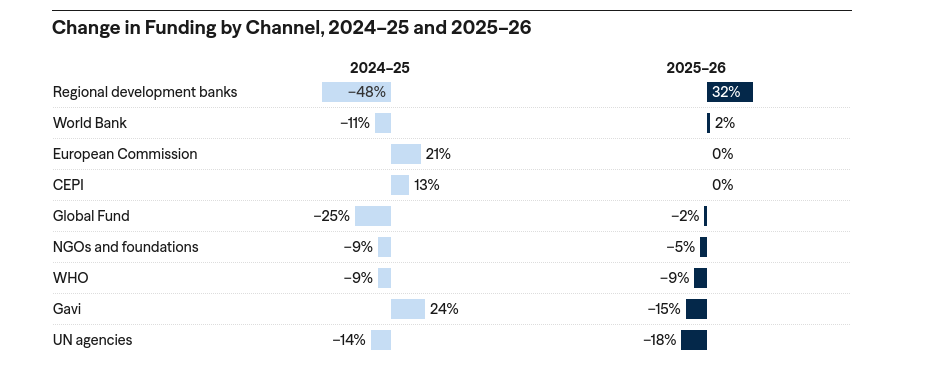
The pivot toward MDB financing is not merely a strategic choice; it is a structural necessity forced by shrinking fiscal spaces and evaporating foreign assistance. According to preliminary data compiled by the Institute for Health Metrics and Evaluation (IHME) and published via Think Global Health, development assistance for health originating from regional development banks surged by an impressive 32%—representing an injection of approximately $270 million—between 2025 and 2026. This followed a modest 2% ($91 million) increase in World Bank health allocations over the same timeframe.
Yet, this bank-led rebound falls dramatically short of filling the multi-billion-dollar chasm left by widespread cuts to bilateral and multilateral grant channels. Overall global health grant aid contracted by 12% in 2025, followed by an additional 5% reduction in 2026. The contraction has hit sub-Saharan Africa with particular severity. External health funding to the region plummeted by nearly 70% between 2021 and 2025 as emergency COVID-19 facilities expired and donor priorities shifted inward.
Major donor nations have spearheaded these cutbacks. Most notably, the United Kingdom slashed its international assistance budget by 37%, translating to an 891 million dollar reduction in health-related aid, while the United States trimmed its foreign health commitments by 8% ($668 million). Parallel declines have battered multilateral grant channels: United Nations agencies experienced an 18% funding drop, and Gavi, the Vaccine Alliance, faced a 15% reduction in available resources. Meanwhile, disbursements from the Global Fund to Fight AIDS, Tuberculosis and Malaria contracted by 25% between 2024 and 2025, followed by a subsequent 2% decrease in 2026. This severe capital restriction coincided with an unprecedented $5.32 billion funding shortfall registered during the Global Fund’s Eighth Replenishment cycle.

Faced with these compounding deficits, low-income nations have attempted to cushion the blow by increasing domestic government health spending by an average of 8% annually between 2024 and 2026. Nevertheless, structural budget constraints and mounting external interest burdens mean that total per capita health spending in these vulnerable economies continues to contract by roughly 3% each year.
Voices from the World Health Summit: The Logic of Institutional Integration
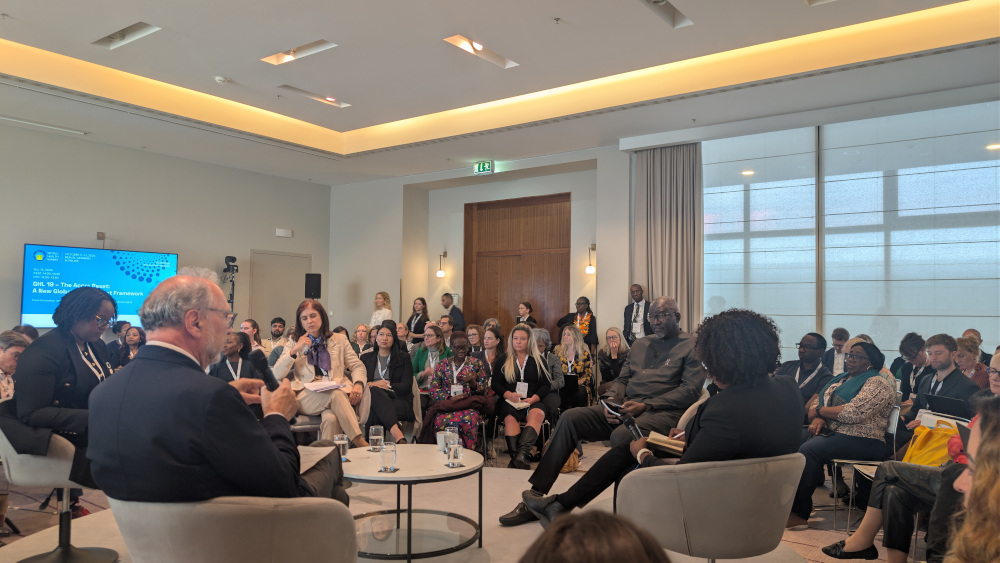
The realities of this fiscal transition took center stage at the recent World Health Summit in Berlin, where international policymakers, economists, and global health leaders dissected the implications of bank-driven health financing.
"Multilateral development banks will probably become the major external source of funding, just like in high-income countries where we go to banks," observed Peter Piot, professor of global health at the London School of Hygiene and Tropical Medicine (LSHTM), during an exclusive interview with Health Policy Watch in Berlin. Piot, a veteran global health negotiator who represented the United Nations in establishing the Global Fund and co-led the Accra Reset High-Level Panel workstream on governance and institutional reform, emphasized that integrating MDBs into national health budgets has become unavoidable as domestic tax revenues fall short of mounting healthcare requirements.

Unlike the volatile, short-term nature of disease-specific donor grants, development bank loans offer multi-year, scalable capital designed to underwrite long-term capital projects. Proponents argue that this type of financing is uniquely suited to build resilient public systems, fortify supply chain networks, expand healthcare workforces, and upgrade national health information systems. However, realizing these benefits depends entirely on whether borrowing governments and international lenders can establish transparent loan terms that successfully safeguard sovereign solvency.
Blended Finance Models: Bridging Grants and Loans
In an effort to stretch diminishing capital pools and navigate this new financial reality, traditional global health institutions are increasingly turning toward financial engineering and blended finance models. These frameworks utilize remaining grant dollars to de-risk or leverage larger pools of concessional lending from development banks.
A prime example of this strategic evolution occurred in October, when the Global Fund and the Islamic Development Bank (IsDB) finalized a landmark partnership agreement. The institutional framework combines the Global Fund’s grant capital and technical expertise with the IsDB’s extensive concessional lending portfolio and implementation scale. The initiative targets a significant geographic overlap: approximately 43% of the Global Fund’s country grants—equating to roughly $4.5 billion—are directed toward nations that are also member states of the IsDB, allowing the two institutions to coordinate parallel and blended financing streams.
The Global Fund confirmed that this agreement forms part of a broader, deliberate strategy to partner with multilateral development banks, noting similar arrangements established with the World Bank and the Asian Development Bank. However, a Global Fund spokesperson cautioned that while bank co-investments mobilize vital complementary capital, they are explicitly designed to supplement—not replace—continued donor grant commitments and domestic public health allocations.
Furthermore, transparency concerns have emerged regarding these complex financial structures. The organization acknowledged that the precise financial terms, interest rate structures, and repayment schedules governing these co-investment arrangements remain undisclosed to the public. This lack of transparency prevents public watchdogs, civil society organizations, and national parliaments from fully assessing the ultimate repayment liabilities being incurred by borrowing states.
Equity Trade-Offs and the Critique of Public-Sector De-Risking
The increasing reliance on development bank capital has alarmed global health advocates and civil society organizations, who warn of severe trade-offs concerning health equity and sovereign debt sustainability.

Mariska Meurs, Senior Global Health Advocate at the Dutch civil society organization Wemos, acknowledges that co-investing through global health initiatives offers the distinct advantage of directing MDB capital into public systems rather than purely commercial ventures. Nevertheless, she stresses the vital necessity of distinguishing between public bank borrowing and private-sector de-risking when evaluating long-term health equity impacts.
According to Meurs, public MDB concessional loans directly expand state budget capacity to fund universal health coverage. Conversely, blended finance models engineered specifically to de-risk private commercial investment frequently distort healthcare priorities, channeling funds toward profitable, urban-based medical services rather than non-profit public healthcare infrastructure catering to high-need, marginalized populations.
Moreover, Meurs warns that an over-reliance on MDB borrowing risks distracting the international health community from pursuing structural fiscal solutions. She argues that true sustainability requires systemic reforms, including progressive national and international tax justice and comprehensive sovereign debt cancellation.

"To solve the health financing gap, the global health community should rally behind campaigns for debt and tax justice," Meurs urged, highlighting established public-sector collaborative frameworks such as the WHO-EIB-IsDB Health Impact Investment Platform (HIIP), which focuses explicitly on strengthening primary healthcare systems.
The Rising Debt Spiral Across the Global South
Beyond equity concerns, financial experts and macroeconomists have issued stark warnings regarding the systemic risks of converting grant-based aid into sovereign debt obligations. As developing nations grapple with an escalating sovereign debt crisis, critics argue that introducing more loans into already overburdened economies will inevitably lock vulnerable populations into compounding debt spirals.
"A trend toward blended finance must be treated with caution, as it means more loans and thus more debt for the Global South," warned Bodo Ellmers, Director of Financing for Development at the German NGO Global Policy Forum Europe. "The Global Fund has historically disbursed almost exclusively grants, and that should remain the case, as many developing nations are already groaning under an unsustainable debt burden."
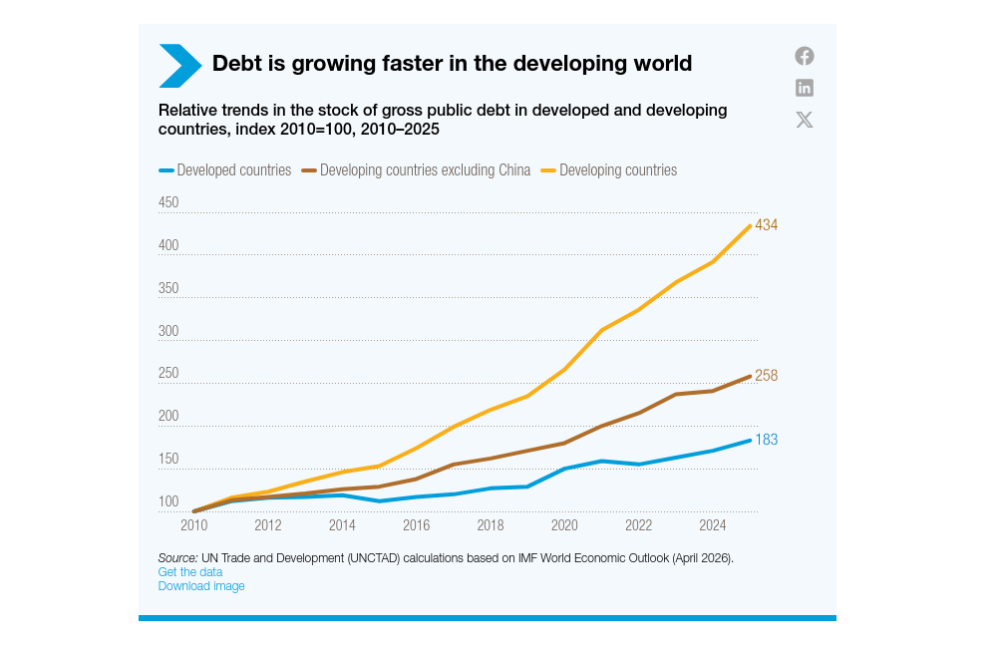
Ellmers’ warnings are substantiated by macroeconomic data from UN Trade and Development (UNCTAD), which reveals that interest payments on external public debt across developing countries—excluding China—have actively outstripped net new lending since 2022. This structural interest burden severely constrains the fiscal space of borrowing governments precisely as traditional grant assistance recedes, leaving them vulnerable to severe economic shocks when public health emergencies strike.
Innovative Relief Mechanisms: Debt Swaps and Fiscal Space
To create the fiscal room necessary to absorb development bank capital without triggering sovereign defaults or defaulting on essential public services, leaders behind the Accra Reset advocacy framework argue that new loan approvals must be paired with aggressive debt relief mechanisms. Foremost among these proposals are debt-for-health swaps. Under this mechanism, international creditors forgive or restructure portions of sovereign debt on the strict condition that the resulting savings on interest payments are redirected into national health budgets.
"The discussion going on is to create more fiscal space—that is debt swaps for health, and bringing the International Finance Corporation and the private sector along so that we can have a more critical combination," explained Elhadj As Sy, Chair of the Board of the Kofi Annan Foundation and Co-Chair of the Accra Reset High-Level Panel, during an interview in Berlin.

In As Sy’s assessment, pairing debt restructuring initiatives with development bank loans and targeted private capital is essential to generating the structural headroom required for nations in the Global South to construct self-reliant health systems anchored firmly in domestic resources.
The Accra Reset Reform Agenda: A Roadmap for Health Sovereignty
Translating the vision of continental health sovereignty into practical reality requires a fundamental overhaul of how external capital enters recipient countries. Rather than permitting international lenders to impose parallel application, monitoring, and reporting processes that overburden weak administrative capacities, the Accra Reset urges MDBs and global health funds to channel all financing through a single country interface aligned behind one unified national health plan. This harmonized model has already demonstrated success in countries like Indonesia, where four separate development banks successfully coordinated $4 billion in capital behind a single national strategy.
This structural alignment is critically important because development bank borrowing requires formal, legal approval from Ministries of Finance, which must manage strict sovereign debt ceilings and macroeconomic stabilization targets. To ensure rigorous fiscal discipline without sidelining healthcare investments, the Accra Reset mandates that national health investment plans be jointly co-signed at the cabinet level by ministers of finance, health, and planning. Furthermore, the framework stipulates that external lenders must rely on national audit offices rather than imposing duplicative, donor-driven reporting tracks.
Reflecting on previous reform initiatives—such as the 2023 Lusaka Agenda—Shingai Machingaidze, Advisor to the Accra Reset Secretariat, noted that earlier frameworks correctly identified the systemic flaws of donor-driven aid but ultimately struggled to compel institutional change through voluntary compliance.
"Everything said in those previous analyses remains valid today," Machingaidze explained during an interview with Health Policy Watch. "If we continue to rely on voluntary implementation, we should expect the same results—the difference with the Accra Reset is that it is anchored at the Head-of-State level, providing a direct political pathway to practical implementation."
Ultimately, whether this new financial architecture succeeds will depend on the international community’s ability to translate high-level political momentum into resilient, self-reliant health systems. By carefully balancing multilateral development bank financing with robust debt relief, transparent terms, and rigorous domestic accountability, developing nations may finally safeguard their national health sovereignty long after traditional grant aid has receded.